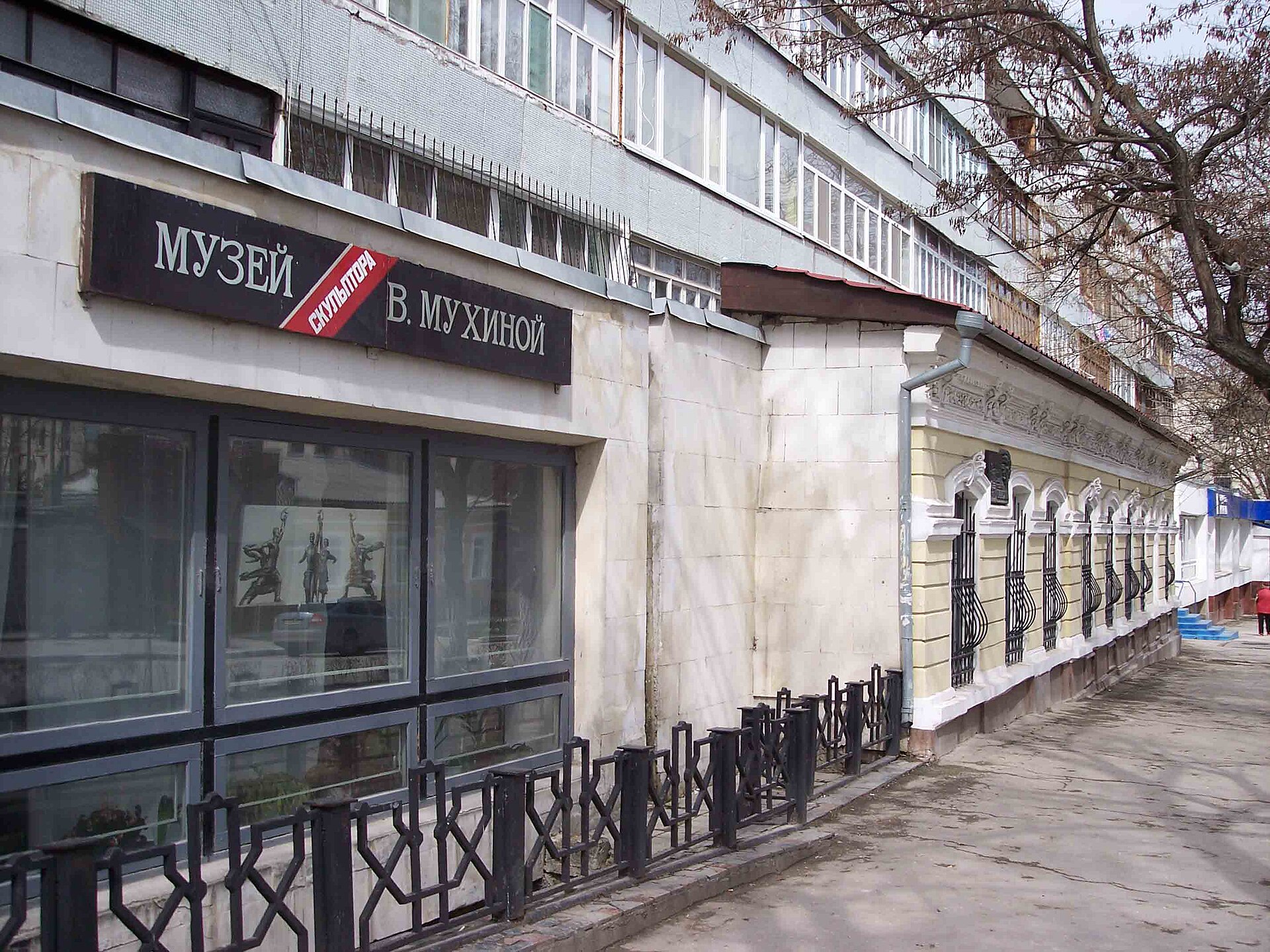
The small Crimean city of Feodosia has attracted artists, writers, and those who prefer its quiet streets and the sound of the sea. One of its cultural landmarks is a modest house on a tree-lined street—Vera Mukhina’s former home. The place isn’t grand; it’s where the past remains in small things: the creak of wooden floors, the scent of old books, and the saltiness of the Black Sea breeze through open windows.
The house, built in the late 19th century, blends the simple elegance of Crimean coastal homes with the practicality of a family residence. Whitewashed walls, wooden shutters, and a small courtyard with grapevines make it feel like time moves slowly here. Inside, high ceilings, tiled stoves, and furniture left untouched for decades suggest how Mukhina might have lived—sketching by the window or carrying her paints into the garden, shaped by the light and landscapes of her childhood.
Though born in Riga, Mukhina grew up in Feodosia. Her family moved here when she was a child, and the city left its mark on her work. The rolling hills, the light on the water, and the rhythm of the sea appear in her early sketches and later compositions. The museum’s collection includes personal photographs, letters, and some of her works—plaster models, preparatory sketches, and reproductions of her famous pieces. These let visitors see how her style developed.
The museum’s focus on Worker and Kolkhoz Woman stands out. The exhibit shows rare photographs from the 1937 Paris World’s Fair, where the sculpture was first unveiled, along with technical drawings and documents about its construction. Mukhina’s notes reveal her concerns: capturing human motion, making metal seem alive, conveying energy in a frozen moment. She didn’t consider this her finest work, despite its fame.
The museum also shows Mukhina as a person. One room recreates her studio—mannequins draped in fabric, tools on a worktable, half-finished sculptures. Nearby, display cases hold her diaries, letters, and photographs. These materials reveal her as a teacher, a mentor, and someone who navigated her era with determination. Her writings discuss art’s role in society, intellectual freedom, and balancing personal vision with public expectations.
This museum feels different. It doesn’t mythologize Mukhina’s life. The house feels lived-in, as if she might return. Visitors often leave with a changed view of her work—suddenly, the sculptures aren’t just symbols but the result of experimentation, doubt, and craftsmanship. For those who know only Worker and Kolkhoz Woman, the museum offers a broader understanding of her legacy.
Feodosia’s relaxed pace and natural beauty have long drawn creative minds. Mukhina returned here throughout her life, pulled back to where her artistic journey began. Today, her house museum remains a quiet retreat. There are no guided tours or crowds—just the chance to wander, linger over a sketchbook, or sit in the courtyard and listen to the waves.
The museum doesn’t tell Mukhina’s whole story. It offers something more personal: a look into her world, her influences, and the struggles behind her public persona. It’s for those who see history not as dates and facts but as lived experience. Here, the past feels close—the worn edges of a chair, the yellowed pages of a letter, the faint pencil marks on a sketch. In that quiet connection, Mukhina’s work reveals something essential about being human.