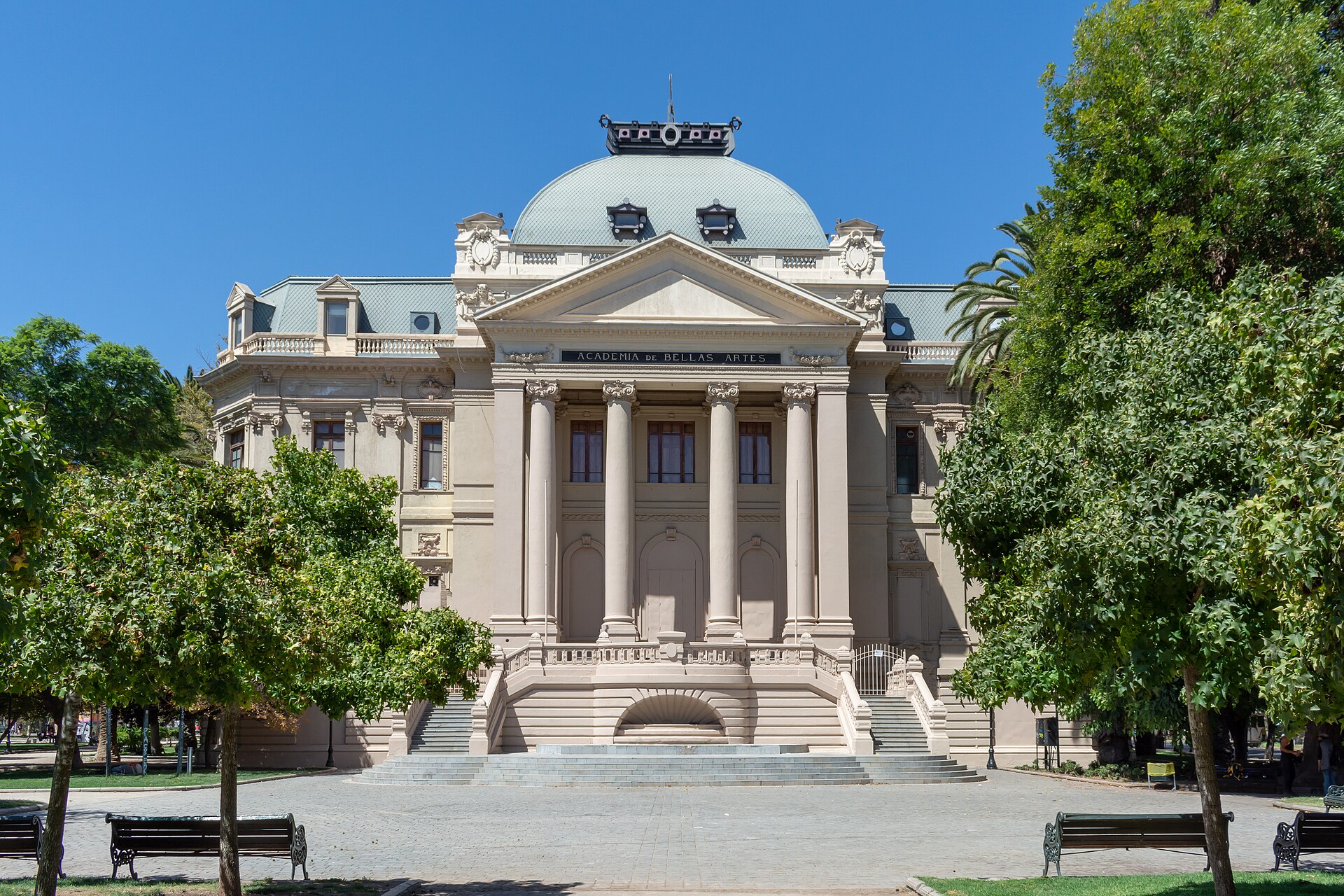
The Museum of Contemporary Art in Santiago is one of those rare places where art doesn’t just hang on the walls—it feels alive, breathing in rhythm with the city around it. Tucked into the heart of Chile’s capital, in the Quilicura district, the museum sits where old and new converge. The building itself is a piece of history, originally constructed in the late 19th century as the National Congress, back when Santiago was just beginning to take shape as a major Latin American city. Its thick stone walls, soaring ceilings, and grand halls with tall windows create an atmosphere where the past and present blend effortlessly, as if the space itself is part of the art on display.
Founded in 1947, the museum was one of Chile’s first institutions dedicated to contemporary art, born during a time of cultural awakening in the country. The post-war years were a period of creative ferment, and the need for a space to showcase modern artistic movements was keenly felt. The initial collection focused on Chilean artists, but over time it grew to include works from across Latin America and beyond. Today, the museum’s holdings span from the mid-20th century to the present, covering everything from abstract painting and sculpture to immersive installations and video art. It’s a place where the evolution of artistic expression is laid bare, reflecting both local and global influences.
What sets this museum apart is its refusal to be a static archive. Instead, it functions as a dynamic space where art engages visitors, provoking thought and conversation. Temporary exhibitions often tackle pressing social and political issues, mirroring the concerns of the moment. Past shows have explored themes like environmental degradation, the legacy of dictatorship, and gender equality, using art as a lens to examine the world. But the museum isn’t just about visual art—it’s a hub for ideas. Lectures, workshops, and performances turn the space into a forum for dialogue, where artists and audiences can connect beyond the traditional gallery experience.
The architecture of the building is as much a part of the experience as the art itself. After a careful restoration in the early 2000s, the museum retained its historic character while gaining a new vitality. The main hall, with its marble columns and ornate ceiling moldings, still echoes the grandeur of its days as the National Congress. Meanwhile, modern additions with glass walls create a striking contrast, bridging the old and the new. The inner courtyards, planted with native flora, offer quiet respites where visitors can pause between exhibitions, soaking in the atmosphere or simply watching the play of light and shadow.
The museum’s collection is a journey through key movements in contemporary art. Chilean artists feature prominently, including figures like Roberto Matta, a surrealist whose work left an indelible mark on Latin American art, and Nemesio Antúnez, whose abstract compositions became emblematic of Chilean modernism. The collection also includes international artists, ranging from established names to emerging talents, offering a broader perspective on the global art scene. A particularly poignant section is dedicated to works created during the years of military dictatorship, when art became a form of resistance and a way to preserve memory in the face of oppression.
Beyond its role as an art institution, the museum is deeply woven into the fabric of Santiago. Its central location makes it a natural stop for locals and visitors alike, surrounded by other cultural landmarks, cafes, and parks. On weekends, the museum buzzes with activity—families with children, students sketching in the courtyards, artists debating in the halls, and casual visitors who come as much for the atmosphere as for the art. In the summer, the courtyards transform into open-air cinemas, while winter brings concerts and poetry readings, turning the space into a gathering place for the city’s creative community.
For those curious about contemporary art, the museum offers a window into Chilean and Latin American culture. There’s no rigid agenda here—just an invitation to explore, question, and discover. Even if you’re not an art expert, the exhibitions can be surprisingly engaging. Temporary shows often take unexpected turns, while the permanent collection provides a sense of how art in Chile has evolved over the decades. Sometimes, the most powerful moments come from simply standing in front of a piece, letting it speak for itself.
Santiago is a city of contrasts, where colonial-era buildings stand alongside sleek skyscrapers, and bustling streets give way to quiet green spaces. The Museum of Contemporary Art embodies that duality—it’s both a relic of the past and a platform for the future. You might spend an hour here or lose yourself for an entire day, depending on how deeply you want to dive into the world of art. The key is to take your time. Each exhibition, each piece, has its own story to tell, and sometimes the best way to experience it is to pause, look, and listen.