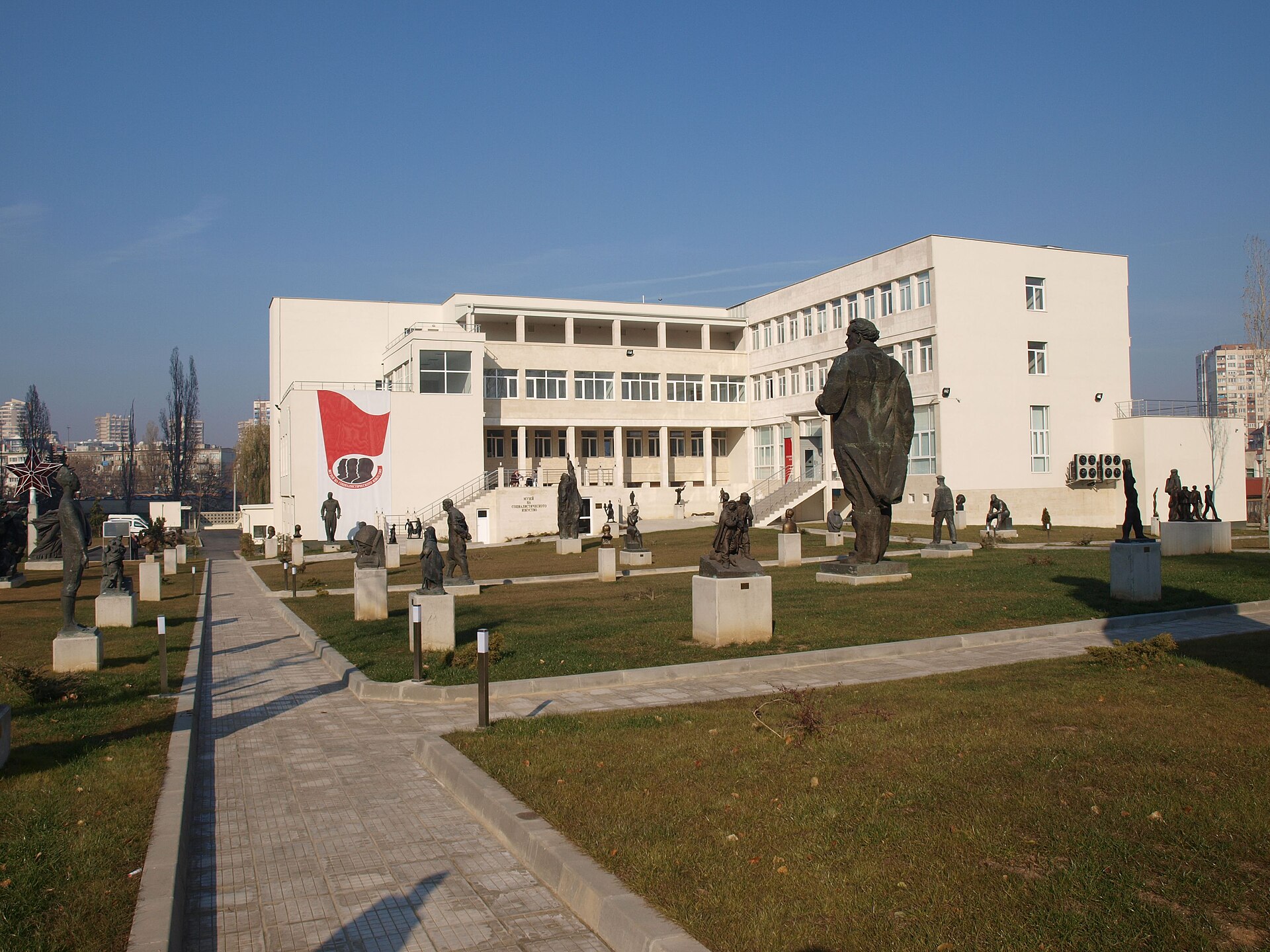
The Museum of Socialist Art in Sofia is one of those places that feels like a step into another era, not just in time but in ideology. Tucked away in the southern part of the city, it’s a quiet, almost understated space that holds the weight of Bulgaria’s communist past. The museum doesn’t try to glorify or vilify the period it represents—it simply presents it, letting the artifacts speak for themselves. For anyone curious about how a country once shaped by Marxist-Leninist principles navigated its identity, this is a place where history feels tangible, even if it’s not always comfortable.
The museum’s outdoor sculpture garden is the first thing that strikes visitors. Giant statues of Lenin, Marx, and Bulgarian communist leaders stand in stark contrast to the modern buildings surrounding them. These were once towering symbols of power, displayed in public squares across the country. Now, they’re arranged almost like relics in an archaeological site, their imposing forms softened by the passage of time. Some are missing parts—an arm here, a head there—hinting at the abrupt way they were removed after 1989. The garden isn’t just a collection of discarded monuments; it’s a physical record of how quickly political winds can shift.
Inside, the museum’s main exhibition hall is a mix of propaganda, everyday objects, and personal stories. The walls are lined with posters from the era, their bold colors and slogans still vivid decades later. Some depict workers in heroic poses, others show smiling children under the watchful gaze of party leaders. There are also more intimate items—badges, uniforms, and even a replica of a typical communist-era apartment, complete with furniture and household goods. These details make the past feel lived-in, not just a series of abstract ideas. It’s one thing to read about life under socialism; it’s another to see the kind of radio that sat in someone’s kitchen or the schoolbooks children used.
One of the most striking pieces in the collection is the massive red star that once crowned the Party House in Sofia. It’s hard to imagine now, but this star was a central symbol of the regime, visible from all over the city. Its removal in the early 1990s marked the end of an era, and its presence here feels like a quiet acknowledgment of that shift. Nearby, a section of the Berlin Wall—gifted to Bulgaria after reunification—serves as a reminder of how interconnected these histories were. The wall’s graffiti, a mix of political slogans and personal messages, contrasts sharply with the controlled imagery of the communist propaganda around it.
The museum doesn’t shy away from the contradictions of the period. There are exhibits on the cult of personality surrounding Todor Zhivkov, Bulgaria’s long-time communist leader, as well as displays on the secret police and the surveillance state. But there are also glimpses of the ordinary lives that unfolded alongside the grand narratives—wedding photos, letters, and even a few jokes from the era, which show how people navigated the system with humor and resilience. It’s a reminder that history isn’t just about leaders and ideologies; it’s also about the people who lived through it, adapting in ways both small and significant.
What makes the Museum of Socialist Art compelling is its lack of didacticism. There’s no heavy-handed interpretation here, no attempt to tell visitors what to think. Instead, the museum invites reflection, letting the objects and images provoke their own questions. For Bulgarians, it’s a place to reckon with a complicated past. For foreigners, it offers a window into a world that might feel distant but is still very much part of Europe’s modern history. The museum doesn’t offer easy answers, but it does provide context—something that’s often missing in oversimplified narratives about the Cold War.
The building itself is unassuming, a former government warehouse repurposed for this collection. There’s no grand architecture or dramatic setting, which in some ways makes the experience more powerful. The focus remains on the exhibits, not the space around them. The museum is also part of a larger effort in Bulgaria to preserve and understand its communist history, a period that’s still a source of debate and division. Some see it as a time of stability and progress, others as a dark chapter of repression. The museum doesn’t take sides, but it does ensure that the conversation continues.
Visiting the Museum of Socialist Art isn’t just about looking at old statues and posters. It’s about understanding how a society constructs its identity, how it remembers and forgets, and how the past shapes the present. Sofia is a city where layers of history are visible everywhere—Roman ruins beneath the streets, Ottoman mosques next to neoclassical buildings, and now, this museum, which adds another layer to the story. It’s a place that challenges visitors to think about what gets preserved, what gets discarded, and why. And in doing so, it offers a deeper appreciation of how Bulgaria, and perhaps all of us, grapple with the weight of history.