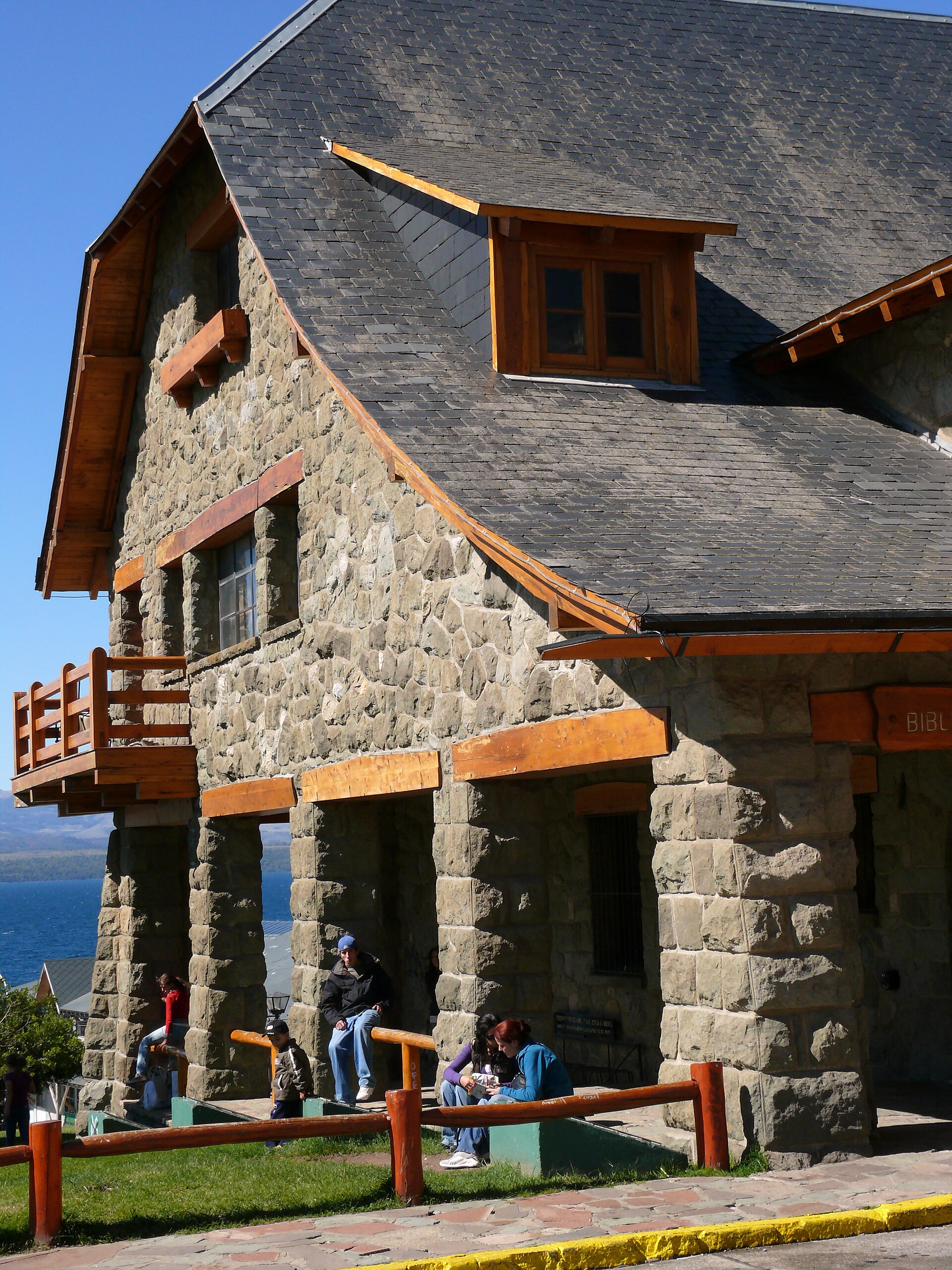
The Francisco P. Moreno Museum of Patagonia sits quietly in the heart of Bariloche, a place where the past feels closer than it does in most cities. Named after one of Argentina’s most important explorers, the museum isn’t just about Moreno himself—though his life was extraordinary enough to fill several rooms. A scientist, adventurer, and diplomat, Moreno spent years mapping the uncharted corners of Patagonia in the late 1800s, collecting fossils, studying indigenous cultures, and later helping to define the border between Argentina and Chile. The museum preserves his work, but it does something broader: it tells the story of a region shaped by ice, wind, and the people who have called it home.
The building itself is worth noticing before you even step inside. Built in the 1940s, it’s a solid, unassuming structure made of local stone, with high ceilings and large windows that let in the soft Patagonian light. The architecture is often called Patagonian neoclassicism—a mix of grandeur and simplicity, with thick walls that seem to echo the landscape outside. Inside, the spaces are airy, with wooden panels and wrought-iron railings that give the place a timeless feel. There’s no rush here, no flashing screens or crowded displays. The exhibits have room to breathe, and so do the visitors.
The natural history section is where the region’s ancient past comes to life. Skeletons of prehistoric creatures—giant sloths, saber-toothed cats, and other long-extinct animals—fill the room, their bones arranged as if they might still be roaming the plains outside. Many of these fossils were collected by Moreno himself during his expeditions, and they offer a glimpse into a world that existed thousands of years before humans arrived. Nearby, taxidermied specimens of condors, guanacos, and other native species remind you that Patagonia’s wildlife is still very much alive, even if some of its most dramatic creatures are gone.
The museum’s collection on indigenous peoples is one of its most moving parts. Before European settlers arrived, Patagonia was home to the Tehuelche, Mapuche, and other groups, each with their own languages, traditions, and ways of surviving in a harsh land. The exhibits include everyday objects—clay pots, stone tools, bone jewelry—as well as reconstructions of traditional dwellings. The Mapuche textiles are particularly striking: vibrant, intricate weavings that have been passed down through generations. This section doesn’t shy away from the darker parts of history, either. It acknowledges the displacement and loss that came with colonization, but it also honors the resilience of cultures that still exist today, even if they’ve changed over time.
Another part of the museum focuses on the era of exploration and settlement. Maps from the 1800s show a Patagonia that was still largely unknown, with blank spaces where rivers and mountains would later be named. Letters, diaries, and personal belongings of early travelers paint a picture of what it was like to venture into this remote corner of the world. One of the most fascinating displays covers the border dispute between Argentina and Chile, a conflict that Moreno helped resolve. Copies of treaties and diplomatic documents are on view, a reminder that Patagonia’s history isn’t just about discovery—it’s also about power, negotiation, and the drawing of lines on a map.
A smaller but interesting section looks at Bariloche’s transformation in the 20th century. Today, the city is known for its chocolate shops, ski resorts, and Alpine-style architecture, but it wasn’t always a tourist destination. Old photographs show the first hotels, built when visitors were still a novelty, and everyday objects—tools, schoolbooks, postcards—offer a glimpse into the lives of the people who lived here before the crowds arrived. The postcards are especially poignant, showing a quieter, less polished version of Bariloche, where the streets weren’t yet lined with souvenir shops and the lake was just a lake, not a backdrop for selfies.
What makes this museum different from many others is its lack of pretension. There are no grand narratives or dramatic reenactments, just a quiet attempt to show how life in Patagonia has unfolded over time. The exhibits feel honest, even humble. A rusted arrowhead, a faded photograph, a handwritten letter—each one carries a story, and together they create a sense of connection to the land and the people who have shaped it. You won’t spend hours here, but you might leave with the feeling that you’ve touched something real, something that still matters.
If you’re in Bariloche, the museum is worth a visit, if only to understand why this place feels the way it does. It’s not a flashy attraction, and it doesn’t try to be. Instead, it offers something rarer: a chance to slow down, to look closely, and to see the past without the gloss of tourism. Afterward, you can walk along the shore of Nahuel Huapi Lake and imagine what it must have been like for the first explorers, the indigenous peoples, and the settlers who decided to stay. The land hasn’t changed as much as the people have, and that, in the end, might be the most interesting story of all.