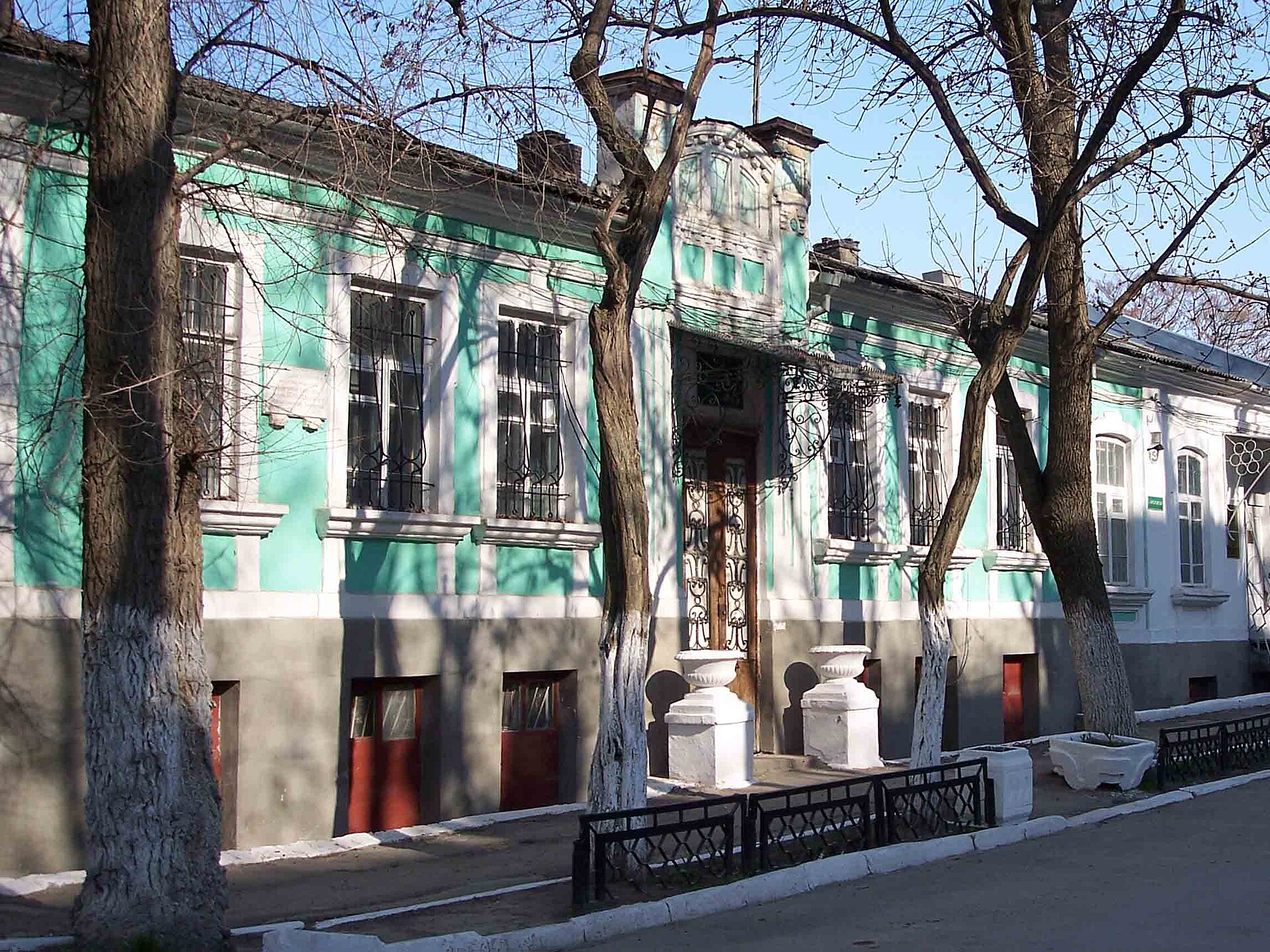
The house on Korobkov Boulevard in Feodosia feels like a place where time has quietly settled into the early 1900s. It’s not just a building but a living piece of history, standing in a town that was once one of Crimea’s cultural hubs. Here, far from the bustle of the capital, the Tsvetaev sisters—Marina and Anastasia—spent several years of their lives. The walls still seem to hold the echoes of their conversations, their thoughts, and the creative energy that filled these rooms.
Marina Tsvetaeva, already a recognized poet by then, arrived in Feodosia in 1913 with her younger sister Anastasia. Their father, Ivan Tsvetaev, the founder of Moscow’s Museum of Fine Arts (now the Pushkin Museum), had no direct connection to this place, but the Crimean climate and sea air were considered beneficial for health. At the time, Feodosia was a quiet provincial town with a layered history, where Greek, Genoese, and Tatar influences intertwined. It was here, in this house, that Marina worked on her poetry, while Anastasia kept diaries that would later become important records of their era.
The architecture of the house is typical of Feodosia’s early 20th-century mansions—modest yet elegant. A two-story building with high ceilings, wooden shutters, and a spacious veranda overlooking the courtyard. Inside, the atmosphere of the past has been preserved: antique furniture, tiled stoves, ceramic floors, even the doorknobs and window frames feel like they’ve been untouched by time. The rooms are furnished simply, reflecting the tastes of the intelligentsia of that era. There’s no opulence here, just authenticity—every detail tells a story of the sisters’ daily lives, their habits, and the world they inhabited.
The museum opened in 2009, a natural extension of the enduring interest in Marina Tsvetaeva’s work. Though she didn’t spend much time in Feodosia, it was here that she wrote some of her most famous poems, including a cycle dedicated to the city. Anastasia, the younger sister, was not just her companion but also the chronicler of their lives. Her later memoirs about Feodosia became invaluable for scholars and admirers of the Tsvetaevs’ legacy.
The museum’s exhibits go beyond personal belongings. Photographs, letters, books, and documents recreate the context of their stay in Feodosia. Visitors can see early editions of Marina’s poetry, rare family photos, and glimpses of what the city looked like a century ago. One room has been arranged as Marina’s study, complete with a writing desk, inkwell, and manuscripts. It’s easy to imagine her stepping away for a moment, only to return and pick up where she left off.
For the Tsvetaev sisters, Feodosia was more than just a retreat. It was a place that left a mark on their lives. Marina experienced a turbulent period here—separated from her husband, Sergei Efron, who had gone to the front, and filled with uncertainty about the future. Yet the sea, the mountains, and the old streets of the city also brought inspiration. Anastasia, more sociable and open, grew close to locals, artists, and poets. Their home became a kind of literary salon, a gathering place for the creative minds of the time.
Today, the museum is more than a tribute to a great poet and her sister. It’s a way to connect with Feodosia’s past, to understand what the city was like a hundred years ago. While Feodosia has changed, the spirit of the old quarters still lingers, the same spirit that once inspired the Tsvetaevs. Walking along the waterfront or climbing Mount Mithridates, you can’t help but recall lines from Marina’s poems about Crimea. The museum acts as a bridge between past and present, offering a glimpse of Feodosia through the eyes of those who lived here long ago.
Visiting the museum isn’t like a typical guided tour. There are no rigid schedules or pushy guides. You can take your time, lingering over details, reading letters, and reflecting on the lives of the people who once called this place home. The house invites quiet contemplation—sitting in a chair by the window, imagining Marina Tsvetaeva gazing at the sea, lost in thought as she composed her verses.
The Marina and Anastasia Tsvetaeva Museum doesn’t leave visitors indifferent. It’s not so much about great names as it is about human stories, about how art and life intertwine in the simplest of things. There’s no grandiosity here, just a quiet authenticity that resonates more deeply than any lofty words. For those interested in literary history, it’s a must-visit in Feodosia. But even if poetry isn’t your passion, this house is worth seeing—if only to understand how much a single room with a view of the sea can reveal about the people who once lived there.