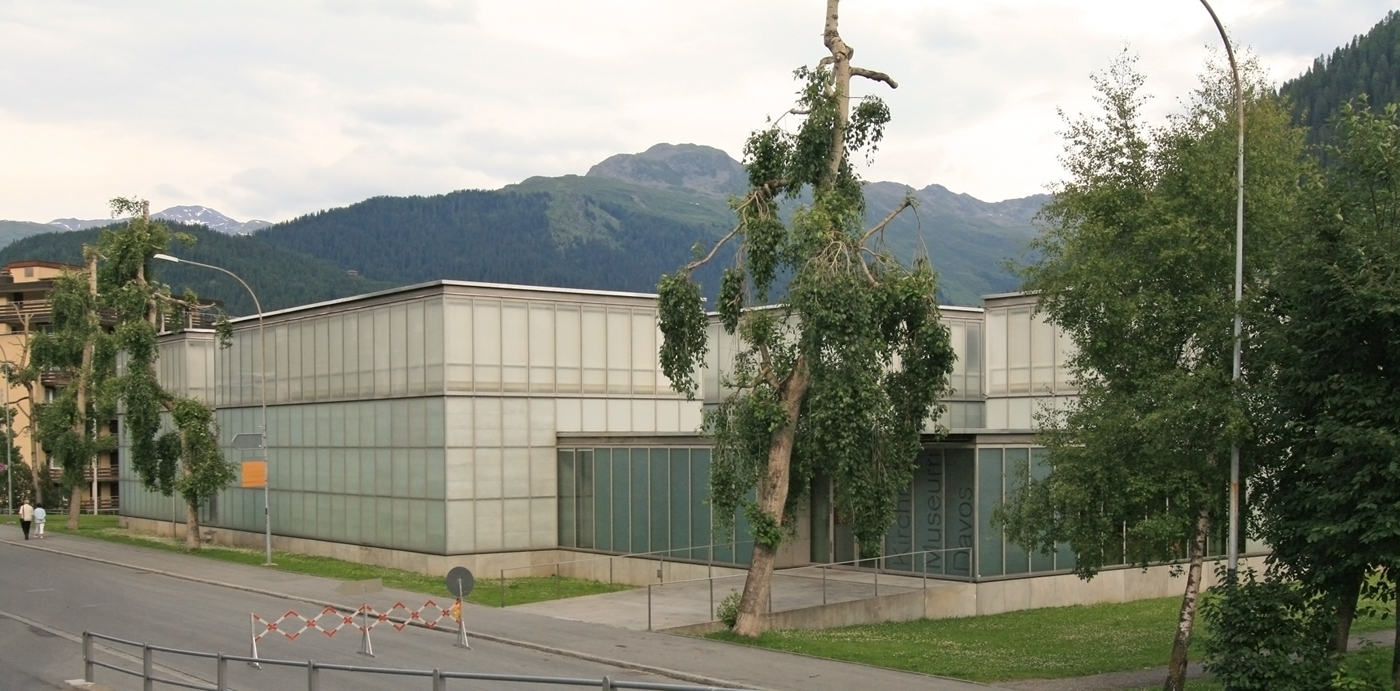
The Kirchner Museum in Davos is a quiet place where art, history, and the Alpine landscape come together in an unassuming way. It’s dedicated to Ernst Ludwig Kirchner, one of the most striking figures of German Expressionism, who spent the last two decades of his life in these mountains. The building itself is a thoughtful piece of architecture—glass and wood blending into the slopes as if it grew from the earth rather than being built upon it. There’s no grandeur here, just an understated elegance that lets the art take center stage.
Kirchner arrived in Davos in 1917, seeking refuge from the psychological toll of World War I and his own fragile health. What he found wasn’t just a retreat but a transformation. The Swiss Alps became both his sanctuary and his muse. His later works, filled with jagged lines and bold, clashing colors, capture the raw energy of the mountains, the forests, and the people who lived among them. The museum holds the largest collection of these pieces, offering a clear view of how the landscape reshaped his art. Where his earlier paintings were crowded with urban anxiety, his Davos period feels almost mythic—a return to something primal.
The museum doesn’t just display paintings. Alongside them are sketches, prints, sculptures, and personal items—letters, photographs, everyday objects—that make Kirchner feel present, as if he’d just stepped out of his studio. One of the most compelling parts of the collection is the reconstruction of his workspace. It’s a rare glimpse into how he worked: the materials he used, the light he painted in, the way he arranged his tools. Seeing it in person makes his process feel tangible, almost alive.
The museum sits in the Wildbad district, on the edge of Davos, where old spa villas once stood. The building, designed by architects Gernot and Nikolaus Kuhn, was completed in 1992 and has since become a subtle but essential part of the town’s identity. Its minimalist design doesn’t compete with the art; instead, it frames it. Large windows open onto the mountains, and sometimes the view outside feels like another Kirchner painting—only real. Inside, the space is open and unhurried, letting visitors wander at their own pace.
For Kirchner, Davos wasn’t just a place to live—it was part of his artistic world. He painted the local farmers, shepherds, and rural scenes, but always through his own lens. There’s no romanticizing in his work; instead, there’s a raw honesty, an attempt to capture the essence of mountain life. The museum shows how deeply he engaged with this place, how it shaped him, and how, in turn, he shaped the way others see Davos. Today, the town is known for more than just skiing or economic forums—it’s also a place tied to art.
Visiting the museum isn’t just about understanding Kirchner’s work; it’s about seeing how a place can change a person. The Alps weren’t just a backdrop for him—they were a catalyst. Here, he found peace, but his art didn’t stagnate. His style kept evolving, becoming more distinct. The museum doesn’t spell this out, but it lets you feel the connection between the artist and the landscape. His paintings seem to carry the crisp Alpine air, and even if you’re not familiar with his work, they make you pause.
The museum also hosts temporary exhibitions, sometimes featuring other artists linked to Expressionism or the Alpine theme. This keeps the space dynamic, ensuring that art doesn’t feel frozen in time. Occasionally, there are lectures or discussions, but more often, it’s a quiet place where people come to look, think, and linger. There are no crowds here, just those who are genuinely drawn to the work.
If you find yourself in Davos, the Kirchner Museum is worth a visit—not just for the art, but for the way it shifts your perception of the town. Known for its ski slopes and high-profile conferences, Davos takes on a different meaning here. Kirchner didn’t just live in these mountains; he made them part of his legacy. The museum isn’t just a tribute to his memory—it’s a way to experience what endures after an artist is gone: their vision, their passion, their world.