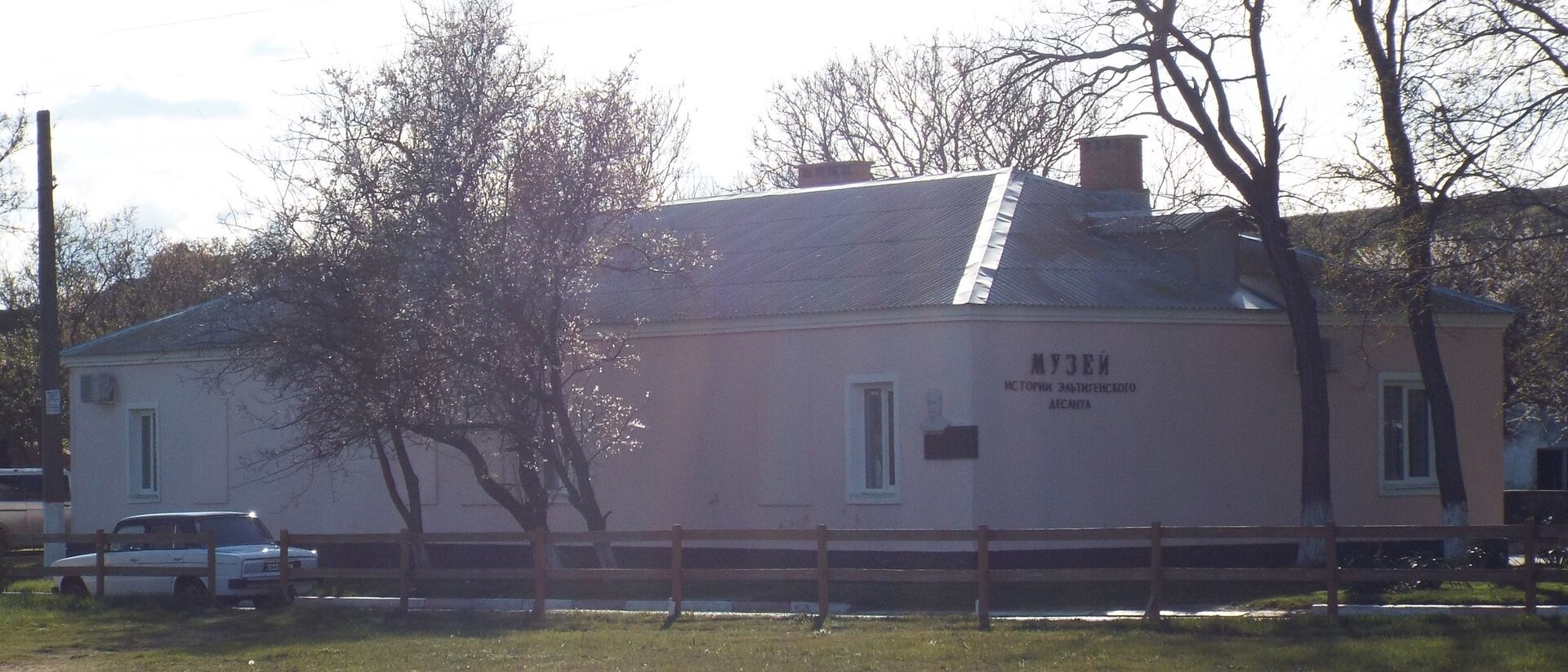
The Kerch-Eltigen Landing Museum stands where history and memory intersect, a quiet but powerful reminder of one of the most harrowing chapters of World War II. Located in Kerch, a city layered with centuries of human struggle, the museum preserves the story of a desperate Soviet operation that unfolded along the shores of the Kerch Strait in November 1943. The landing at Eltigen—now known as Heroivske—and Kerch was an attempt to break through German defenses and liberate Crimea. What followed was a brutal month-long battle, fought against overwhelming odds. Soldiers faced relentless enemy fire, dwindling supplies, and the unforgiving Crimean winter. Though the operation ultimately failed to achieve all its objectives, the defenders held their ground long enough to divert critical German forces, easing pressure on other parts of the Soviet front. The cost was staggering, with thousands of lives lost in the struggle.
Opened in 1985, on the eve of the 40th anniversary of Victory Day, the museum occupies a building that is itself a piece of history. The former House of Culture in Eltigen was constructed in the postwar years, its simple, functional architecture typical of the era. Inside, the space is dedicated to one purpose: honoring the courage and sacrifice of the landing force. The exhibits are arranged not just to display artifacts but to immerse visitors in the reality of those days. Documents, photographs, and personal belongings of the soldiers create a tangible connection to the past, while maps of the battle trace the operation’s grim progression. The most moving elements are the firsthand accounts—letters from the front, diaries, and testimonies from survivors and locals who witnessed the fighting. These voices bring the exhibits to life, reminding visitors that behind every object lies a human story.
Among the most poignant displays are the items recovered long after the war ended. Some were unearthed during excavations, others found by chance in the years that followed. A rusted helmet, a soldier’s notebook, a tattered uniform—each tells a fragment of the larger story. One exhibit features a collection of medals posthumously awarded to fallen soldiers, their names inscribed on plaques alongside brief biographies. Many of these men were barely out of their teens, yet they fought with a determination that defies comprehension. The museum also highlights individual acts of heroism, like that of Nikolai Salakhov, a battalion commander who organized the defense under heavy fire before being killed in action, or Maria Baida, a medic who carried dozens of wounded soldiers to safety before succumbing to exhaustion. Their stories are not just historical footnotes; they are testaments to the resilience of ordinary people thrust into extraordinary circumstances.
Beyond the museum’s walls, the surrounding area serves as an open-air memorial. A towering stele depicts a soldier against a backdrop of battle maps, while nearby lie the graves of those who never returned. Some are marked with names, others remain unknown, their identities lost to time. Every year on the anniversary of the landing, ceremonies are held here—wreaths are laid, speeches are given, and veterans, if any remain, share their memories. Descendants of the fallen sometimes travel from across the country to pay their respects, ensuring that the legacy of the operation endures.
The Kerch-Eltigen landing is often described as one of the war’s most tragic episodes in Crimea. Though it did not achieve its strategic goals, its impact was profound. The defenders’ stubborn resistance forced the Germans to commit resources they could not afford to lose, weakening their position in the region. The operation became a symbol of Soviet tenacity, a reminder that even in defeat, there can be defiance. The museum plays a crucial role in preserving this memory, not just as a repository of facts but as a place where visitors can reflect on the true cost of war.
Walking through the exhibits, there is no glorification of battle, only a stark portrayal of its realities. The photographs show exhausted faces, the letters speak of fear and longing, and the weapons bear the scars of combat. In one small room, recordings of veterans’ testimonies play in the background. Their voices, sometimes unsteady with emotion, transport listeners to the chaos of those November days. It is impossible to leave without a sense of the weight of what happened here—the sheer scale of loss and the quiet heroism of those who endured.
Kerch itself is a city where history is written in layers. Ancient Greek ruins stand near medieval fortresses, and Soviet monuments share the landscape with more recent memorials. Yet it is the sites tied to World War II that carry the most emotional resonance. The Kerch-Eltigen Landing Museum is one such place, where the past feels immediate, where the sacrifices of 1943 are not just remembered but felt. It is a space for contemplation, a reminder that history is not just something we read about but something that shapes the present. The stories preserved here are not just about war; they are about the people who lived through it, and the legacy they left behind.