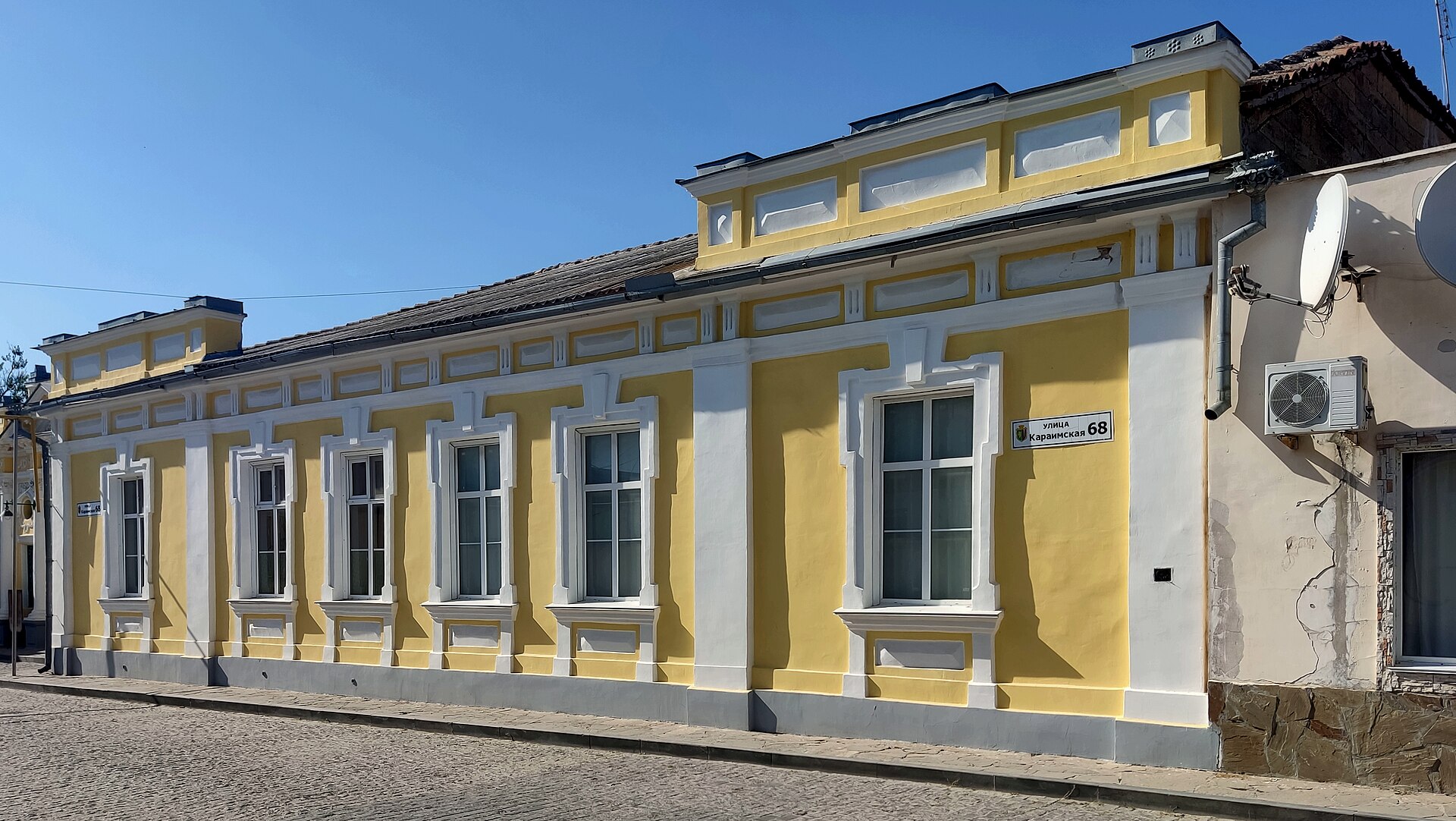
The Karaite Museum of History and Ethnography in Yevpatoria is one of those rare places where time seems to pause, allowing you to step into a world that feels both distant and intimately familiar. Tucked away in the old Karaite quarter, the museum sits among narrow streets lined with low, tiled-roof houses that have witnessed centuries of quiet, everyday life. The Karaites, a small but distinct community with roots in a unique branch of Judaism, have called Crimea home since the Middle Ages, and Yevpatoria has long been one of their cultural strongholds. Here, away from the bustle of tourist hotspots, you can trace the threads of a history deeply woven into the fabric of the peninsula itself.
The museum building is a piece of that history. Constructed in the late 19th century as a private home for a Karaite family, its architecture reflects the era’s understated elegance—thick stone walls, high ceilings, and intricately carved wooden doors and shutters. Inside, the space retains the warmth of a lived-in home rather than the sterility of a typical museum. Heavy furniture, faded photographs, and everyday objects tell stories of Karaite life in a way that documents never could. There’s no grandiosity here, just the quiet presence of a past that feels remarkably close, as if the family who once lived here might return at any moment.
The exhibits go beyond ethnography, delving into the broader history of the Karaite community in Crimea. Glass cases display rare books in Hebrew and Karaim, religious texts, and manuscripts passed down through generations. Some of the most striking pieces are tied to traditional crafts—embroidery, carpet weaving, and the making of national dress. The Karaites were known for their skill, and the items on display still impress with their precision and attention to detail, a testament to a way of life where craftsmanship was both necessity and art.
A separate hall is dedicated to the community’s religious life. Here, you’ll find prayer books, lamps, and ritual objects that offer a glimpse into Karaite spirituality. Unlike rabbinic Judaism, Karaite belief is based solely on the written Torah, without oral interpretations. This distinction shaped everything from the architecture of their houses of worship, called kenassas, to family traditions. The museum explains how religious holidays were observed, how rites of passage like births and weddings were celebrated, and even how the community approached death and mourning. It’s a rare opportunity to understand a faith that, while rooted in Judaism, developed along its own distinct path.
The museum also honors the individuals who shaped Karaite history in Crimea. Among them are scholars, poets, and public figures whose contributions left a lasting mark. One of the most prominent is Sergei Kushul, the museum’s namesake, who was not only a collector of Karaite artifacts but also a passionate advocate for preserving his people’s culture. His efforts ensured that many unique items survived when they might otherwise have been lost. The exhibits dedicated to these figures remind visitors that history isn’t just about grand events—it’s also about the people who lived, created, and fought to keep their heritage alive.
While the museum is deeply rooted in the past, it also engages with the present. Temporary exhibitions tackle contemporary issues, such as the struggle to preserve the Karaim language, which is now on the brink of extinction, or the revival of traditional crafts in a modern world. Occasionally, descendants of Crimean Karaites visit from around the globe, drawn back to the land of their ancestors. These gatherings transform the museum from a static collection into a living space where stories are shared and traditions are passed down. It’s a reminder that history isn’t just something to observe—it’s something to participate in.
Visiting the museum also offers a deeper understanding of Yevpatoria itself. The city has always been a mosaic of cultures, and the Karaites, alongside Greeks, Armenians, Crimean Tatars, and Russians, played a key role in shaping its character. Their neighborhoods, kenassas, and market stalls helped create the city’s unique atmosphere, setting it apart from other Crimean resorts. Today, as Yevpatoria regains its popularity as a destination, the museum serves as a quiet counterpoint to the sun and sand, a place where visitors can reflect on the layers of history beneath the surface.
A walk through the museum isn’t just a tour—it’s an immersion. There are no crowds here, no rush to snap the perfect photo for social media. Instead, there’s a hush, broken only by the rustle of an old book’s pages or the creak of floorboards underfoot. It’s a place for those who want to do more than see history—they want to feel it. To understand how people lived, how their lives intertwined with the land, and how their stories continue to echo in the present. And when you leave, you might just carry with you the sense that the past isn’t as distant as it seems. It’s still here, waiting to be discovered.