Gdańsk has long been known as the world’s amber capital, and it’s easy to see why. The Baltic Sea washes golden fragments of fossilized resin onto its shores, a natural gift that has shaped the city’s identity for centuries. The Amber Museum, tucked away in the heart of the Old Town, is more than just a collection of artifacts—it’s a journey through time, tracing the story of a material that has fascinated people for millennia. The building itself is a piece of history, once serving as a prison and part of the Great Armory in the 17th century. Its thick brick walls and vaulted ceilings whisper of Gdańsk’s golden age, when it was one of Europe’s wealthiest trading hubs and amber was its most prized commodity.
The exhibition begins with the geological origins of amber, revealing it not just as a gemstone but as a window into ancient worlds. Display cases hold pieces of resin with insects, leaves, and even water droplets trapped inside—tiny time capsules preserving ecosystems from forty million years ago. The museum walks visitors through the life cycle of amber: how it formed in prehistoric forests, how it was discovered along the coast, and how it was transformed from rough lumps into delicate jewelry. Tools of the trade—chisels, saws, and grinding stones—are on display, alongside a reconstructed 18th-century amber workshop, where everything looks as if the craftsman just stepped away for a moment.
Gdańsk has always been at the center of the amber trade, and the museum delves deep into this legacy. In the Middle Ages, the city controlled the Baltic amber market, and its guilds of artisans were renowned across Europe. Amber wasn’t just a material for adornment; it was a medicine, a talisman, a symbol of luxury. The collection spans centuries, from simple beads and amulets to intricate pieces commissioned by royalty. The craftsmanship of the 19th and 20th centuries is particularly striking, showcasing the heights of Gdańsk’s amber artistry. Modern works are also on display, proving that the tradition is very much alive today.
One of the museum’s most captivating sections is its collection of inclusions—pieces of amber with ancient organisms preserved inside. Ants, spiders, and mosquitoes, frozen in resin millions of years ago, seem almost lifelike. The museum doesn’t just showcase these wonders; it explains their scientific significance, as they offer invaluable insights into prehistoric ecosystems. Nearby, contemporary artists interpret the theme through sculptures, paintings, and installations, turning amber into a medium for modern expression.
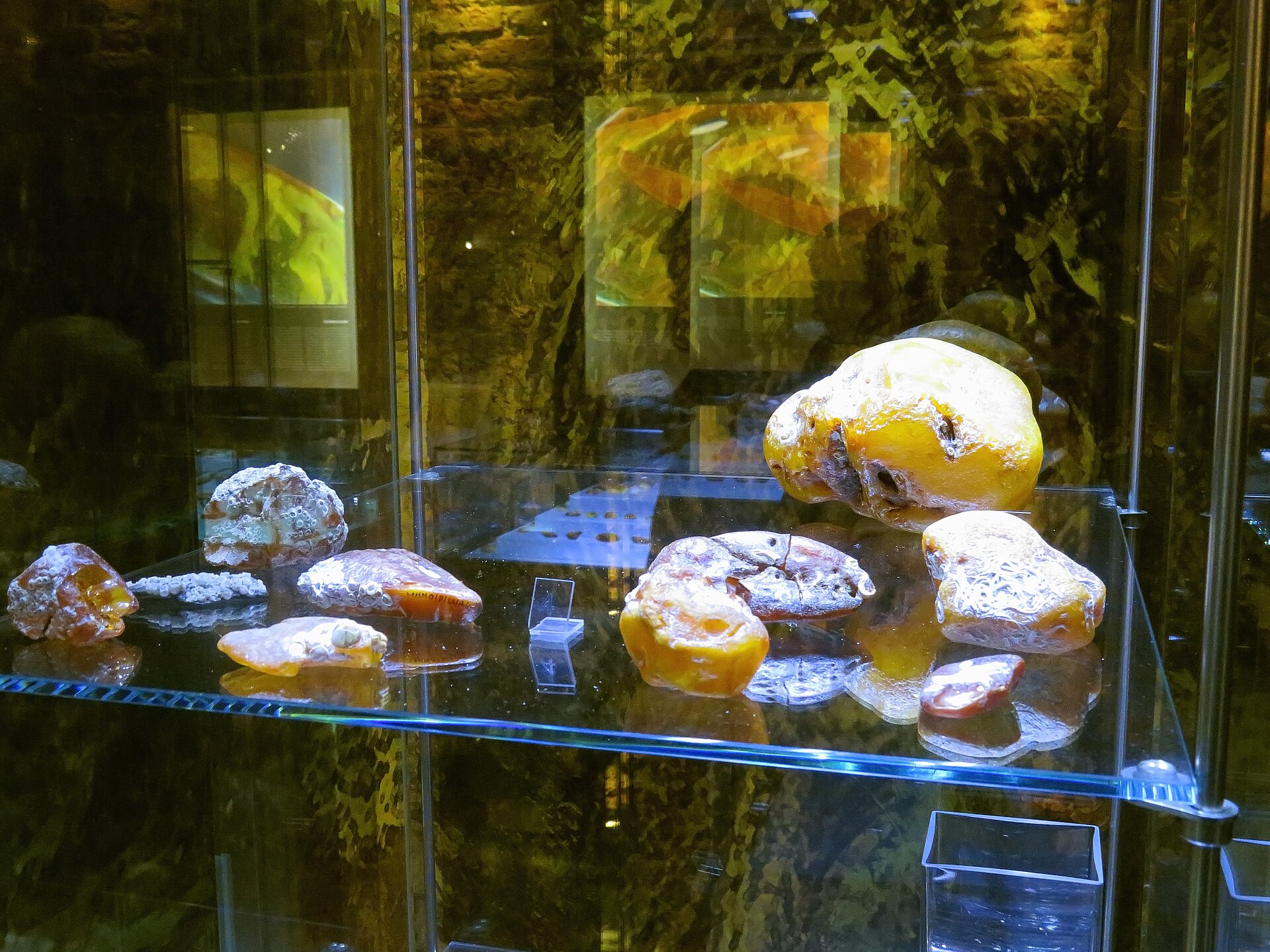
A dedicated hall explores the history of the Amber Road, the ancient trade routes that carried Baltic amber to the Mediterranean and beyond. Visitors learn how Roman soldiers prized the stone, how it was used in Byzantium, and how it became a status symbol. The museum doesn’t just display finished pieces; it also shows raw amber in its natural state—massive, unpolished chunks that once washed ashore or were dredged from the sea. Comparing Baltic amber to varieties from the Dominican Republic or Sicily reveals how each region’s stone has its own hue, clarity, and story.
The museum makes the experience engaging for all ages with interactive elements. Children and adults alike can try their hand at polishing a piece of amber, examining it under a microscope, or learning how to spot a fake. A small laboratory demonstrates simple experiments—how amber becomes electrically charged when rubbed, how it burns, and why it’s called the "sun stone." These hands-on moments turn the visit into something more than a history lesson; they make the story of amber feel tangible and alive.
Today, Gdańsk remains a hub for amber craftsmanship, and the museum plays a key role in keeping the tradition vibrant. It hosts exhibitions by modern artisans, workshops, and lectures, ensuring that the art form continues to evolve. The gift shop offers pieces by local jewelers, from simple pendants to elaborate designs combining amber with silver, wood, or other stones. But the museum’s greatest gift is perspective—it helps visitors understand why amber is so deeply woven into the city’s fabric. It’s not just a stone; it’s part of Gdańsk’s history, culture, and economy. Walk through the city’s streets, and you’ll see amber everywhere—in shop windows, café decor, and souvenir stands. The museum reveals the rich, enduring story behind that familiar glow.