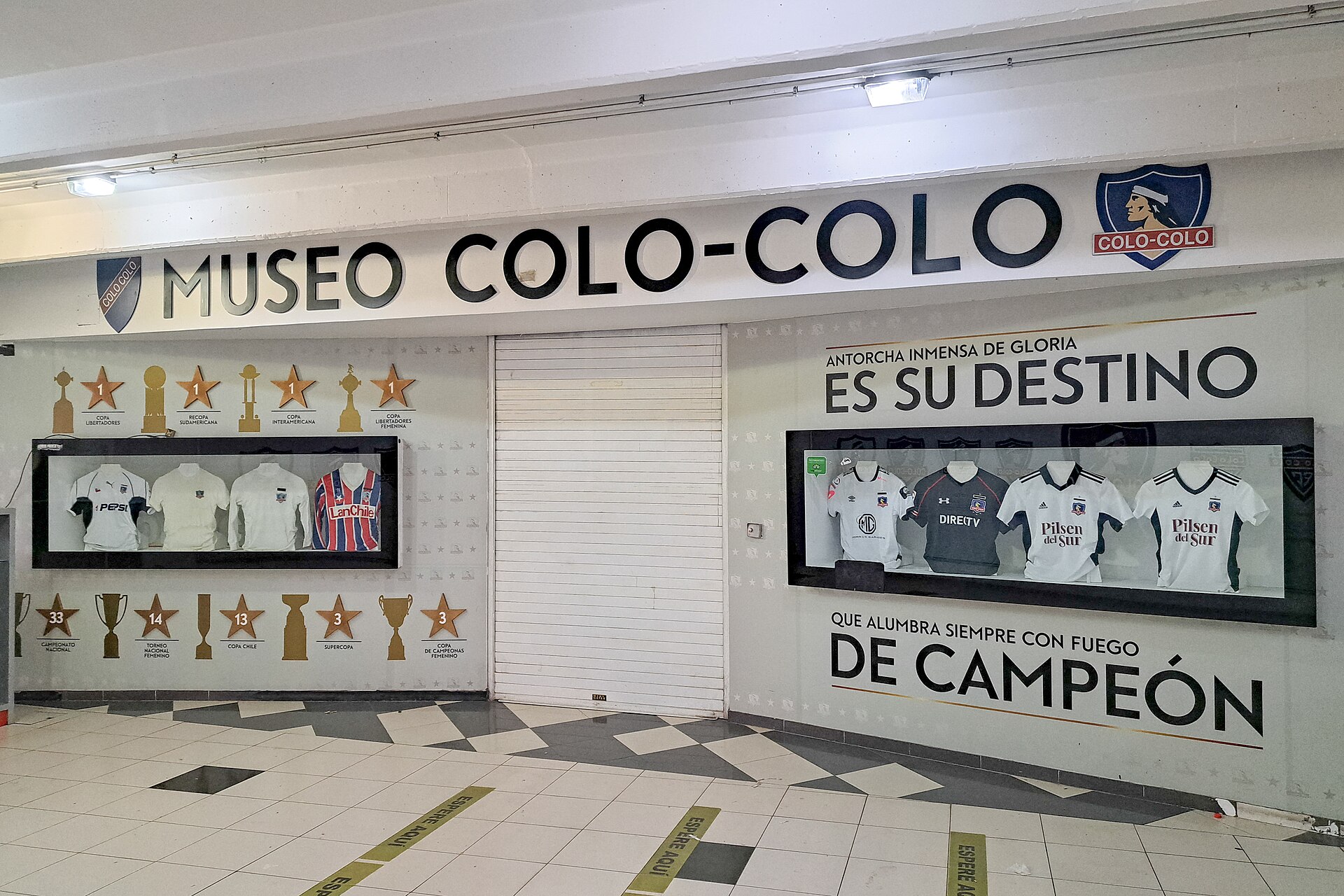
The Museo Colo-Colo isn’t just a collection of trophies and match statistics—it’s a place where the heartbeat of Chilean football still echoes through the decades. Tucked inside Santiago’s Estadio Monumental, this museum tells the story of one of Chile’s most beloved and successful clubs, a team whose name has become synonymous with passion, resilience, and national pride. Unlike sterile sports museums that reduce history to cold facts, here every exhibit feels personal. A faded jersey worn by a long-retired legend, a yellowed ticket stub from a legendary match, even the scuffed boots of a player who once defined an era—each piece carries the weight of memory, reminding visitors how football in Chile grew from a simple game into something far deeper.
Colo-Colo was born in 1925 from the ambition of a group of young men who wanted to challenge the established clubs of Santiago. They named their team after a Mapuche leader, a nod to Chile’s indigenous roots and a symbol of defiance and identity. From the beginning, the club was more than just a sports team—it was a movement that cut across social classes, bringing together factory workers, students, and professionals under the same banner. The museum preserves fragments of that early spirit: grainy photographs of the first matches, handwritten registration documents, and personal items belonging to the founders. These artifacts don’t just document victories; they tell a story of struggle, of a club that had to fight for its place in Chilean football from the very start.
The museum itself is unassuming, blending seamlessly into the stadium complex named after David Arellano, one of the club’s founders who died tragically on the pitch in 1927. Estadio Monumental is a landmark in its own right, a modern arena that can hold over forty thousand fans and has hosted some of the most electric nights in South American football. The museum occupies a quiet wing of the stadium, its layout guiding visitors chronologically from the club’s humble beginnings to its present-day status as a continental powerhouse. There’s no grandiosity here, just a quiet reverence for detail. Glass cases display gleaming trophies alongside interactive screens playing rare match footage, while the walls are lined with quotes from players and coaches that capture the essence of what it means to wear the black-and-white stripes.
One of the most moving sections is the Hall of Fame, where the faces of Colo-Colo’s greatest players stare back at you from framed photographs. Among them is Carlos Caszely, one of the club’s most prolific strikers, whose fiery personality and skill made him a fan favorite. Then there’s Marcelo Barticciotto, the Argentine forward who became a legend in the 1990s, leading the team to its greatest triumph: the 1991 Copa Libertadores, the first and only time a Chilean club has won South America’s most prestigious tournament. That victory wasn’t just a sporting achievement—it was a moment of national euphoria, a rare occasion when the entire country seemed to unite in celebration. The museum doesn’t shy away from the darker chapters either. There are exhibits on financial crises, heartbreaking defeats, and even the occasional scandal, all serving as reminders that greatness is never guaranteed.
For fans, the museum is a pilgrimage site, a place to reconnect with the club’s legacy and feel part of something larger than themselves. You’ll often see families here, parents pointing out their childhood heroes to wide-eyed kids, or elderly men reminiscing about matches they attended decades ago. The atmosphere is warm, almost familial, with visitors swapping stories, debating the greatest players, and speculating about future glories. In those moments, it’s clear that Colo-Colo isn’t just a football club—it’s a way of life for many Chileans, and this museum is its sanctuary.
Beyond the permanent exhibits, the museum regularly hosts temporary displays that dive deeper into specific moments or themes in the club’s history. These might celebrate milestone anniversaries of major victories, spotlight individual players or coaches, or explore the intersection of football with broader culture. One past exhibition, for example, examined how Colo-Colo has been portrayed in Chilean literature and film, illustrating just how deeply the club is woven into the country’s artistic and social fabric. These rotating exhibits keep the museum dynamic, ensuring that even repeat visitors always find something new to discover.
What makes the Museo Colo-Colo special, though, is that it’s not just for football fans. It’s a place where anyone curious about Chile—its people, its history, its soul—can gain unexpected insights. Football here is more than a game; it’s a lens through which to view the nation’s evolution. The exhibits touch on how the club reflected (and sometimes resisted) the political and social upheavals of the 20th century, from the optimism of the 1960s to the turmoil of the Pinochet era. The museum doesn’t take sides, but it doesn’t ignore these connections either, showing how sport can both mirror and shape a country’s identity.
Walking through the museum, you get the sense that Colo-Colo is more than just a club—it’s a living legend, one that continues to write its story with every match. There’s no room for indifference here. Even those who don’t follow football leave with an understanding of why this team means so much to millions of Chileans. The museum doesn’t try to impress with flashy displays or over-the-top design. Instead, it succeeds precisely because of its simplicity, its honesty, and its deep respect for the club’s roots. In that way, it perfectly embodies the spirit of Colo-Colo itself—a team that has always stayed true to its origins, even as it reached the pinnacle of South American football.