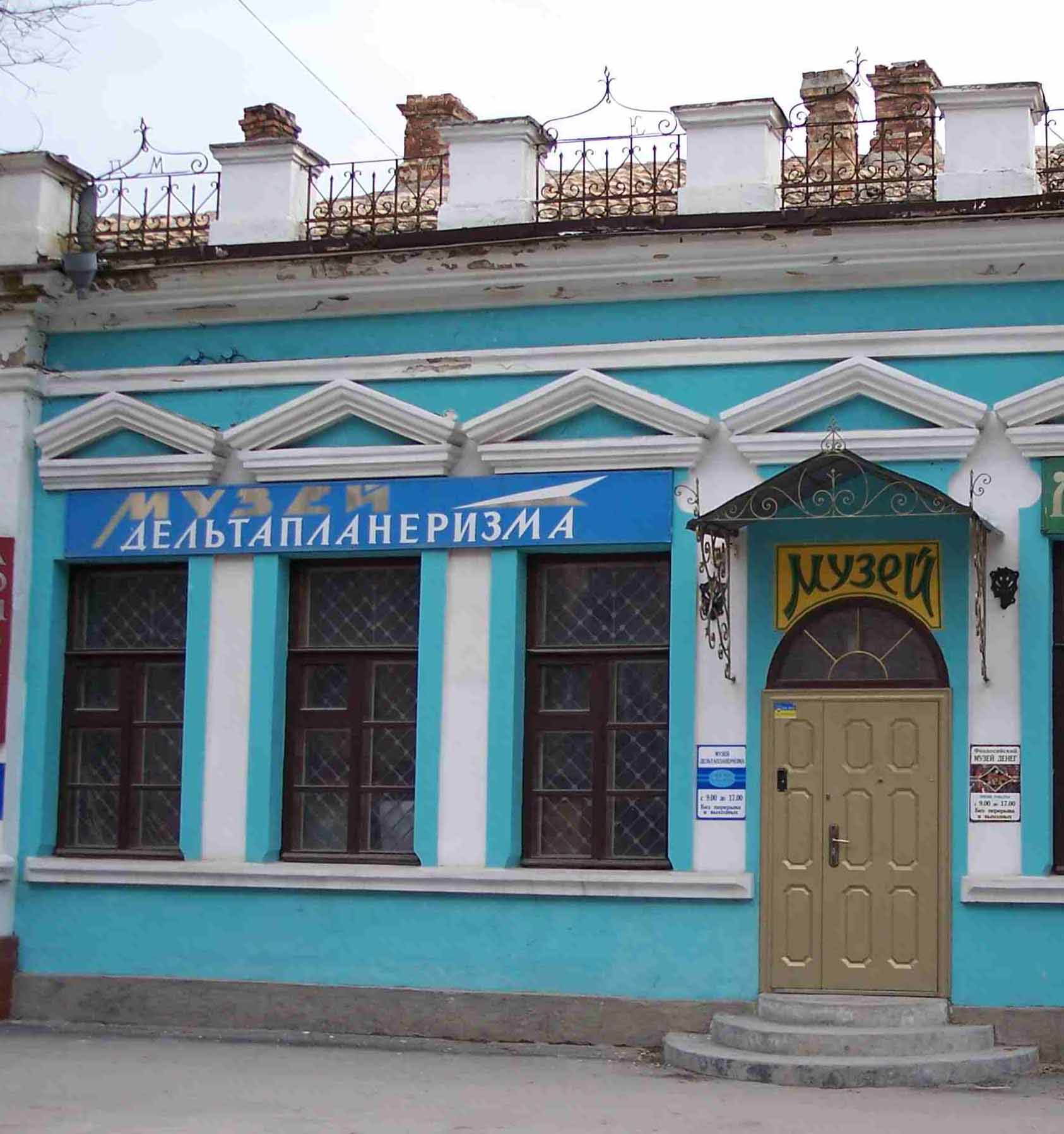
The Museum of Hang Gliding in Feodosia is one of those places where history isn’t just preserved—it’s still alive. Tucked away on a quiet street, it tells the story of people who looked at the sky and refused to accept that flight was only for birds or machines. This wasn’t about engineering perfection or record-breaking feats at first. It was about the sheer thrill of defying gravity with nothing but fabric, metal, and courage. Feodosia, with its steady winds and open skies, became the perfect stage for this quiet revolution.
The museum itself feels like stepping into a time capsule. The building is unassuming, but inside, the air hums with the energy of an era when hang gliding was less a sport and more a rebellion. The exhibits trace the evolution of these fragile machines, from the earliest homemade contraptions to the sleeker, more refined models that followed. Some look like relics from another century—wooden frames wrapped in taut fabric, held together by hope as much as bolts. Others are sturdier, with aluminum tubing and modern materials, but all of them carry the same spirit: the belief that humans could, and should, fly.
What makes the museum special isn’t just the hardware, though. It’s the people behind it. The walls are lined with photographs of the pioneers—men and women who gathered on the slopes of Mount Klementyeva in the 1970s, testing their designs, crashing, laughing, and trying again. There’s a raw, unpolished honesty to these images. No helmets, no safety harnesses, just grins and windblown hair as they launched themselves into the air. The museum doesn’t shy away from the risks, either. Some of those faces belong to people who didn’t make it back, a reminder that every breakthrough came with a cost.
The exhibits do a good job of explaining how these machines actually worked, even for those who’ve never given much thought to aerodynamics. Diagrams break down the physics of flight in simple terms, showing how wind interacts with the wing, how weight shifts control direction, and how something so seemingly simple could keep a person aloft. There are models, too, demonstrating the principles in action. It’s easy to get lost in the details, tracing the progression from wooden frames to carbon fiber, from basic control systems to the sophisticated designs of today.
Feodosia has always been a place where creativity thrives, and hang gliding became part of that legacy. The museum captures how the sport intersected with the town’s artistic and intellectual life. Poets, painters, and scientists mingled with pilots, all drawn to the same sky. The annual hang gliding festivals in Koktebel weren’t just competitions—they were gatherings of kindred spirits, where the line between sport and art blurred. Some of the photographs show pilots standing beside canvases inspired by their flights, or reading poetry under the same winds that carried them.
Today, the museum is still a hub for enthusiasts. Veterans of the sport come to share stories, newcomers attend lectures, and occasionally, there are workshops where you can learn to assemble or repair a glider. The staff don’t just guard the exhibits—they’re part of the story, happy to pull out rare pieces and let visitors handle them. It’s not uncommon to overhear conversations about wind patterns, or to see someone tracing their fingers over the fabric of a vintage wing, as if trying to absorb its history.
For most visitors, the museum is an unexpected discovery. Feodosia is known for its beaches and the Genoese Fortress, its layers of history stretching back centuries. But this place offers something different: a story about the future as much as the past. It’s about the moment when someone looked up and decided that the sky wasn’t a limit, but an invitation. And in a way, that’s what Feodosia has always been—a place where people come to push boundaries, whether on canvas, in verse, or in flight.
If you find yourself in Feodosia, it’s worth a visit. You might leave with a new appreciation for the people who refused to stay grounded. Or, if you’re lucky, you might just catch the same spark that made them take to the air in the first place.