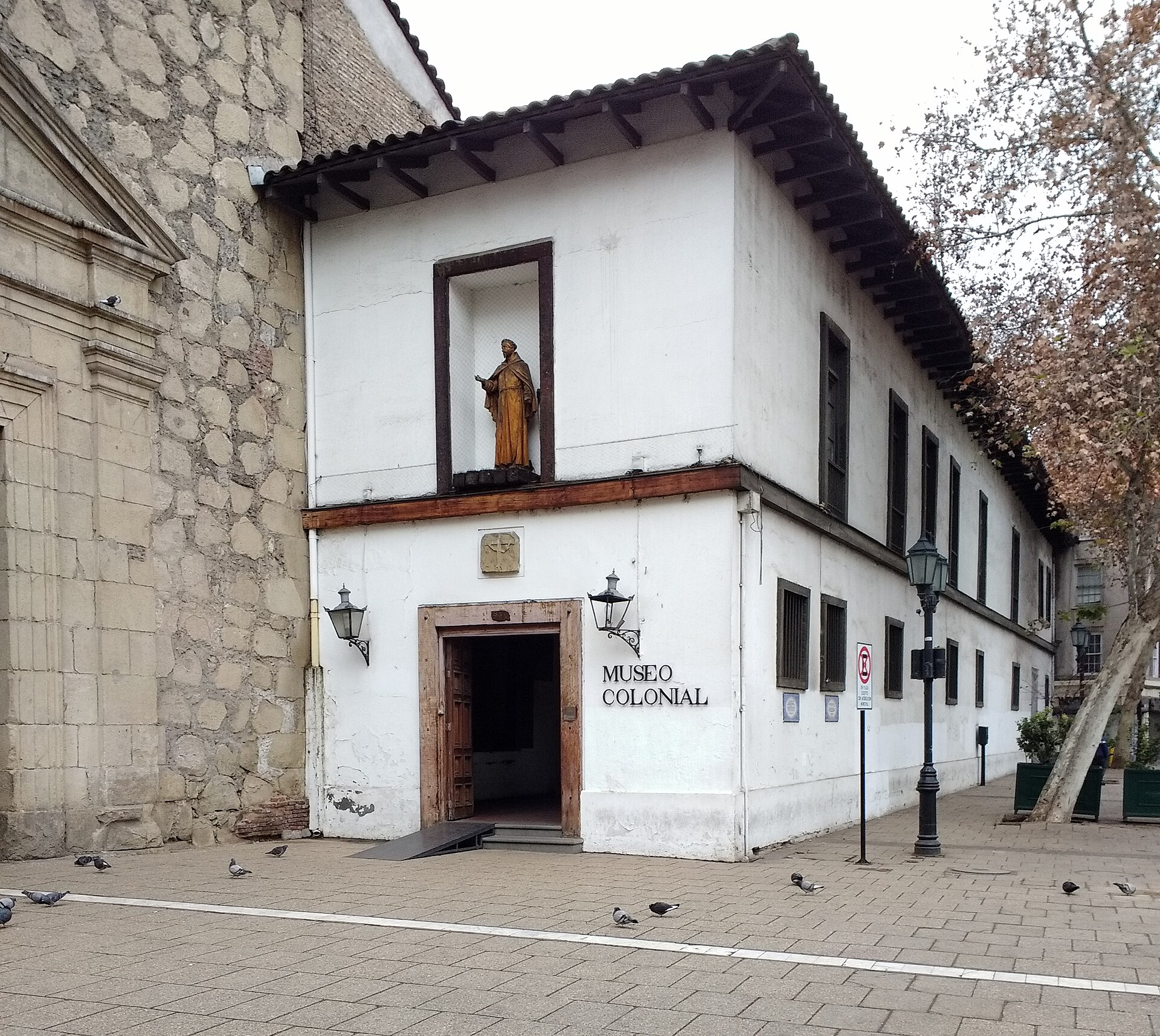
The Museo Colonial in Santiago is one of those rare places that doesn’t just show you history—it lets you step into it. Tucked away in the heart of the city, the museum occupies a building that has witnessed centuries of change. Constructed in the 18th century, it was once the home of a wealthy family with ties to Chile’s colonial administration. The thick adobe walls, heavy wooden beams, and sunlit courtyards with their quiet fountains all carry the weight of time. Even without its exhibits, the building itself would be worth a visit, a silent witness to the lives that unfolded within its rooms.
The museum’s collection spans over two hundred years, from the mid-16th to the early 19th century, offering a glimpse into the art and daily life of Chile under Spanish rule. The pieces on display go beyond mere decoration; they tell stories of a society shaped by faith, power, and cultural exchange. Religious paintings by local artists, influenced by European styles, hang alongside intricately carved wooden altars and delicate ceramic works. Bronze candelabras and mahogany furniture speak of wealth, while paintings of saints and biblical scenes reveal how deeply religion was woven into both spiritual and social life.
What makes the museum’s collection particularly fascinating is how it reflects the blending of cultures. The Spanish brought their traditions, but in this new land, those traditions inevitably mixed with indigenous customs. The result was something distinct—a style where Christian motifs coexisted with pre-Columbian symbols, and European techniques adapted to local materials and tastes. Some altars feature patterns reminiscent of ancient Andean designs, while ceramics bear shapes that would have been familiar to indigenous communities. These objects aren’t just relics; they’re evidence of a society in transition, where old and new worlds collided.
Beyond art, the museum also offers a look at the everyday lives of colonial Santiago’s inhabitants. One room recreates the interior of a wealthy household, complete with heavy drapes, wrought-iron chests, silver cutlery, and fine porcelain. Nearby, simpler items—clay pots, wooden spoons, rough-spun fabrics—paint a starkly different picture of life for the city’s poorer residents. The contrast is striking, a reminder of the rigid social hierarchies that defined the era. It’s easy to imagine the clatter of silver on porcelain in one room while, just beyond the walls, others made do with far less.
The museum’s library holds another layer of history, with rare books and documents from the colonial period. Handwritten letters, legal records, and religious texts offer glimpses into moments that might otherwise be forgotten—rebellions against Spanish rule, the struggles of the first mestizo generations, or the quiet resistance of indigenous communities. While access to the library is restricted, occasional exhibitions bring some of these fragile pages to light, allowing visitors to connect with the voices of the past.
The building itself is a testament to colonial architecture. Its design follows the patterns common across Latin America at the time: inner courtyards, second-floor galleries, and sturdy iron-studded doors. These courtyards weren’t just practical—they were the heart of the home, providing light, air, and a space for gatherings. Today, they’re dotted with sculptures and fragments of old fountains, offering a quiet place to sit and imagine the conversations that once filled the air. The architecture isn’t just a backdrop; it’s part of the story, a physical reminder of how people lived.
What sets the Museo Colonial apart is its refusal to romanticize the past. It doesn’t just celebrate the beauty of colonial art or the grandeur of elite life; it also confronts the darker aspects of the era—exploitation, inequality, and violence. The museum doesn’t shy away from showing how power was wielded, how wealth was built on the backs of others, or how indigenous cultures were suppressed. In doing so, it becomes more than a collection of objects; it’s a space for reflection, a place where visitors can grapple with the complexities of history.
A visit here can take as little as an hour or stretch into the afternoon, depending on how deeply you want to explore. For those with a keen interest in history, there’s plenty to absorb, but even casual visitors will find something to hold their attention. The key is to take your time—lingering over the details, letting the objects speak. Afterward, the small café on the grounds offers a chance to sit and process what you’ve seen, to let the quiet of the courtyards linger before stepping back into the rhythm of modern Santiago.
The museum doesn’t just preserve the past; it invites you to engage with it. Walking through its rooms, it’s easy to forget the city outside, to lose yourself in the textures and colors of another time. And when you finally leave, you carry with you not just memories of what you’ve seen, but a deeper understanding of how the present was shaped by what came before.