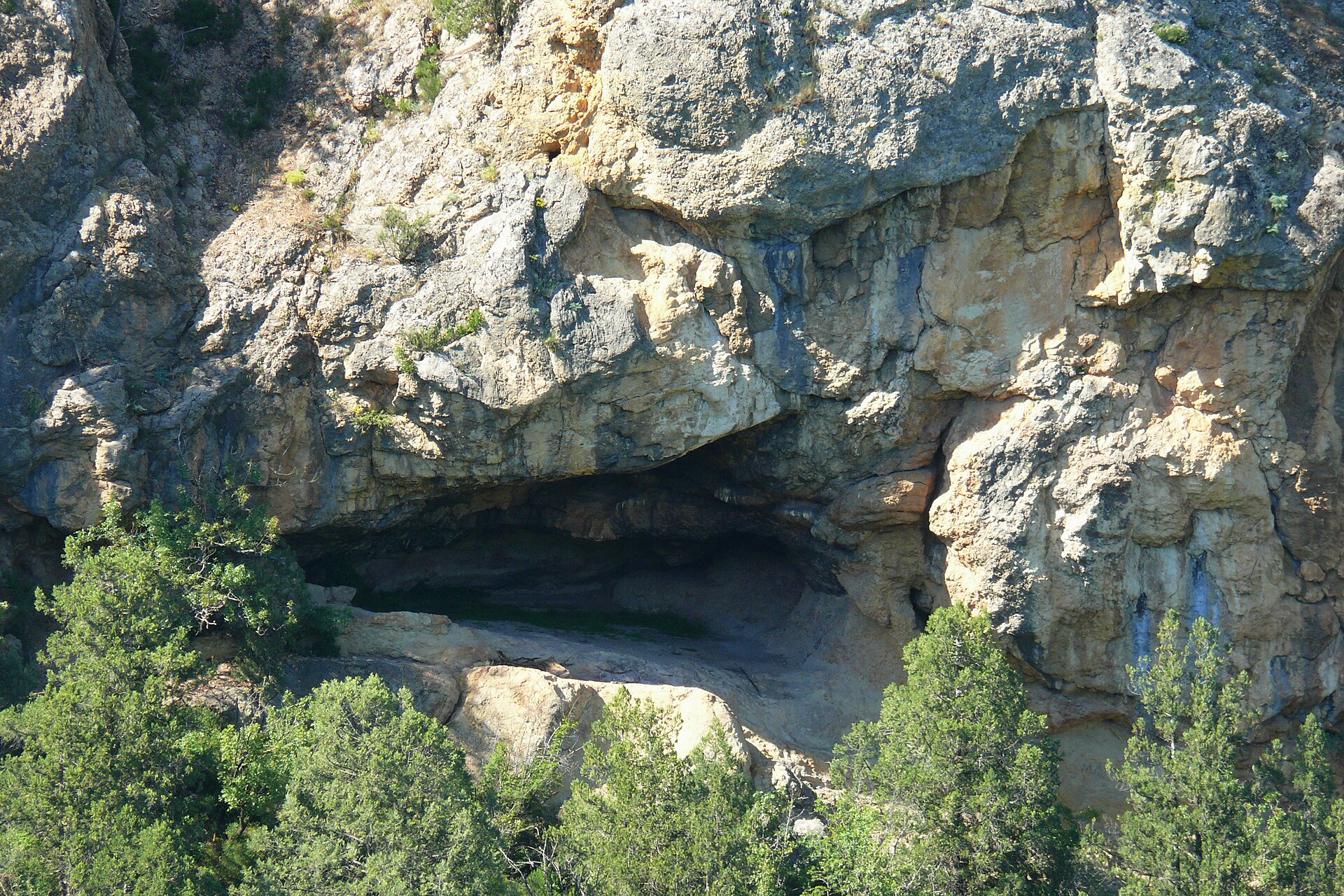
Perched in the rocky hills outside Sevastopol, Murzak-Koba is a quiet place where history lingers. It’s not a crowded tourist spot or a site with guided tours. Instead, it offers a connection to Crimea’s distant past, when the peninsula was home to some of Europe’s earliest human settlements. The cave is unassuming—a shallow grotto in the limestone—but its significance lies in what it has preserved for thousands of years.
The entrance is easy to miss. A narrow path winds down from the ridge, disappearing between boulders before opening into a small depression. Inside, the space is modest, more like a sheltered overhang than a cavern. Yet this was enough for the people who lived here nearly ten thousand years ago, during the Mesolithic era.
Archaeologists have found flint tools, animal bones, and ancient hearths on the cave floor. These fragments show how communities adapted to a landscape that was once very different. The Black Sea was closer then, and the hills were covered in forests, not the sparse vegetation you see today.
Murzak-Koba holds evidence of early human rituals. Burial sites were uncovered here, along with bone tools and ornaments. Some of these objects, now in museums, show signs of carving. They suggest a culture that valued symbolism and craftsmanship. Standing inside the cave, you’re in the same space where these items were once used.
The cave was discovered in the mid-20th century. Soviet researchers recognized its importance, and excavations revealed layers of undisturbed history. Today, it remains a site of scientific interest. There are no signs, no fences, and no paths—just the raw landscape and the quiet persistence of the past.
This lack of development is part of its appeal. But it also means you need to tread carefully. The cave’s fragile deposits can be damaged by careless footsteps, and the terrain is rough.
The hills around Murzak-Koba are rugged and windswept. From certain points, you can see the Black Sea in the distance. The landscape feels timeless, much as it did to the Mesolithic hunters who once roamed here. You might encounter shepherds or hikers, but mostly, the place is undisturbed. There are no cafes or souvenir stands—just the wind and the cry of birds overhead.
Murzak-Koba offers a different experience than the usual Crimean itinerary. There are no palaces or fortresses here. Instead, there’s a sense of intimacy with the past. The cave doesn’t demand attention; it waits quietly, letting you discover its secrets on your own terms.
If you visit, come prepared. The path is steep in places, and rocks can be slippery after rain. A flashlight helps explore the interior, though natural light reaches most of it. Sturdy shoes and water are essential. There are no restrooms or vendors nearby, so plan ahead. The best time to visit is during cooler months, when the heat is less intense.
Murzak-Koba isn’t for everyone. If you prefer grand monuments and exhibits, this might not be the place. But if you want to stand where ancient people once stood, to touch the same stone they touched, it’s worth the effort. The cave doesn’t offer dramatic revelations—just a quiet space to reflect on time’s passage. In a region shaped by recent conflicts, Murzak-Koba reminds us that Crimea’s story began long before those events, in a time when the land was wild and the sea was just another horizon.