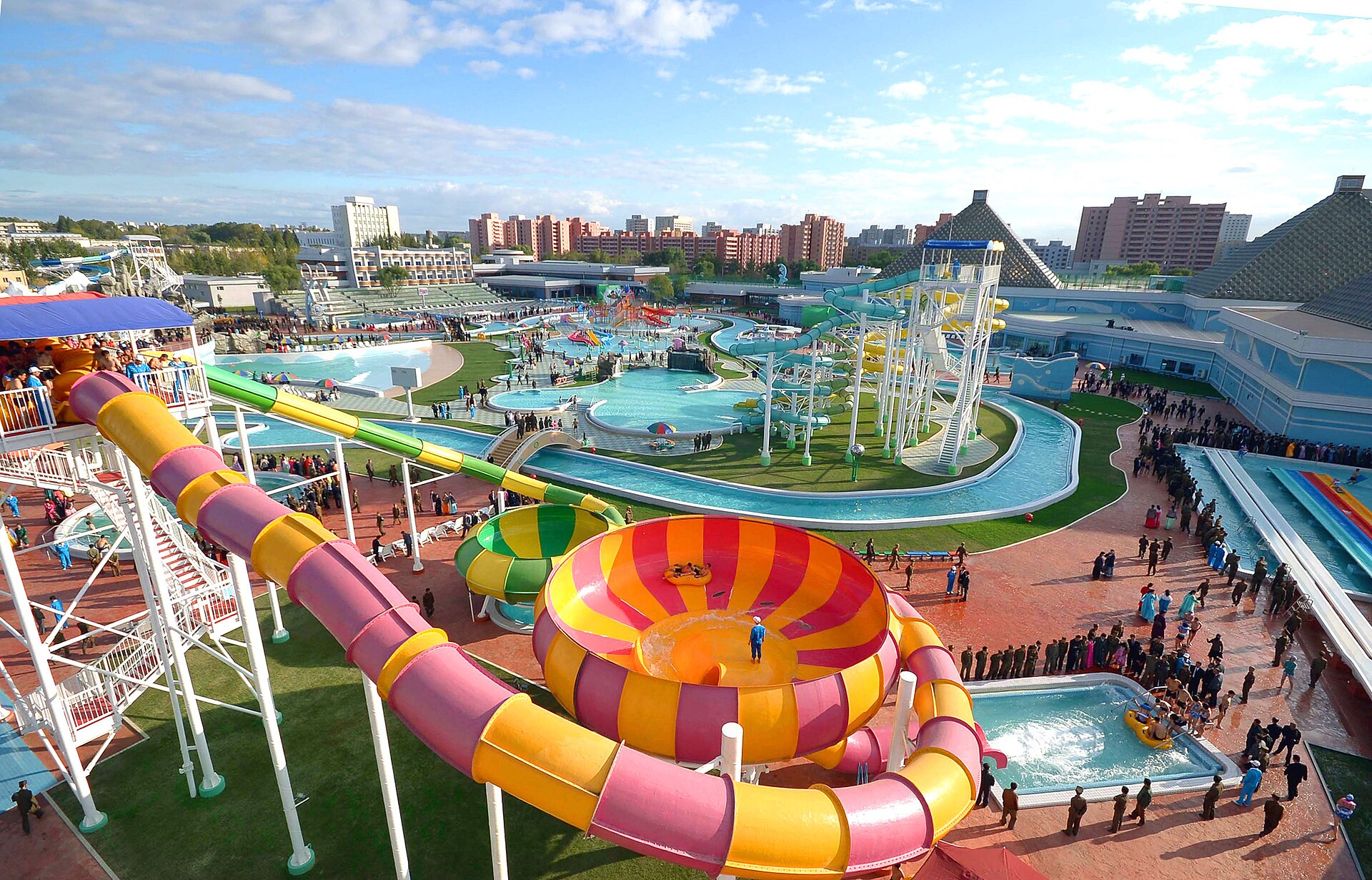
Pyongyang’s rhythm softens at Munsu Water Park. Opened in the early 2000s, it was built for leisure, but also to signal change—small, controlled, yet noticeable. In a city where public spaces follow strict routines, Munsu feels different. The usual amusement park crowds are absent. Instead, it offers relaxation and a curated standard of comfort, accessible only to a select few.
The architecture mirrors North Korea’s public buildings: grand, imposing, designed to impress. From the outside, it resembles Pyongyang’s sports palaces with sweeping lines and polished surfaces. Inside, the design shifts. Wave pools, water slides, and jacuzzis appear modern, though meticulously maintained. For locals, stepping inside must feel like crossing into another world—one where water flows freely and the air stays cool.
Munsu’s construction coincided with a period of cautious, selective openness. Similar projects emerged around the same time, luxurious by local standards but modest elsewhere. The water park was part of an effort to show that life in North Korea included more than ideology and labor. It was a place where, under the right conditions, even ordinary citizens could unwind—though access was never unrestricted.
Portraits of the country’s leaders hang on the walls. Patriotic music plays softly in the background. Yet the mood remains light. Children laugh on the slides. Adults drift in the pools. Teenagers ride artificial waves. The halls are rarely crowded, giving the space an almost surreal openness. For a few hours, visitors move more freely than they do on the streets outside.
Munsu isn’t open year-round. It operates mostly in warmer months when outdoor pools are usable. In winter, it likely closes or serves another purpose, though details are scarce. Access is tightly controlled. Foreigners enter only through guided tours. Locals need special permission. The result? No crowds, no noise, no urgency. The park feels like a private retreat.
For North Koreans, Munsu is more than a swimming spot. It’s part of the reality their government presents: modern, comfortable, but entirely under its control. No advertising, no foot traffic, no chaos. Everything is planned—operating hours, dress codes. Yet for visitors, it still offers a brief escape from daily life.
The outside world first heard of Munsu through rare reports from foreign journalists visiting Pyongyang. To them, it suggested North Korea wasn’t just about military parades and propaganda. It was a place where people sought relaxation, even within strict limits. For North Koreans, Munsu isn’t something to analyze. It’s a weekend destination—a place to swim and, for a little while, feel part of the life they’ve been promised.