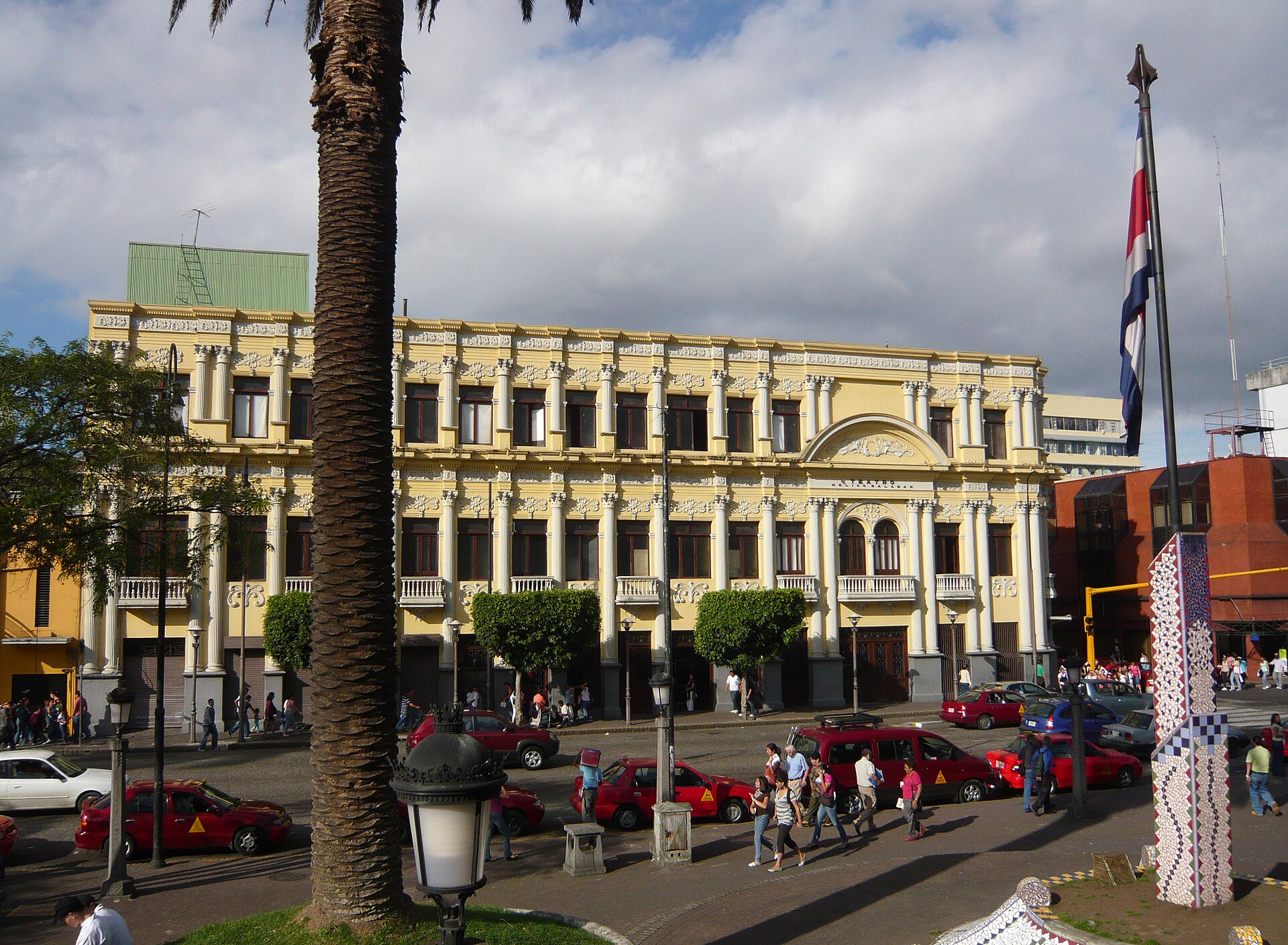
The Municipal Theater of Desamparados is one of those quiet places that doesn’t demand attention but lingers in memory long after you’ve left. Tucked away in the heart of this small Costa Rican town, it sits among modest homes and the hum of daily life, far removed from the grand opera houses of Europe or the polished cultural hubs of capital cities. There’s no gilded marble here, no towering columns—just a building that feels more like a welcoming home than a temple of art. Its charm lies in its simplicity, in the way it invites you inside not as a spectator, but as someone who belongs.
Built in the early 20th century, the theater emerged during a time when Desamparados was transforming from a sleepy settlement into a proper town. Costa Rica itself was undergoing a cultural awakening, shaking off its peripheral status to carve out its own identity. Theaters, libraries, and schools became symbols of progress, and Desamparados was no exception. For the locals—many of them farmers or craftsmen—this space was more than just a venue; it was a place to gather, to share music, stories, and ideas. The theater became a small but vital cultural hearth for the community.
From the outside, the building is unassuming: a two-story structure with pale stucco walls and large windows that let in the soft tropical light. A small awning shelters the entrance from rain, and above the door, a simple sign bears its name. Inside, the atmosphere is intimate. The auditorium is modest, with wooden seats arranged to feel more like a living room than a formal hall. The stage is designed for chamber performances rather than grand productions, and the foyer offers a cozy spot to sip coffee or chat between acts. There’s no opulence here, but there is warmth—a sense that this place exists for the people who walk through its doors.
Over the decades, the theater has seen its share of renovations. In the mid-20th century, it was updated with modern lighting and improved acoustics, and the stage was made more functional. Yet the essence of the place was carefully preserved. Today, it hosts more than just plays—concerts, lectures, exhibitions, and even small festivals fill its calendar. The programming is diverse, ranging from classical works to contemporary pieces by local playwrights, from jazz performances to folk ensembles. It’s a space that evolves with the town, reflecting its rhythms and tastes.
Desamparados isn’t a tourist destination, and the theater doesn’t exist to impress visitors. Its true value lies in its connection to the community. For many locals, attending a show or concert is as natural as stopping by a café or strolling through the park. There’s no pretense here, no need for formal attire or rigid etiquette. People come as they are, to relax, to laugh, to think, or simply to be together. In this way, the theater serves as more than just a cultural venue—it’s a social hub where generations mix, where news is shared, and where ideas take shape.
What makes the theater special is its accessibility. It has never been an elite space; instead, it has always aimed to be open to everyone. Tickets are affordable, and some events are even free. This matters in a small town where not everyone can travel to the capital for cultural events. The theater offers a chance to experience art without barriers, whether it’s a play performed by local actors, a concert by a school orchestra, or an opportunity to take the stage yourself. It’s a place where art isn’t something distant or exclusive but a living part of everyday life.
The architecture of the theater reflects this democratic spirit. There’s nothing ornate about it—just clean lines, functional spaces, and a lack of unnecessary decoration. Yet the building has its own understated charm. The wooden beams in the ceiling, preserved from the original construction, and the vintage chandeliers that once lit the hall in decades past add a touch of history. The foyer sometimes displays works by local artists, and the walls are adorned with photographs from past performances. These details create a sense of continuity, a bridge between the past and the present.
Today, the theater continues its quiet existence. It doesn’t chase fame or follow fleeting trends, but it hasn’t lost its relevance either. In an age where culture is often commodified and art can feel like a luxury for the few, places like the Municipal Theater of Desamparados remind us of what truly matters. There are no celebrity names or blockbuster premieres here, but there is something far more valuable: sincerity, warmth, and a sense of belonging. Perhaps that’s why the theater remains such an important part of the town’s life—not as a landmark, but as a place where art becomes a natural extension of daily existence.