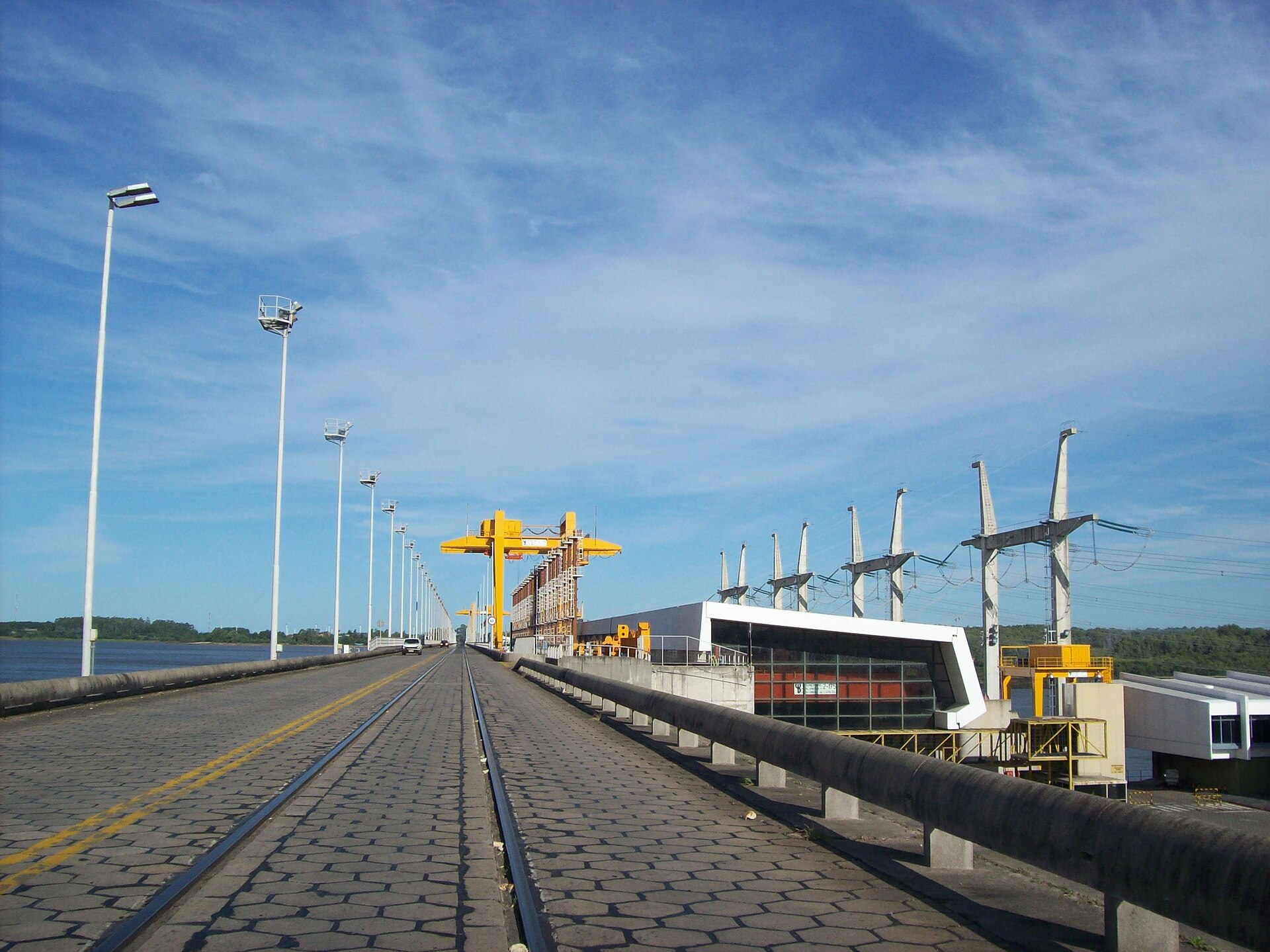
The Salto Grande Bridge isn’t just a structure spanning the Uruguay River—it’s a quiet testament to the connection between two nations. Stretching between Uruguay and Argentina, it was completed in the late 1970s, a time when the region needed more than just ferries to keep pace with growing trade and travel. Before its construction, crossing the river meant relying on slow, unpredictable boat rides, which, while charming in their own way, couldn’t meet the demands of modern life. The bridge changed that, turning what was once a natural barrier into a seamless link between the cities of Salto and Concordia, two places with deep historical ties.
What makes the bridge stand out isn’t just its size—nearly two and a half kilometers long—but the way it blends into the landscape without overwhelming it. Its design is straightforward, almost understated: sturdy concrete pillars rise from the water, supporting steel spans that carry both cars and trains. The structure was built to last, and it shows. At night, when the lights come on, the bridge casts a warm glow over the river, its reflection rippling in the dark current. It’s a sight that lingers, especially for those who see it for the first time from the riverbank.
For locals, the bridge is part of daily life. Trucks loaded with goods cross it every day, and commuters rely on it to get to work or visit family on the other side. The railway, though less busy now, still carries freight, a reminder of the bridge’s original purpose. But beyond its practical role, it has become a place where people come to walk, think, or simply watch the river flow. On weekends, you’ll find couples strolling along the pedestrian paths, children pointing at the boats passing below, and photographers trying to capture the way the light hits the water at dusk.
The bridge’s construction wasn’t just an engineering feat—it was a diplomatic one. Uruguay and Argentina had to work together for years to make it happen, pooling resources and expertise. The project required more than just steel and concrete; it needed trust, negotiation, and a shared vision for the future. Today, the bridge stands as proof that even the most practical endeavors can carry deeper meaning. It’s a symbol of cooperation, a physical reminder that borders, whether natural or political, don’t have to be divides.
There’s something almost poetic about the way the bridge interacts with the river. Its solid, angular lines contrast with the water’s gentle curves, creating a balance between human creation and nature. The area around it hasn’t been overly developed, so you can still find patches of wilderness where herons wade in the shallows and the only sounds are the wind and the occasional call of a bird. It’s a place where you can step away from the noise of the city and just be, even if just for a moment.
Salto itself is known for its thermal springs, which draw visitors looking to relax in warm, mineral-rich waters. But the bridge remains one of the city’s defining landmarks, a structure that ties the present to the past. It’s easy to take such things for granted—until you stand on it and realize how much it represents. The river below has been there for centuries, shaping the land and the lives of those who live near it. The bridge, by comparison, is a recent addition, yet it feels like it’s always been part of the scenery.
What’s striking about the Salto Grande Bridge is how unassuming it is. It doesn’t demand attention like some grand monument, yet it commands respect simply by doing its job well. It doesn’t need flashy architecture or dramatic flourishes to make an impression. Its strength lies in its purpose: connecting people, facilitating trade, and reminding us that progress doesn’t always have to come at the expense of beauty or harmony.
For travelers passing through, the bridge might just seem like another stop on the road. But if you take the time to look—to really look—you’ll see more than just steel and concrete. You’ll see the history of two countries coming together, the rhythm of daily life unfolding on its surface, and the quiet dignity of a structure that has stood the test of time. It’s the kind of place that makes you pause, even if just for a moment, to appreciate the things we build not just to get from one place to another, but to bring us closer together.