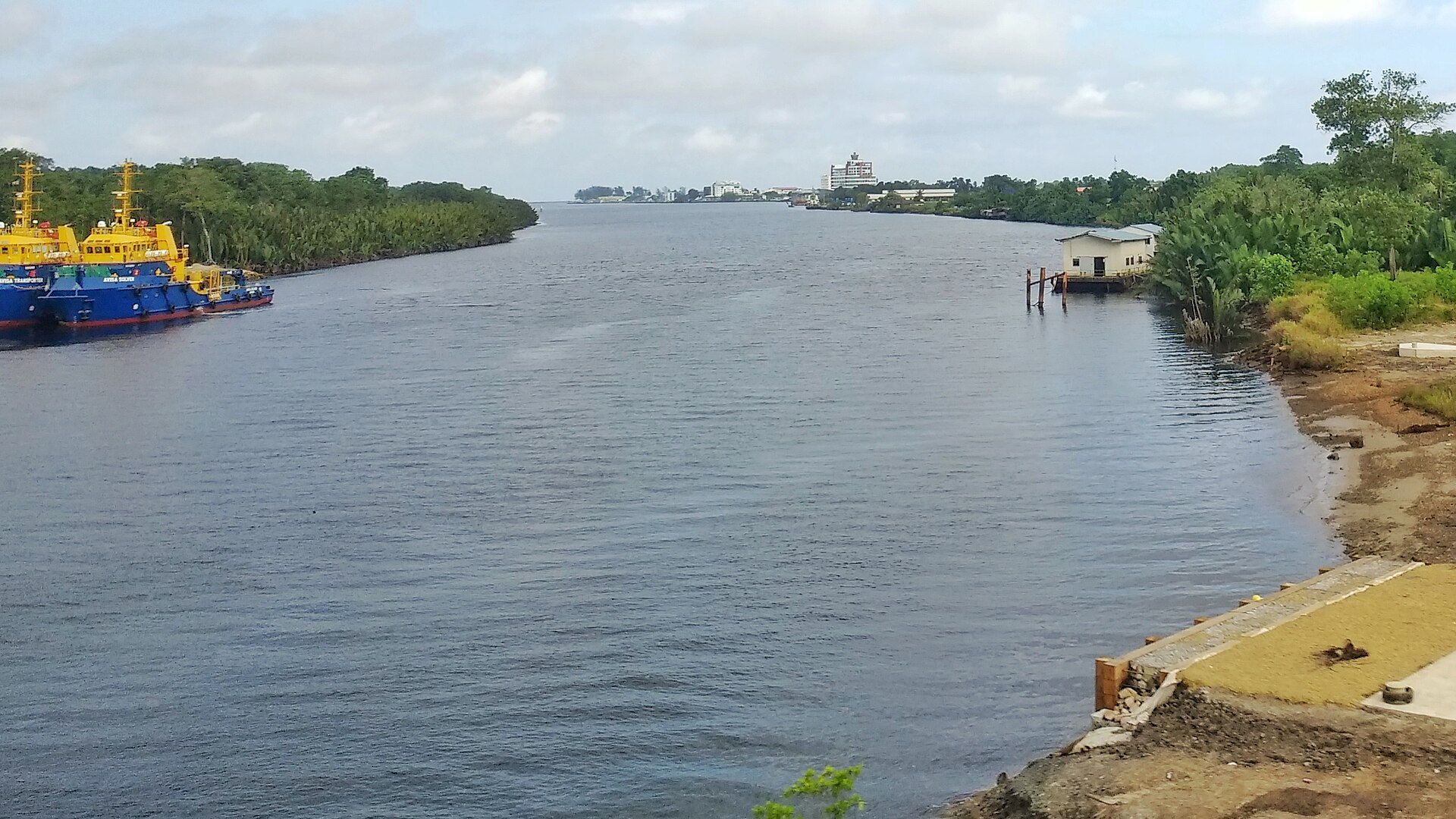
Rasau Bridge is one of those quiet, unassuming structures that do more than just connect two riverbanks—they connect lives. Stretching across the Belait River in Brunei’s Kuala Belait District, not far from the Malaysian border, it’s a place that means little to outsiders but everything to those who rely on it daily. For locals, it’s not just a piece of engineering; it’s part of the rhythm of life. People cross it on their way to work, trucks carry goods over it, and students use it to reach schools and clinics. The bridge wasn’t built on a whim—it was a practical solution to a long-standing problem. The Belait River, though narrow, had always been a natural barrier, cutting off communities from one another. Its construction was a logical step in the region’s development, one that made daily life a little easier.
The bridge’s design is as straightforward as the needs it serves. A simple beam structure with reinforced concrete supports, it was built for function, not aesthetics. There are no ornate details or grand flourishes, just clean lines and dependability. In Brunei, especially in this part of the country, practicality often takes precedence over decoration, particularly when it comes to infrastructure. Rasau Bridge is no exception. It wasn’t meant to impress; it was meant to work. And for the people who use it every day, that’s enough.
Its origins are tied to Brunei’s economic transformation in the mid-20th century. The discovery of oil and gas turned the Belait District into one of the country’s most important industrial hubs. The river, while not wide, became a significant obstacle, especially during the rainy season when water levels rose and made crossings difficult. The bridge was built out of necessity, part of a broader push to modernize Brunei’s infrastructure to keep pace with its growing economy. It wasn’t a glamorous project, but it was an essential one.
Today, Rasau Bridge is woven into the fabric of daily life in the district. Trucks loaded with supplies rumble across it, fishermen return with their catches, and schoolchildren hurry to class. In the mornings, there’s a steady stream of traffic heading toward the oil fields, while evenings see the flow reverse as workers return home. For most visitors, the bridge won’t be a highlight of their trip, but if you find yourself in the area, it’s worth crossing at least once. There’s something revealing about the way people move here—their routines, their dependences, the quiet efficiency of it all.
The surroundings tell their own story. The Belait River here is calm, its banks lined with mangroves that stretch toward the horizon. In the distance, the silhouettes of oil rigs and refinery towers rise against the sky, a reminder of the wealth that has shaped this region. The air is thick with the sounds of nature—birds calling, cicadas humming in the evening heat. It’s not a postcard-perfect scene, but that’s part of its charm. There’s a rawness to it, an unfiltered glimpse of life in a place where industry and nature coexist.
The bridge is also a piece of history, one that reflects the changes in the Belait District. Before oil was discovered, this was a sparsely populated, hard-to-reach area. The industry brought roads, settlements, and jobs, along with the need for reliable crossings. Rasau Bridge was one of the projects that helped turn the district into a vital economic and transport hub. It stands as a reminder of how quickly fortunes can change when resources and technology intersect.
For travelers, the bridge might seem unremarkable at first glance. But places like this often say more about a country than its grandest landmarks. There’s no gilded opulence here, no palaces or grand mosques like in the capital, Bandar Seri Begawan. Instead, there’s the quiet pulse of everyday life. The people here aren’t performing for tourists; they’re just going about their business, and the bridge is part of that rhythm. If you pass through, take a moment to stop. Look at the river, listen to the sounds around you. It’s in these unassuming places that you get a sense of Brunei as it really is.
In a way, Rasau Bridge is also a symbol of progress. Brunei is a country that doesn’t stand still—new roads are built, old ones are upgraded, and infrastructure evolves. One day, this bridge might be replaced by something newer, its story fading into the memories of those who used it. But for now, it remains, doing what it was built to do. And perhaps that’s its greatest value—not as a monument, but as a quiet, enduring part of life in this corner of the world.