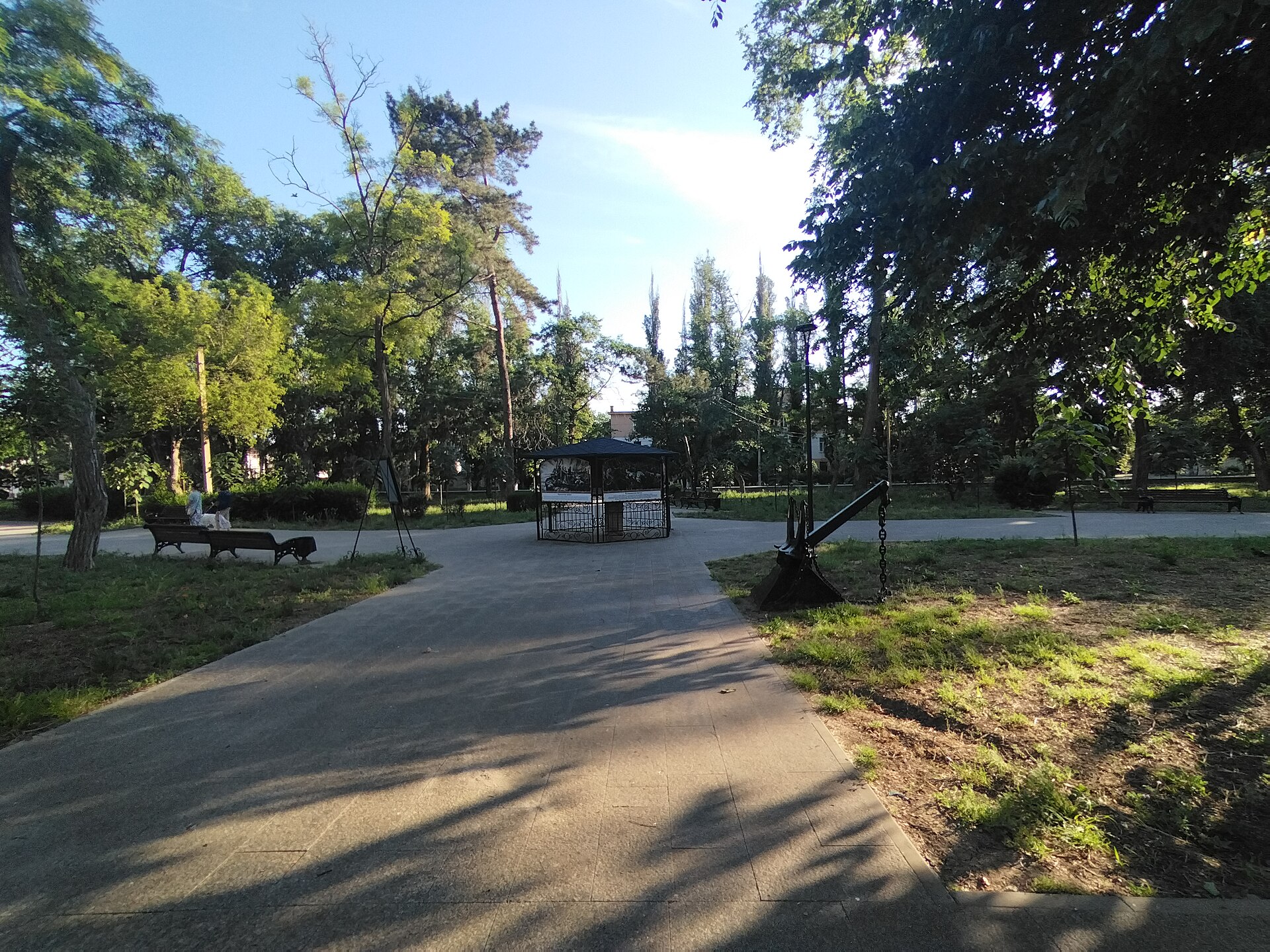
The Sea Garden in Feodosia is one of those places that doesn’t announce itself with grand gestures. It doesn’t demand attention like the city’s more famous landmarks, yet once you step onto its shaded paths, it’s easy to understand why locals and visitors keep returning. There are no manicured flowerbeds or towering monuments here—just the quiet rustle of old trees, the salt-tinged breeze, and a sense of time slowing down just enough to let you breathe.
The garden took shape in the late 19th century, when Feodosia was evolving from a quiet port town into a seaside resort. Back then, the idea was simple: create a public space where people could escape the summer heat and enjoy the sea. By the early 1900s, it had become a favorite spot for evening strolls. Concerts filled the air in summer, open-air theaters hosted performances, and along the pathways, benches were occupied by ladies in long dresses and gentlemen with walking sticks. Fashions changed, but the garden’s purpose remained the same—a place to wander, to listen to the waves, and to watch the horizon.
The architecture here is unassuming. The walkways are paved with tiles, some cracked by decades of footsteps and weather. Acacias and pines stretch overhead, their branches forming a natural canopy against the Crimean sun. At the heart of the garden stands a small rotunda from the early 20th century, its steps offering a view of the sea. On clear days, the outline of the Crimean mountains appears in the distance. Nearby, a modest monument to Ivan Aivazovsky pays tribute to the artist whose paintings immortalized these shores.
From the garden, the Feodosia Bay unfolds in all its quiet beauty. The best time to see it is at sunset, when the water turns gold and pink, and the light softens the edges of the city. In summer, the garden is cooler than the streets downtown, while in winter, the sea wind carries the sharp, salty scent of the Black Sea. A low stone wall, draped in ivy, runs along the waterfront, separating the paths from a narrow strip of beach. Fishermen cast their lines from the rocks, children float paper boats in the shallows, and old men play dominoes on the benches, their games stretching into the evening.
During the Soviet era, the garden fell into neglect. It was never closed, but neither was it properly maintained—trees grew wild, paths became overgrown, and the rotunda’s paint peeled away. In recent decades, restoration work has brought the garden back to life, though not in a way that feels overly polished. Now, in the evenings, families come with their children, couples walk arm in arm, and those seeking solitude find it here, away from the noise of the city.
What makes the Sea Garden special is how deeply it’s woven into the fabric of Feodosia. Unlike the Genoese Fortress, which draws crowds of tourists, this place is for the city’s own. Locals call it simply "the garden" and come not for photos, but for the small, unremarkable moments—a quiet bench, the sound of waves, a picnic on the grass. In summer, small cafés open along the paths, serving tea and simple snacks. In winter, the garden empties out, becoming a quiet, almost secretive space where the wind and the sea are the only company.
There’s something timeless about the Sea Garden. It’s not just a park, but a living piece of Feodosia’s past, a place where the rhythm of life still follows the ebb and flow of the tides. There’s no rush here, no forced cheerfulness, no pressure to do or see anything in particular. Just the paths, the gulls circling overhead, and the waves breaking against the stones—just as they have for over a century.