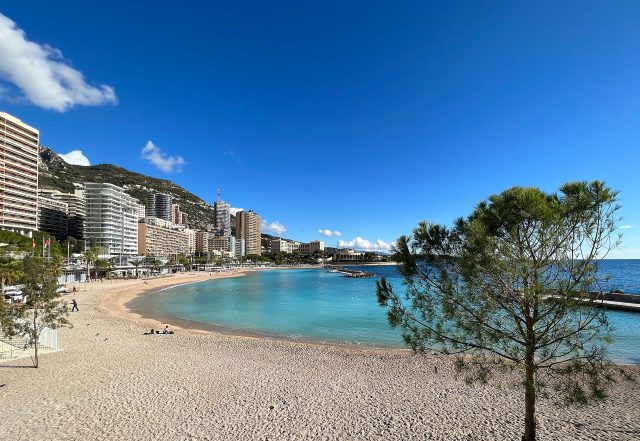
The Oceanographic Museum of Monaco sits quietly along the Mediterranean shore in Larvotto, a world away from the glittering casinos and yacht-lined harbors that define the principality. For over a century, it has offered visitors a glimpse into the hidden depths of the sea, a place where the rhythm of the waves replaces the hum of the city. There’s no rush here, no flashing lights or crowded walkways—just the soft glow of aquarium tanks and the slow, deliberate movement of marine life behind thick glass.
Founded in 1910 by Prince Albert I, a passionate oceanographer, the museum was ahead of its time. In an era when underwater ecosystems were still largely unexplored, the prince envisioned a place where science and public curiosity could meet. He had spent years on expeditions, collecting specimens and documenting marine life, and believed that knowledge of the ocean should belong to everyone, not just researchers. That philosophy still guides the museum today. It remains both a working scientific institution and a space where visitors can stand in silence, watching sharks glide past or jellyfish pulse with an almost hypnotic grace.
The building itself feels more like a temple to the sea than a modern attraction. There are no flashy displays or interactive screens—just a series of halls, each one unfolding like a chapter in the story of the ocean. Below the main exhibition spaces lies the original section, preserved from the early 1900s. Some of the first aquarium systems still function here, and the walls are lined with antique maps and hand-drawn illustrations of sea creatures, sketched by the scientists who once worked within these walls. The air carries a sense of history, as if time has settled differently in this place.
The museum’s centerpiece is its vast oceanic tank, a recreation of a coral reef teeming with life. Hundreds of species—fish, invertebrates, and plants—thrive here, many of them brought back from expeditions to tropical waters. The water is so clear, and the lighting so carefully calibrated to mimic sunlight filtering through the sea, that it’s easy to forget you’re indoors. The most mesmerizing moments come during feeding times, when divers descend into the tank and the water erupts in a swirl of color as fish dart toward them.
Yet the museum doesn’t focus solely on the exotic. There are also exhibits dedicated to the Mediterranean, the sea that laps at Monaco’s shores just steps away. Smaller tanks hold local species—seahorses, octopuses, and flatfish—that may not be as dazzling as their tropical counterparts but carry their own quiet charm. Occasionally, the museum takes in injured sea turtles or dolphins for rehabilitation, offering visitors a rare chance to witness their recovery.
This isn’t a place built for spectacle. There are no loud announcements, no crowds jostling for the best photo. Instead, it invites patience and observation. Children press their hands against the glass, eyes wide with wonder, while adults linger in front of displays of shark skeletons, giant clam shells, or delicate starfish. The only sounds are the murmur of water and the occasional whisper of a guide explaining the secrets of the deep.
Behind the scenes, the museum remains an active research center. Scientists here study marine conservation, the effects of climate change on underwater ecosystems, and methods for restoring coral reefs. Some of the exhibits are the result of decades-long expeditions, collaborations between researchers from around the world. For Monaco, a tiny but ambitious nation, the museum is a way to leave its mark on science, not just luxury.
As evening falls and the lights of Monte Carlo begin to shimmer across the water, the museum takes on a different mood. The glow from the tanks spills softly onto the walls, casting shifting patterns of light and shadow. The building seems almost alive, breathing in time with the water that ripples behind the glass. It’s easy to lose track of time here, especially if you pause in the small café on the upper floor, where the view stretches out over the darkening sea.
The Oceanographic Museum of Monaco is more than just a collection of fish in tanks. It’s a place where history and modernity intersect, where science and art blend seamlessly, and where humans can connect with the vast, mysterious world beneath the waves. In a principality often defined by opulence and entertainment, the museum offers something rare—a quiet, authentic space where the ocean’s wonders take center stage.