The Victory Monument at Pukkwan stands on a hill overlooking the city of Kimchaek, a quiet sentinel to a history that unfolded differently here than in most accounts of the Korean War. This isn’t just a memorial—it’s a carefully constructed narrative, woven into the landscape over decades, where ideology and memory intertwine with the events of the 1950s. The city itself, once an unremarkable industrial hub called Songjin, was renamed after Kim Chaek, a North Korean revolutionary hero, a common practice in the country to reinforce the continuity of power and victory. The monument, built in 1993, is dedicated to the Korean War, but its symbolism stretches beyond a single conflict, reflecting broader themes of resilience and national identity.
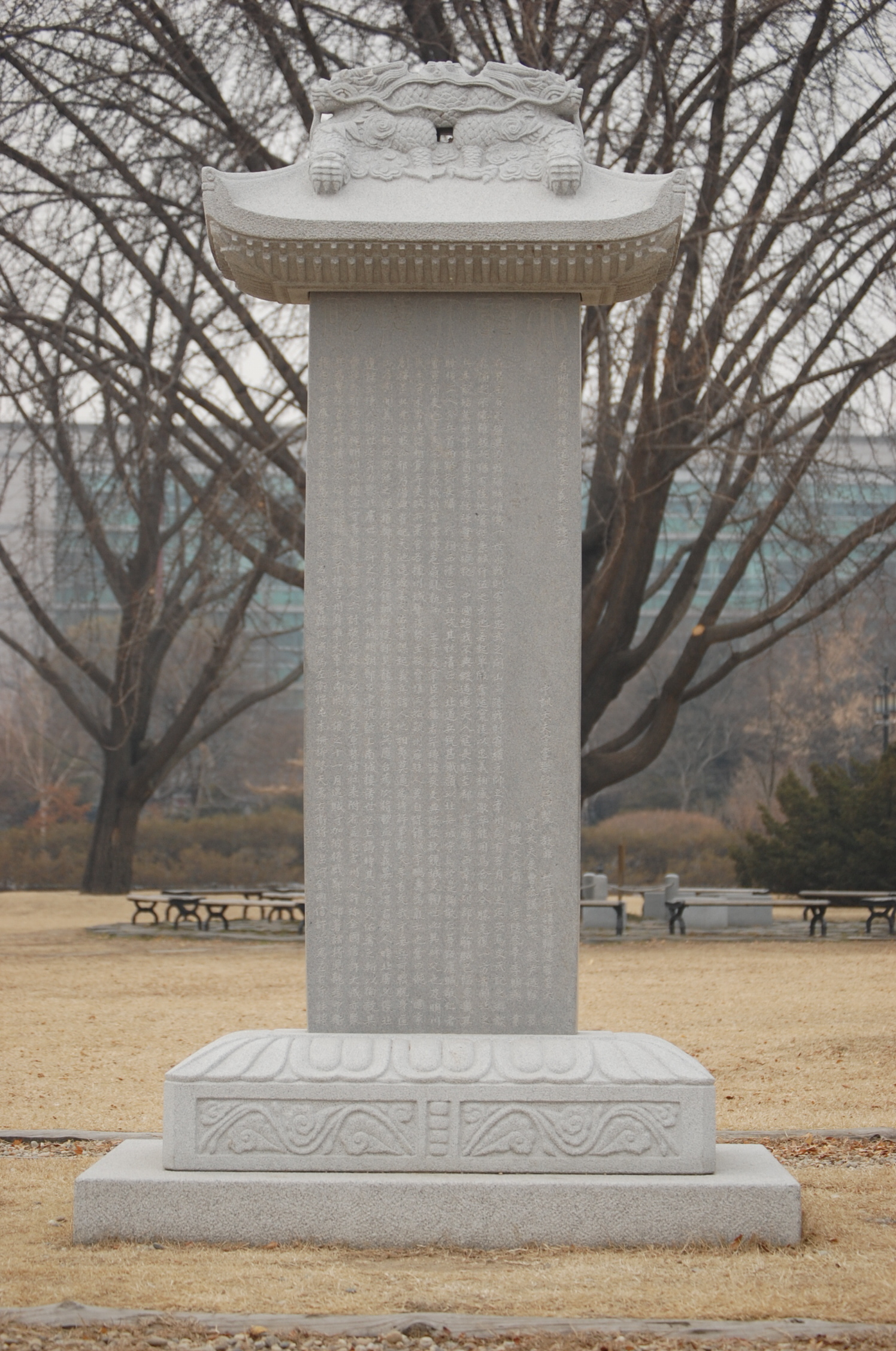
The monument’s design is striking in its simplicity and scale. Two towering granite steles rise toward the sky, their slightly asymmetrical forms creating a sense of movement. Between them stands a soldier, rifle in hand, frozen in the moment of triumph. Surrounding the central figure are sculptural groups depicting fighters, partisans, workers, and peasants—each representing those who, according to the official narrative, contributed to the victory. The use of granite, heavy and enduring, mirrors the weight of the memory it preserves. The figures are rendered in a realistic yet idealized style, their expressions calm and determined, even in the midst of battle scenes. There’s no despair here, only resolve.
Pukkwan Valley, where the monument is located, was the site of fierce fighting in 1950. American and South Korean forces attempted to push northward but were met with resistance from Chinese volunteers and North Korean troops. In North Korea’s official historiography, this battle is portrayed as a turning point in the war, though historians outside the country often interpret it differently. For locals and visitors from other parts of North Korea, the monument is a place where the heroism of the past feels tangible, even if filtered through state ideology. The climb to the monument begins with a broad staircase flanked by informational panels, their Korean text recounting acts of bravery and sacrifice. Even without translation, the message is clear.
From the top of the hill, the view extends over Kimchaek—a city of factories, docks, and smokestacks, with the sea visible in the distance. The landscape is a mix of industry and nature, a reminder that this was once a battleground, now repurposed into a place of everyday life. The atmosphere around the monument is unlike that of many war memorials elsewhere. There’s no solemn hush, no sense of grief hanging in the air. Instead, the site feels alive: schoolchildren arrive for field trips, soldiers conduct ceremonies, and locals stroll through the grounds as if it were a park. The war isn’t just history here—it’s part of the present, a narrative that refuses to fade.
North Korea is dotted with monuments to the Korean War, but the one at Pukkwan stands out for its scale and location. It’s not in Pyongyang, nor is it in a place frequented by tourists. Kimchaek is a working port, a city where life revolves around factories and shipyards, far from the usual tourist trail. This gives the monument a sense of authenticity that grander, more polished sites in the capital might lack. There are no souvenir stalls, no crowds of visitors, no overt attempts to persuade. Just granite, sky, and the wind sweeping between the steles.
For those who visit Kimchaek, the monument is an unexpected discovery. The city itself isn’t a tourist destination—it’s a place where the rhythm of life is dictated by industry and labor. Yet here, on this hill, the pulse of history feels different than it does in textbooks. Whether or not you agree with the interpretation of events presented here, the monument forces you to confront how memory shapes the present. It’s a reminder that history isn’t just about facts—it’s about who tells the story and why.
In the end, the Pukkwan Victory Monument is more than stone and bronze. It’s an attempt to capture a moment when a war-torn country declared, to itself and the world, that it had endured. That might sound grandiose, but in North Korea, grandeur is part of the narrative. Strip away the layers of ideology, and what remains is a simple truth: the people who lived and fought here deserve to be remembered. Even if that memory is carved in stone by someone else’s hand.