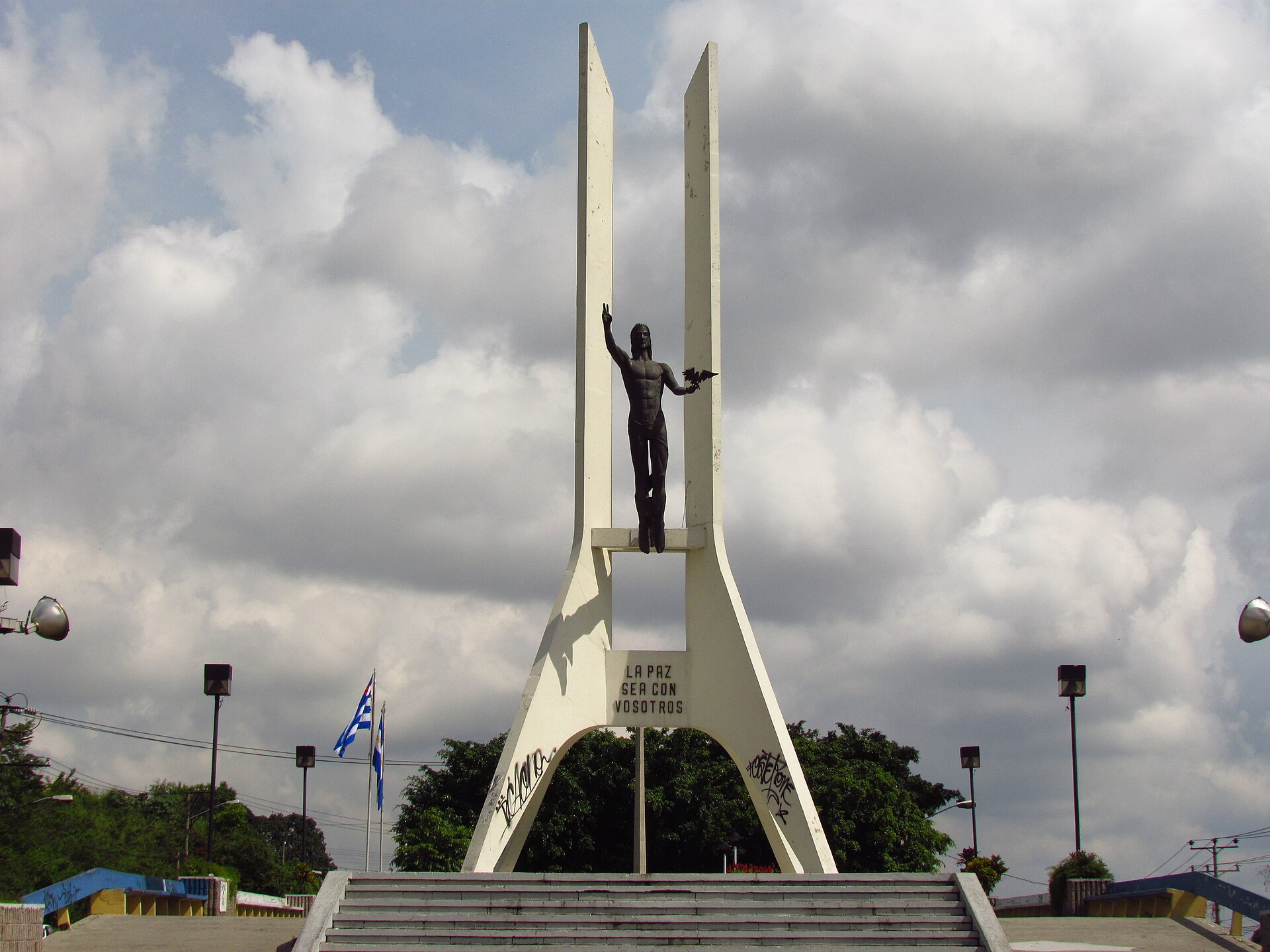
Ciudad Arce is not a name that appears often on travel itineraries, and the Monument to Peace here is not the kind of landmark that draws crowds from across the country. Yet for those who find themselves in this quiet Salvadoran town, the monument offers something rare—a moment of reflection that feels both personal and shared. It stands at a crossroads where the roads of the city converge, not as a grand statement, but as a quiet invitation to pause and consider what comes next.
The monument was erected in the late twentieth century, a time when El Salvador was still grappling with the aftermath of a brutal civil war that had claimed tens of thousands of lives. The conflict had left deep scars, and the fragile peace that followed was something to be nurtured, not taken for granted. The monument was never meant to be a political symbol or a triumphant declaration. Instead, it was a gesture of hope, a way to acknowledge the past while turning toward a future where violence no longer defined daily life.
Architecturally, the monument is understated, almost austere. A tall concrete and metal stele rises from a small, well-kept square, its abstract design suggesting hands reaching toward one another. There are no ornate details or dramatic flourishes, just a clean, uncluttered form that allows the space around it to breathe. The square itself is simple—a few benches, neatly trimmed grass, and the occasional tree providing shade. It’s the kind of place where people come not to be impressed, but to sit, to think, or simply to be.
Ciudad Arce may not be one of El Salvador’s largest or most famous cities, but its history is woven into the fabric of the country’s struggle. During the war, it was a strategic point where some of the fiercest fighting took place. After the peace accords were signed, it became a place where people had to learn how to live alongside one another again. The monument’s location, at the intersection of roads leading in different directions, feels deliberate. It’s as if it’s saying: no matter where you’re going, remember what brought us here.
What makes the Monument to Peace unusual is how little it resembles a typical tourist attraction. There are no souvenir stalls, no guided tours, no crowds jostling for photos. Instead, it remains a place for the people of Ciudad Arce and the surrounding area. In the mornings, you might see older men gathering with newspapers, debating the day’s events over coffee. During the day, schoolchildren pass by on their way to class, their laughter cutting through the quiet. In the evenings, families come to sit on the benches, letting their children play while they talk or simply enjoy the cool air. No one makes grand speeches about reconciliation—life just goes on, and in that ordinary rhythm, the monument finds its meaning.
Over the years, the monument has become part of the city’s daily life in subtle ways. On anniversaries of the war’s end, there are small gatherings—flowers laid at the base, a moment of silence, sometimes a few songs played by local musicians. But even on ordinary days, the square doesn’t feel neglected. The grass is mowed, the paths are swept, and the monument itself is kept in good condition. It’s not a relic to be preserved behind glass; it’s a living part of the city, as much a fixture as the corner store or the bus stop down the street.
There’s a universality to the monument that goes beyond its immediate purpose. It doesn’t demand a specific reaction or interpretation. Some people come to honor lost loved ones, others to escape the noise of the city for a little while. A few might not even think about its significance at all, using the square as a shortcut or a place to wait for a ride. That’s part of its strength—it doesn’t impose a narrative, but allows each person to find their own connection to it.
For travelers who do make their way to Ciudad Arce, the Monument to Peace offers a different kind of experience than the ones found in El Salvador’s more tourist-heavy destinations. There’s no script here, no must-see checklist. Instead, it’s a place where the weight of history feels present but not overwhelming, where the past and present coexist without fanfare. If you wander into the square on a quiet afternoon, you might not immediately grasp its significance. But if you sit on one of the benches and watch the people passing by, you’ll start to understand why this unassuming monument has endured. It’s not about the war, or even about peace in the abstract. It’s about the quiet, everyday acts of living that make both possible.