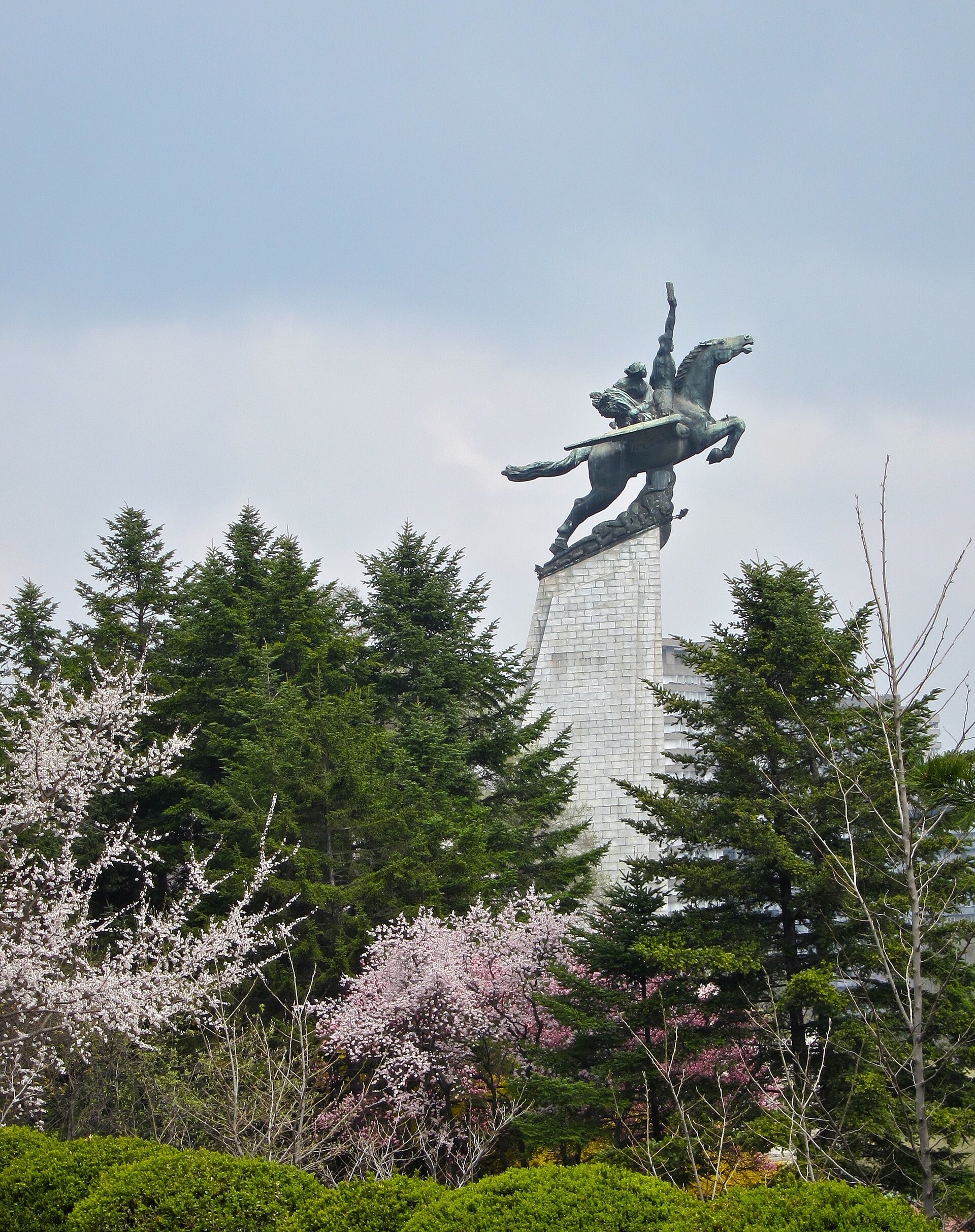
The Chollima Monument in Nampo is more than just a statue—it’s a symbol deeply woven into North Korea’s identity, a physical embodiment of the country’s aspirations and the collective spirit that shaped its post-war years. Erected in 1961, the monument depicts the mythical winged horse Chollima, a creature from Korean folklore that came to represent the nation’s rapid recovery and industrial drive after the devastation of the Korean War. The name itself, meaning "thousand-li horse" (a *li* being an old unit of distance), evokes speed and endurance, qualities the state sought to inspire in its people during a time of rebuilding.
The monument’s design is striking in its simplicity and power. A towering granite pedestal supports the bronze figure of the horse, captured mid-leap with wings outstretched, as if defying gravity. The pose isn’t just dramatic—it’s deliberate, meant to convey motion and urgency, a visual metaphor for the country’s push toward progress. The surrounding park is modest, with just enough space for visitors to walk around or pause for a photograph, but the monument itself dominates the scene, its scale and symbolism impossible to ignore.
For North Koreans, Chollima wasn’t just a myth; it was a movement. In the 1950s and 60s, workers who exceeded production quotas were celebrated as "Chollima riders," a title that carried prestige and reflected the era’s emphasis on collective effort. The monument in Nampo, like others across the country, served as a reminder of that ethos, a tangible link to a time when the nation’s recovery was framed as a near-miraculous achievement. Nampo itself was a key player in that story—a port city and industrial hub where shipyards, factories, and chemical plants sprang up as part of the country’s drive toward self-sufficiency.
Nampo today is a city of contrasts. It lacks the grandeur of Pyongyang, but that’s part of its appeal. The streets are quieter, the pace slower, yet there’s a sense of purpose here, a reminder that this is a place built by and for industry. The city’s location on the Yellow Sea has long made it a vital economic center, and its history is tied to the ambitions of the state. In the Soviet era, Nampo was a showcase for North Korea’s industrial growth, and while much has changed since then, the city still feels like a place where the past and present coexist.
The Chollima Monument is one of those rare landmarks that manages to be both a relic of its time and a living symbol. For foreigners, it offers a glimpse into a narrative that’s often overshadowed by politics—the story of a country that, in the aftermath of war, staked its future on the idea of collective resilience. The monument isn’t just a tourist stop; it’s a piece of cultural memory, one that still appears in propaganda, schoolbooks, and even the names of factories. Seeing it in person, away from the more polished monuments of the capital, adds a layer of authenticity. There’s no crowd here, no guided tour script—just the statue, the quiet park, and the weight of history.
What makes the monument in Nampo particularly interesting is how it fits into the city’s fabric. Unlike the more ostentatious displays in Pyongyang, this version of Chollima feels grounded, almost humble in its surroundings. The city itself doesn’t try to impress; it simply exists, with its docks, its smokestacks, and its unassuming streets. The monument, then, becomes a natural part of that landscape—a reminder that symbols don’t need to be grand to be meaningful.
Visiting the Chollima Monument isn’t about ticking off a sightseeing box. It’s an opportunity to reflect on how a single image can shape a nation’s self-perception. The horse in mid-flight isn’t just a statue; it’s a metaphor for a country that, for better or worse, has always seen itself as moving forward, no matter the obstacles. In Nampo, that story feels more tangible than it might in the capital, where monuments often serve a more overtly political purpose. Here, the monument stands as a quiet testament to an era when progress was measured in steel, sweat, and the belief that collective effort could overcome anything.
If you find yourself in Nampo, take a moment to walk around the monument, not just to take a photo, but to consider what it represents. The city around it is unpretentious, its rhythms shaped by industry and the sea. The monument, too, is unpretentious in its way—no frills, no excess, just a powerful image that has endured for decades. It’s a reminder that history isn’t just about grand events; it’s also about the ideas that shape everyday life, the symbols that outlast their creators, and the quiet places where the past still feels alive.