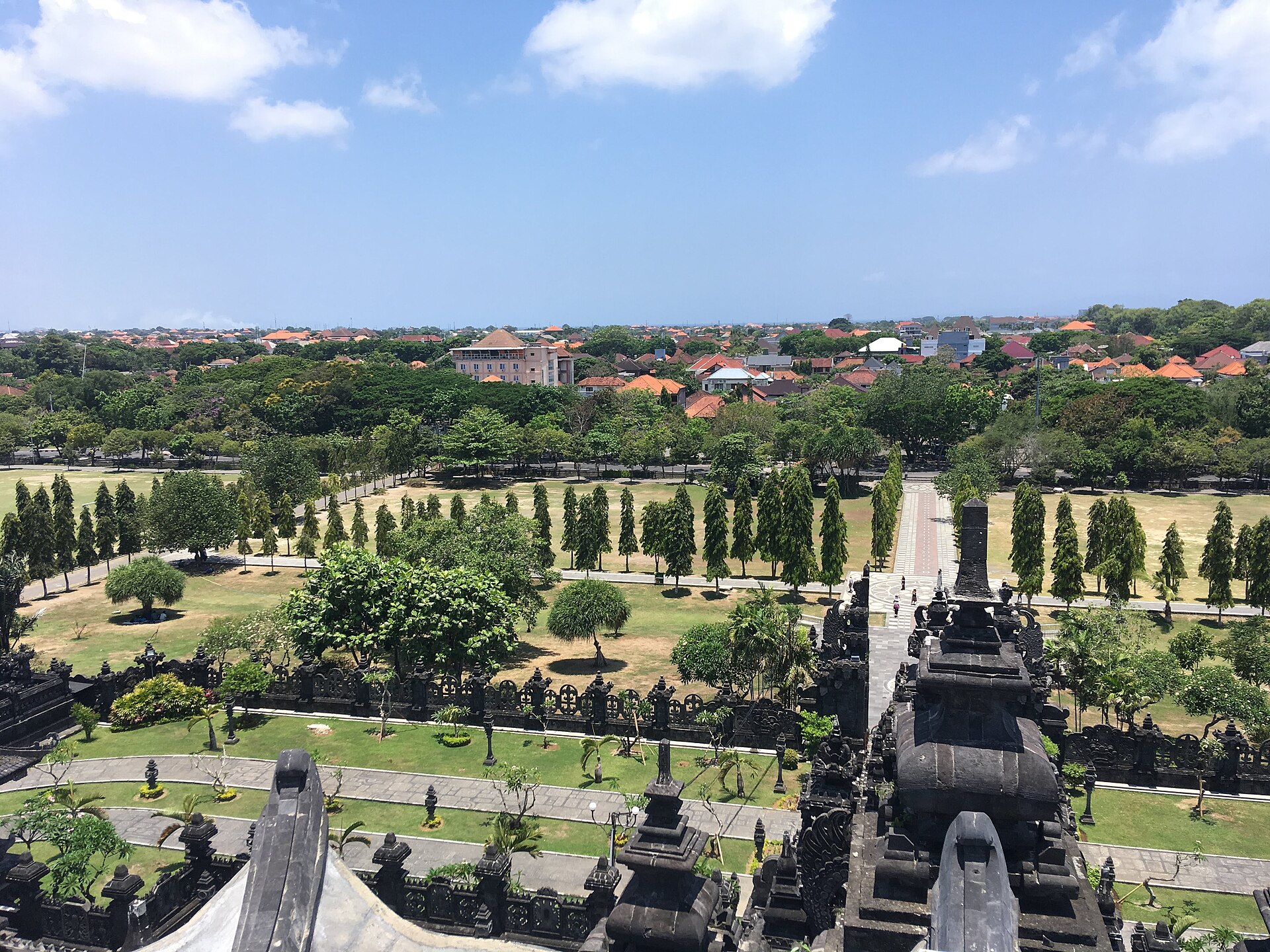
Bajra Sandhi Monument is one of those places in Denpasar that doesn’t immediately demand attention, yet slowly reveals its significance the longer you spend with it. Tucked away on Renon Square in the heart of the city, it stands surrounded by palm trees and open lawns where locals often gather with their families or simply relax in the shade. The monument itself resembles a towering bell, crowned with a vajra—the traditional Balinese symbol of spiritual power and resilience. Its design blends modern architecture with elements of Balinese culture, and though it was built in the late 20th century, there’s a sense of timelessness here, as if it has always been part of the island’s landscape.
The monument was erected to honor those who fought for Indonesia’s independence, particularly the Balinese who resisted Dutch colonial rule. Inside, a museum documents this struggle through photographs, personal artifacts, and historical records. The exhibits aren’t flashy, but they carry weight—each item tells a story of sacrifice and determination. Visitors can climb to the top floor, where a viewing platform offers a quiet panorama of Denpasar and the surrounding area. The best time to visit is at sunset, when the sky softens into gold and pink, and the city below takes on a slower, more reflective mood.
Architecturally, Bajra Sandhi is striking in its simplicity. The structure rises about 45 meters, its base shaped like a lotus, a detail that ties it to Balinese symbolism. Inside, three levels unfold: the first houses the permanent exhibition on independence, the second is reserved for temporary displays, and the third is the observation deck. The layout encourages a leisurely pace, with wide staircases and open spaces that let visitors move at their own rhythm. There’s no rush here, no pressure to hurry through—just the quiet hum of history in the air.
Renon Square, where the monument stands, is more than just a backdrop. It’s one of Denpasar’s most important public spaces, a place where the city comes together for festivals, markets, and cultural events. In the evenings, the square buzzes with life—cafés open their doors, street vendors sell snacks, and children fly kites under the fading light. The monument, in this setting, feels like a natural part of the city’s rhythm, not just a relic of the past. It’s a reminder that Denpasar isn’t just Bali’s administrative hub; it’s a place where tradition and modernity coexist, sometimes uneasily, but always with a sense of continuity.
For travelers, Bajra Sandhi might not have the instant appeal of Bali’s beaches or temples, but that’s part of its charm. There are no crowds here, no selfie sticks or tour groups rushing from one attraction to the next. Instead, there’s space to think, to absorb the weight of what this place represents. The monument doesn’t try to dazzle with grandeur—it’s understated, almost humble, and that’s what makes it special. A visit here pairs well with a stroll through the nearby Bajra Sandhi Park, where shaded paths and small ponds offer a quiet place to sit and reflect after seeing the exhibits.
This isn’t a place that markets itself aggressively. There are no flashy signs or souvenir stalls, no guided tours with loudspeakers. It’s a site for those who want to understand Bali beyond the postcard images, to see the island through the eyes of its people. Occasionally, the museum hosts lectures or discussions with historians, offering deeper insights into the events that shaped Indonesia. Even if you’re only passing through Denpasar, it’s worth setting aside an hour or two to visit—if only to step away from the usual tourist trail and experience something more meaningful.
What lingers after a visit to Bajra Sandhi isn’t the memory of a spectacular view or an exciting activity, but something quieter. The monument serves as a reminder that history isn’t just a collection of dates and battles—it’s made up of individual lives, choices, and sacrifices. In that sense, it fulfills its purpose well. For locals, it’s a point of pride, a place where the past is honored and remembered. For visitors, it’s a chance to see Bali from a different angle, one that’s less about tourism and more about connection.
The monument doesn’t ask for much—just a little time and attention. And in return, it offers a glimpse into the soul of the island, not through grand gestures, but through the quiet dignity of its design and the stories it holds. Whether you’re a history enthusiast or simply someone looking for a moment of reflection, Bajra Sandhi provides a space to pause and consider what it means to belong to a place, to a people, and to a shared past.