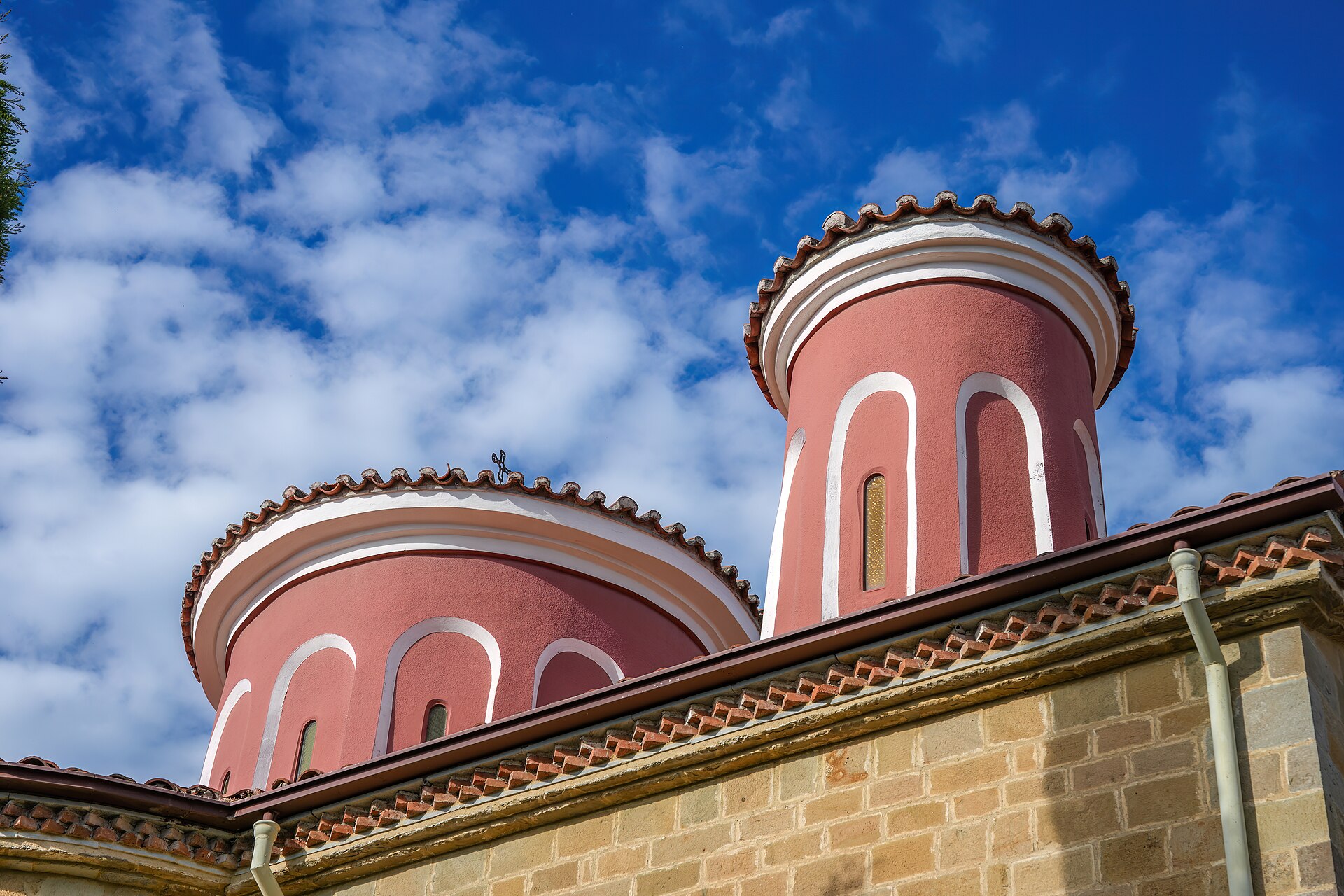
Perched on the edge of a sheer cliff above the town of Kalambaka, the Monastery of Saint Stephen seems to hover between earth and sky. It is one of six active monastic communities in Meteora, a breathtaking complex of Eastern Orthodox monasteries built atop towering rock formations that rise dramatically from the Thessalian plain. Visitors come not only to pray but to witness a place where faith and nature merge into something almost otherworldly.
The monastery’s history dates back to the 14th century, when the first hermits sought refuge on these rocks, fleeing invasions and the distractions of the outside world. Saint Stephen, after whom the monastery is named, was one of its earliest abbots, and his legacy remains deeply tied to this place. Unlike other monasteries in Meteora, which cling to nearly inaccessible peaks, Saint Stephen sits on a gentler slope, making it more accessible to pilgrims and builders alike. By the 16th century, the monastery had flourished—its main structures were erected, frescoes painted, and a rich library of manuscripts collected.
The architecture here is simple and purposeful, reflecting the monastery’s focus on inner life rather than grandeur. The main church, the katholikon, is dedicated to Saint Charalambos, the patron saint of Kalambaka. Its walls are adorned with frescoes in the traditional Byzantine style, featuring elongated figures and deep blues and reds. The scenes of the Last Judgment and the lives of the saints are particularly striking, their colors seeming to shift in the flickering lamplight, filling the space with a quiet intensity. Nearby, the monks’ cells, refectory, and a small museum house ancient icons, religious artifacts, and rare books.
For centuries, the monastery was nearly cut off from the world. Pilgrims reached it by climbing rickety wooden ladders or being hoisted up in nets by the monks. Today, a stone bridge spans the gorge, and a short flight of steps leads to the entrance, making the journey far easier. Yet even now, the sense of isolation lingers. Once inside, the noise of the town below fades, leaving only the wind, the rustle of leaves, and the occasional murmur of the monks.
Saint Stephen is not just a historical monument but a living monastery. A small community of monks still resides here, following ancient traditions. Their days pass quietly—morning prayers, work in the gardens, transcribing manuscripts, and tending to the olive groves and vineyards. The monastery produces its own wine and olive oil, which visitors can purchase at the entrance. Occasionally, guests are allowed a glimpse into the refectory or library, though the monks often prefer to remain in the background, letting the place speak for itself.
The monastery is especially magical at dawn, when the first light gilds the rocks and mist still lingers over the valley. Or at dusk, when the buildings seem to float above the abyss, the sky behind them turning deep violet. In these moments, it’s easy to understand why people have been drawn here for centuries—not just for spiritual solace, but for the stillness, the sense of timelessness that feels impossible to find in the bustle of the world below.
Meteora is a place where history and nature speak the same language. While Saint Stephen may not be the tallest or most remote of the monasteries, it feels the most human. There’s no austerity of the Great Meteoron or the mystique of Varlaam, just a quiet simplicity that draws people in. Perhaps that’s why it resonates so deeply—not as a museum piece, but as a place where time moves differently, where you can sense something greater than yourself.