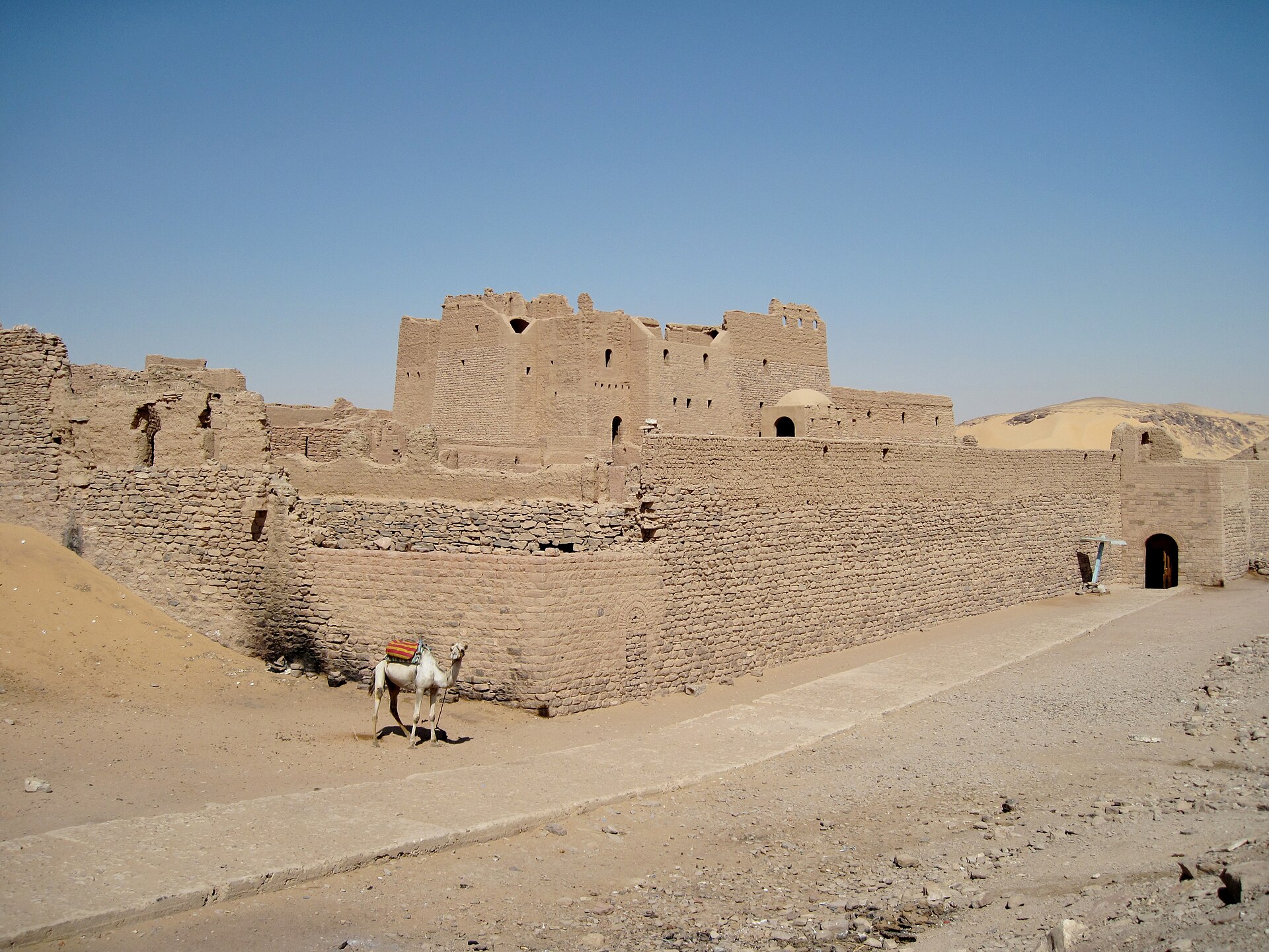
Perched on a low hill where the Nile’s western bank gives way to the encroaching desert, the Monastery of Saint Simeon feels like a place caught between worlds. The ruins rise from the sand as if still guarding the secrets of a time when this stretch of land was far from empty—when it hummed with the voices of monks, pilgrims, and traders moving between the river and the vast, silent expanse beyond. Today, the monastery draws those curious about the early days of Christian monasticism in Egypt, a tradition that took root here long before the arrival of Islam, when the country was still part of the Byzantine Empire. The desert around Aswan, with its stark beauty, has always been a place of retreat, and this monastery was one of many where men sought solitude not to escape the world, but to confront it through prayer and labor.
The monastery’s origins trace back to the seventh century, though some scholars suggest it may have been established even earlier. It takes its name from Saint Simeon Stylites, the ascetic who famously lived atop a pillar for decades, a figure revered in Egypt where the first Christian monks had already begun withdrawing into the desert centuries before. These early hermits, known as the Desert Fathers, shaped the idea of monastic life as something both deeply personal and communal. Monasteries like this one became havens where solitude and brotherhood coexisted—places where men could live apart from society while still belonging to something greater than themselves.
The architecture here reflects the practical needs of desert monasticism. Thick sandstone walls, built without mortar, stand several meters high, designed to shield the inner courtyard from wind and drifting sand. The main entrance, once secured by heavy gates, now lies in ruins, its foundations barely visible. Inside, the remains of living quarters, a refectory, and a church hint at the daily rhythms of monastic life. The church is particularly striking, with its rounded apses and faded frescoes still clinging to the walls. Though time has worn them down, the images of saints, biblical scenes, and intricate Coptic patterns offer a glimpse into the spiritual world of the monks who once gathered here.
Life in the monastery was never easy. The monks grew their own food, dug wells, wove cloth, and copied manuscripts by hand. Water was channeled from the Nile through an aqueduct, fragments of which can still be seen nearby. During the hottest months, sandstorms would bury the paths leading to the monastery, cutting it off from the outside world for weeks at a time. Yet this isolation was part of its appeal. For those who came here, the desert was not just a barrier but a teacher—one that demanded patience, resilience, and faith. By the eleventh century, the monastery had been abandoned after raids by nomadic tribes, left to the mercy of the elements. Ironically, this destruction may have preserved it. Without later renovations, the ruins retain a raw authenticity, untouched by the layers of history that often obscure the past.
Now, the Monastery of Saint Simeon exists in a kind of quiet limbo. From the hill where it stands, the Nile stretches out below, its waters moving slowly past the barren shores. The silence is almost tangible, broken only by the whisper of wind over stone. Visitors arrive on camelback or on foot, crossing the last stretch of sunbaked earth before reaching the ruins. Inside, the narrow passageways between the cells invite exploration, each crumbling room offering a silent story. It’s easy to imagine the monks who once lived here—men for whom faith was not an abstract idea but the very foundation of their existence.
The monastery is deeply tied to the history of the Coptic Church, one of the oldest Christian communities in the world. Egyptian Christians have long lived alongside Muslims, their culture shaped by the pharaohs, the Byzantines, and later, Arab conquerors. The Monastery of Saint Simeon embodies this layered history. Its frescoes, its layout, even its location—straddling the fertile Nile Valley and the harsh desert—reflect the meeting of different traditions. Here, early Christian practices blend with local customs, creating something uniquely Egyptian. The desert itself plays a role in this narrative, a place where life and death, belief and doubt, have always coexisted.
Standing among the ruins, it’s hard not to reflect on how much has changed. Once, this monastery was a thriving center of spiritual life, a destination for pilgrims from across the region. Now, it’s a relic, a reminder that even the most enduring structures are not immune to time. Yet there’s a certain grace in its decay. The monastery doesn’t try to be anything other than what it is—a silent witness to centuries of human longing, struggle, and devotion. It doesn’t ask for attention, but for those who make the journey, it offers something rare: a moment of connection with a past that feels both distant and strangely familiar. The desert wind carries the echoes of prayers long since spoken, and for a little while, the boundaries between then and now blur.