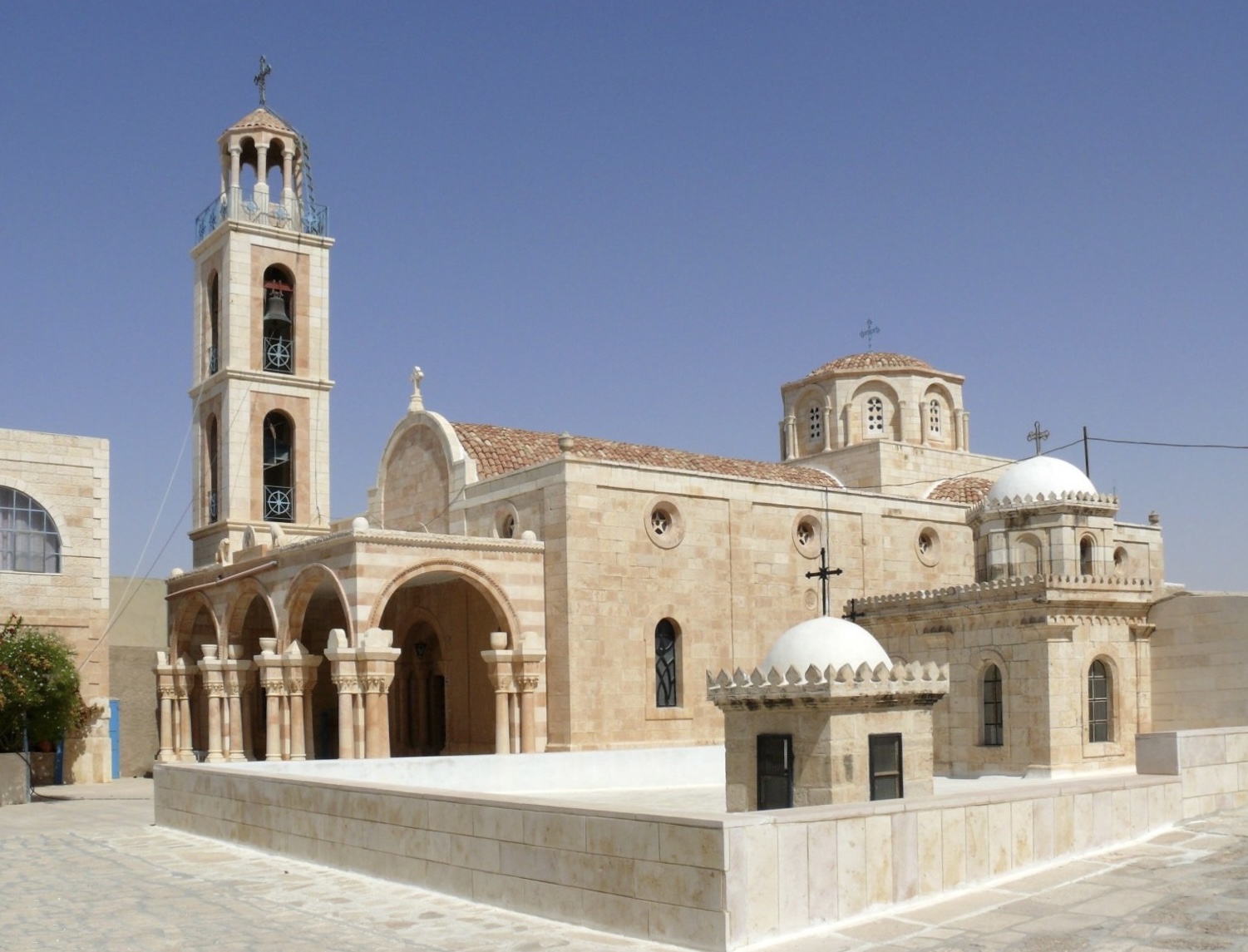
Perched on the sun-baked hills east of Bethlehem, the Monastery of Saint Theodosius the Great is a place where time seems to stand still. It lies far from the usual pilgrimage routes. The wind moves through the ravines, and a distant bell rings now and then. The landscape is rocky, with slopes stretching toward the horizon. A few shrubs or a Bedouin tent break the monotony. This isn’t a place for quick visits or photos. It’s for those who want stillness and a connection to something ancient.
The monastery was founded in the fifth century by Theodosius the Cenobiarch, a monk from Cappadocia who came to Palestine seeking solitude. His retreat grew into a community where monks lived, worked, and prayed together. They shared labor and meals. Their way of life became a model for monasteries across the Christian world, balancing solitude and fellowship.
The stone walls, made from local limestone, look like part of the landscape. Narrow windows and thick doors protect the interior from the desert’s heat and cold. The cave church, carved into the rock, holds fragments of the past. Inside, faded frescoes cover the vaulted ceilings. Some show saints and biblical scenes, their outlines still visible beneath layers of grime. The colors are earthy, matching the land around them.
The monastery has been destroyed and rebuilt many times. Persian invaders sacked it in the seventh century. Crusaders later occupied it. Muslim rulers sometimes banned worship, sometimes allowed it. Each time, the monks returned. Today, a small Greek Orthodox community keeps the tradition alive. They tend gardens, beehives, and ancient manuscripts in the library. Life here follows an old rhythm—morning prayers, work, and evenings spent in thought.
To reach the monastery, you start in Al-Ubeidiya. The road narrows and climbs. The landscape opens up, revealing stone and sky. In summer, the heat is strong. In winter, mist often covers the hills. The monastery appears like a mirage. There are no signs or crowds. Just the quiet sense that few others come here.
The courtyard, shaded by olive trees, offers a place to sit. The monks are rarely seen. Sometimes, one might bring tea or show you ancient texts in the library. There are no tours or gift shops. Just the weight of centuries pressing gently on your shoulders. Time moves differently here.
This isn’t a monastery for tourists. There are no golden domes or mosaics. No processions or stalls. Instead, there’s simplicity. The earliest Christian monks didn’t seek spectacle. They wanted a life stripped down to essentials. The walls here hold the prayers of generations. The stones are worn smooth by hands.
Historians and architects now visit the monastery. It’s one of the few places with an unbroken link to early monasticism. Unlike later religious sites, Saint Theodosius hasn’t changed much. The frescoes are faded. The floors are uneven. The furniture is plain. Yet this austerity makes it feel alive. The monks who lived here centuries ago might still be nearby.
If you come to this part of the world, visit. The road is rough. The climb is steep. But the quiet you find is rare. Sit on a stone bench. Listen to the wind. Let the place settle over you. You might not find answers. But you’ll find stillness. A world where time moves slowly. The past feels close enough to touch.