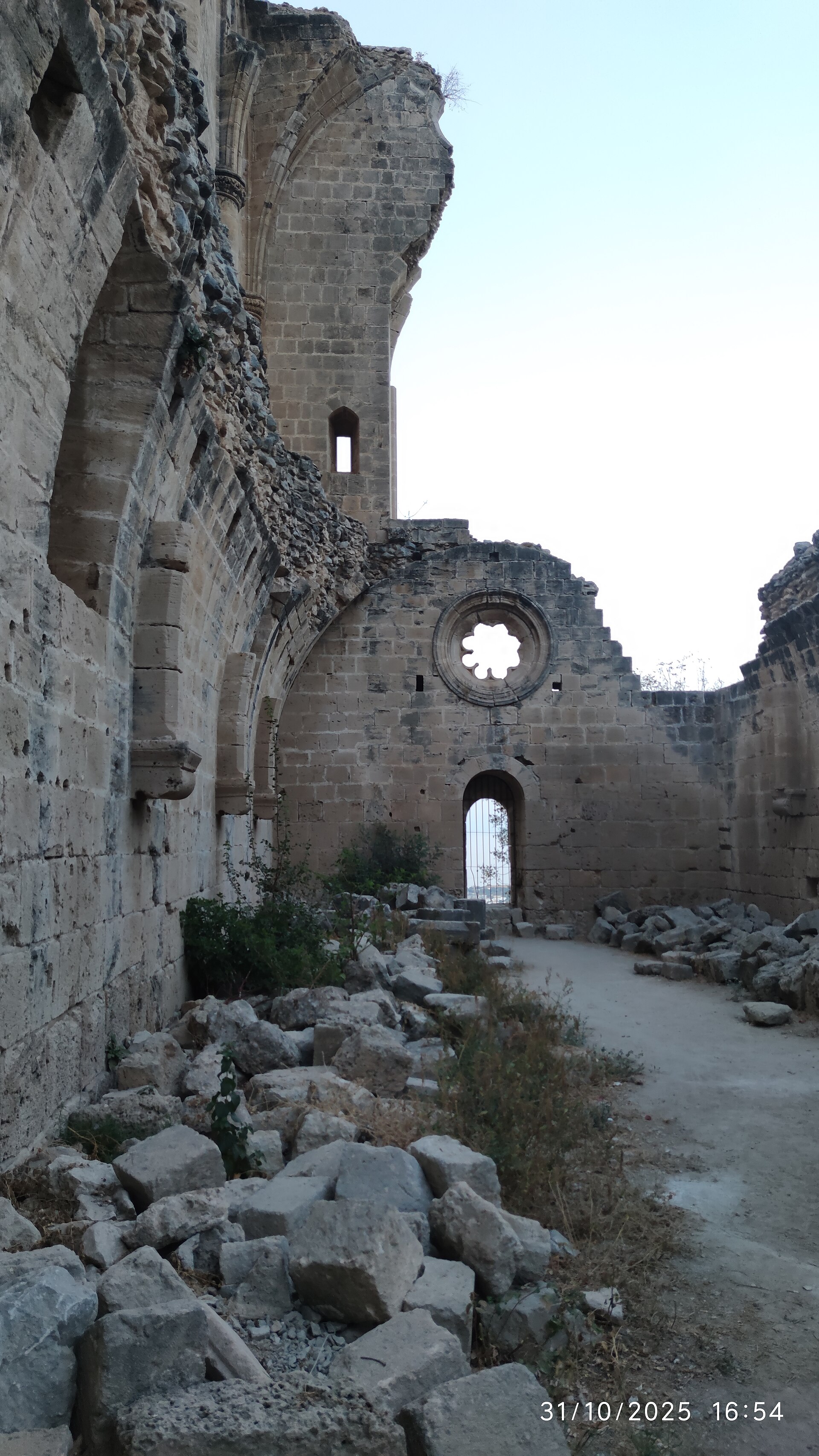
Perched on the northern slopes of the Kyrenia mountain range, Bellapais Abbey feels like a quiet guardian of Cyprus’s layered past. The ruins, though weathered by centuries, still carry the weight of their former grandeur, offering a rare glimpse into the island’s medieval monastic life. From its hillside perch, the abbey overlooks the village of Bellapais and the shimmering Mediterranean beyond, a view that has likely changed little since the 13th century. The name itself is a corruption of the French *Abbaye de la Belle Paix*—Abbey of Beautiful Peace—a poetic nod to the tranquility that still lingers here.
The abbey was founded in the 12th century by Augustinian canons, though the structures visible today date mostly to the 13th and 14th centuries, when the Lusignan kings of Cyprus took a particular interest in the site. These Frankish rulers, who governed the island after the Crusades, saw Bellapais as both a spiritual retreat and a symbol of their power. The Gothic architecture, with its pointed arches and ribbed vaults, reflects the European influences of the time, yet the abbey also bears subtle traces of local craftsmanship—limestone quarried from nearby hills, carved with a simplicity that contrasts with the ornate cathedrals of France or Italy.
The most striking feature of Bellapais is its cloister, a square of sun-dappled stone surrounded by a graceful arcade. The columns, each slightly different in design, support delicate arches that frame the central garden, where monks once walked in silent contemplation. The refectory, one of the best-preserved parts of the abbey, stretches alongside it—a long, airy hall where the canons gathered for meals. Its high windows and soaring ceiling create an almost sacred sense of space, as if the very stones were designed to lift the spirit. Nearby, the chapter house, with its vaulted ceiling and remnants of frescoes, hints at the intellectual life that once thrived here, where manuscripts were copied and theological debates unfolded.
Beyond its architectural beauty, Bellapais holds a place in Cyprus’s cultural memory. The abbey’s decline began in the 15th century, as the island passed from Lusignan to Venetian rule, and later to the Ottomans. By the 16th century, it was largely abandoned, its stones repurposed by villagers, its spiritual role forgotten. Yet the ruins endured, becoming a silent witness to the island’s shifting fortunes. In the 20th century, the abbey found new life as a muse for artists and writers. Lawrence Durrell, who lived in Bellapais in the 1950s, immortalized the place in *Bitter Lemons of Cyprus*, describing its haunting beauty and the way the light played across its ancient walls. His words helped cement the abbey’s reputation as a place where history and poetry intertwine.
Today, Bellapais is neither a museum nor a functioning monastery, but something in between—a place where visitors can wander freely, touching the cool stone of the cloister or sitting beneath the shade of an olive tree. The village that shares its name has grown around the ruins, its narrow streets lined with cafés and small shops selling local crafts. In the evenings, the abbey is often bathed in golden light, and the sound of church bells from the village below drifts up the hillside. There’s a sense of timelessness here, as if the centuries have softened but not erased the abbey’s presence.
What makes Bellapais special is not just its history, but the way it feels alive with stories. The worn steps of the refectory, the faint carvings on the columns, the way the wind moves through the empty arches—all of it suggests the quiet rhythms of monastic life. It’s easy to imagine the canons moving through their daily rituals, the murmur of prayers rising with the morning mist. Even now, the abbey retains a sense of purpose, not as a relic to be admired from a distance, but as a place that invites reflection.
For those who visit, Bellapais offers more than just a glimpse into the past. It’s a reminder of how landscapes hold memory, how stone and silence can tell stories that words cannot. The abbey’s location, too, plays a part in its magic—the way it sits above the village, yet feels apart from it, as if suspended between earth and sky. On a clear day, the view stretches all the way to the sea, a reminder of Cyprus’s place at the crossroads of civilizations. Here, the layers of history—Byzantine, Frankish, Ottoman—are not just abstract concepts, but something tangible, something you can almost reach out and touch.
Bellapais is not a place for hurried visits. It rewards those who take their time, who sit on the low walls of the cloister and watch the shadows lengthen, or who wander through the village afterward, stopping for a coffee in the square. The abbey’s beauty lies in its simplicity, in the way it has adapted to the passage of time without losing its essence. It doesn’t demand attention; it earns it, quietly, through the stories it holds and the peace it offers. In a world that often feels too loud, too fast, Bellapais remains a place of beautiful peace.