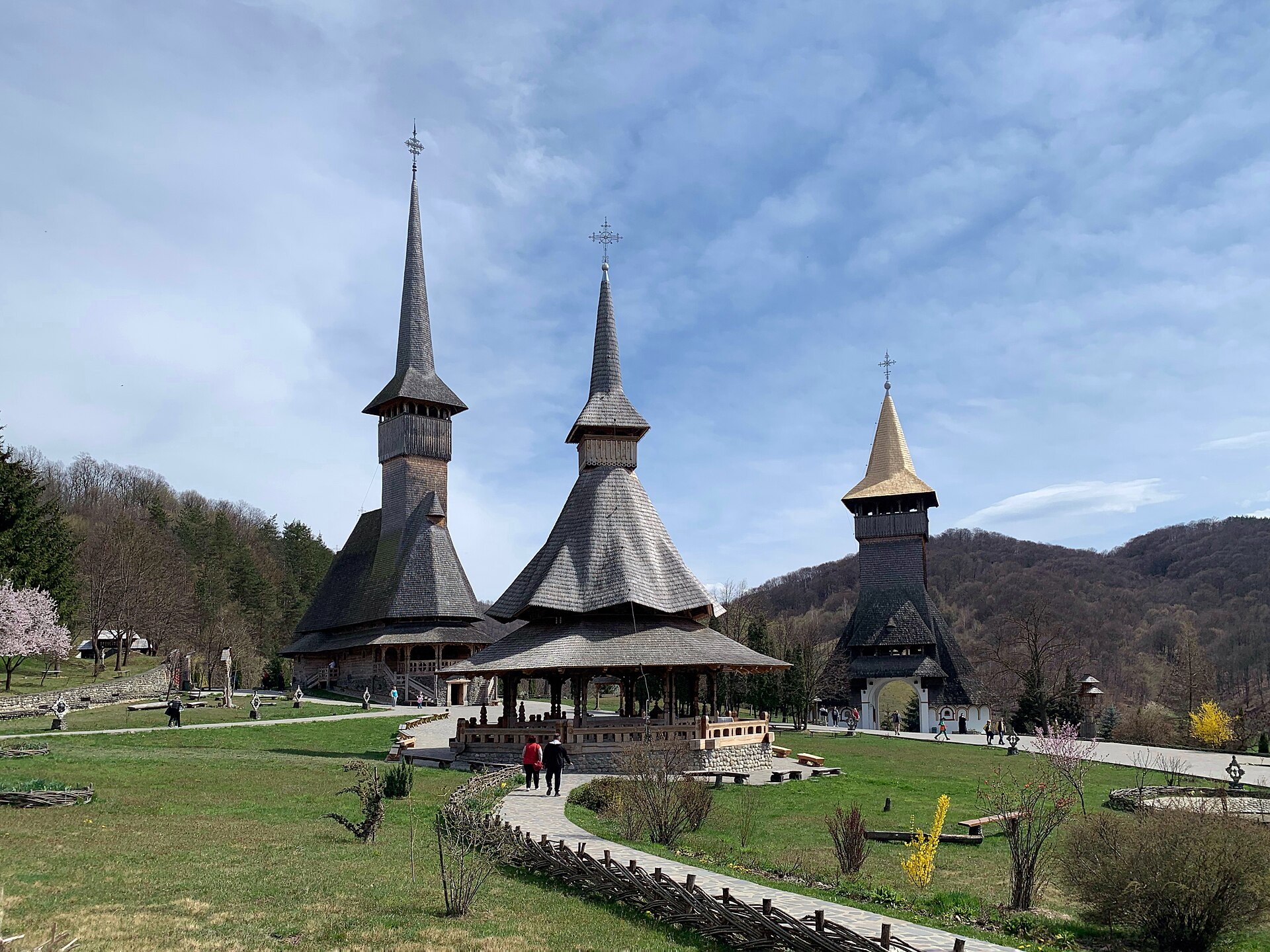
Nestled on the outskirts of Sighetu Marmației, where the Carpathian Mountains soften into rolling foothills and the Tisa River drifts toward the Hungarian border, Barsova Monastery stands apart from Romania’s well-trodden tourist paths. The air carries the scent of pine and damp earth. The monastery is modest in size, its quiet presence and layered history leaving a lasting impression.
Founded in the early 18th century, Barsova was one of many Orthodox monasteries established in Maramureș during the Habsburg era. For the local population, Orthodoxy was a cornerstone of identity, holding communities together under foreign rule. Barsova was built as a retreat for monks who lived by strict ascetic rules. Its walls were raised from local stone and timber, and its church adorned with frescoes in the Maramureș style—direct, reflecting the region’s devotion without ostentation.
The architecture of the monastery is simple. The main church, dedicated to the Dormition of the Mother of God, is small, with low vaults and thick walls that keep the interior warm in winter and cool in summer. The iconostasis, pews, and floors are made of oak and beech, worn smooth by centuries of use. The frescoes inside depict biblical stories without flourish, their sincerity more striking than elaborate murals elsewhere. The space feels intimate, designed for comfort rather than awe.
Surrounding the monastery is a garden where monks once grew vegetables and medicinal herbs. Apple and plum trees still stand, and wildflowers line the paths. In warmer months, the garden is a place to sit in silence, listening to birdsong and the distant murmur of the river. Winter transforms it: snow blankets the roofs and trees, and smoke curls from the chimney as the monks tend to their routines—praying, cooking, or keeping the fire alive.
Barsova was never wealthy or influential. While monasteries like Putna or Voroneț drew patrons and pilgrims, Barsova remained quiet. There are no crowds, no souvenir stalls, no guided tours. Instead, there’s silence, broken only by the tolling of a bell. The monastery’s obscurity is part of its character—it exists for itself, not for visitors.
The 20th century brought hardship. Under communist rule, many religious communities in Romania were dissolved, and monasteries were shuttered. Barsova survived, but barely. The number of monks dwindled, buildings fell into disrepair, and the garden became overgrown. After the fall of the regime, the monastery began to revive. Today, a small community of monks lives here again, tending to the land and welcoming the occasional visitor.
For locals, Barsova is a living part of their faith and history. Families bring children here for baptisms, gather for feast days, and speak with the monks, who offer quiet wisdom. In nearby villages, stories circulate about the monastery’s miracles—healings, comfort for the grieving, prayers that shielded communities from misfortune. These tales are passed down as part of a shared heritage.
Reaching Barsova isn’t easy. From Sighetu Marmației, the road winds through hills before narrowing into a forest path for the last few kilometers. The journey feels like part of the experience. When you arrive, there’s no grand entrance, no agenda. You can sit on a bench by the gate, listen to the rustling leaves, and let daily life slip away.
The monastery doesn’t demand attention. It offers a space to breathe, leaving its mark through authenticity. It’s not for those seeking excitement, but for those who want to understand how people in these mountains have preserved their faith and traditions. There’s no luxury, no distractions—just silence, nature, and memory.