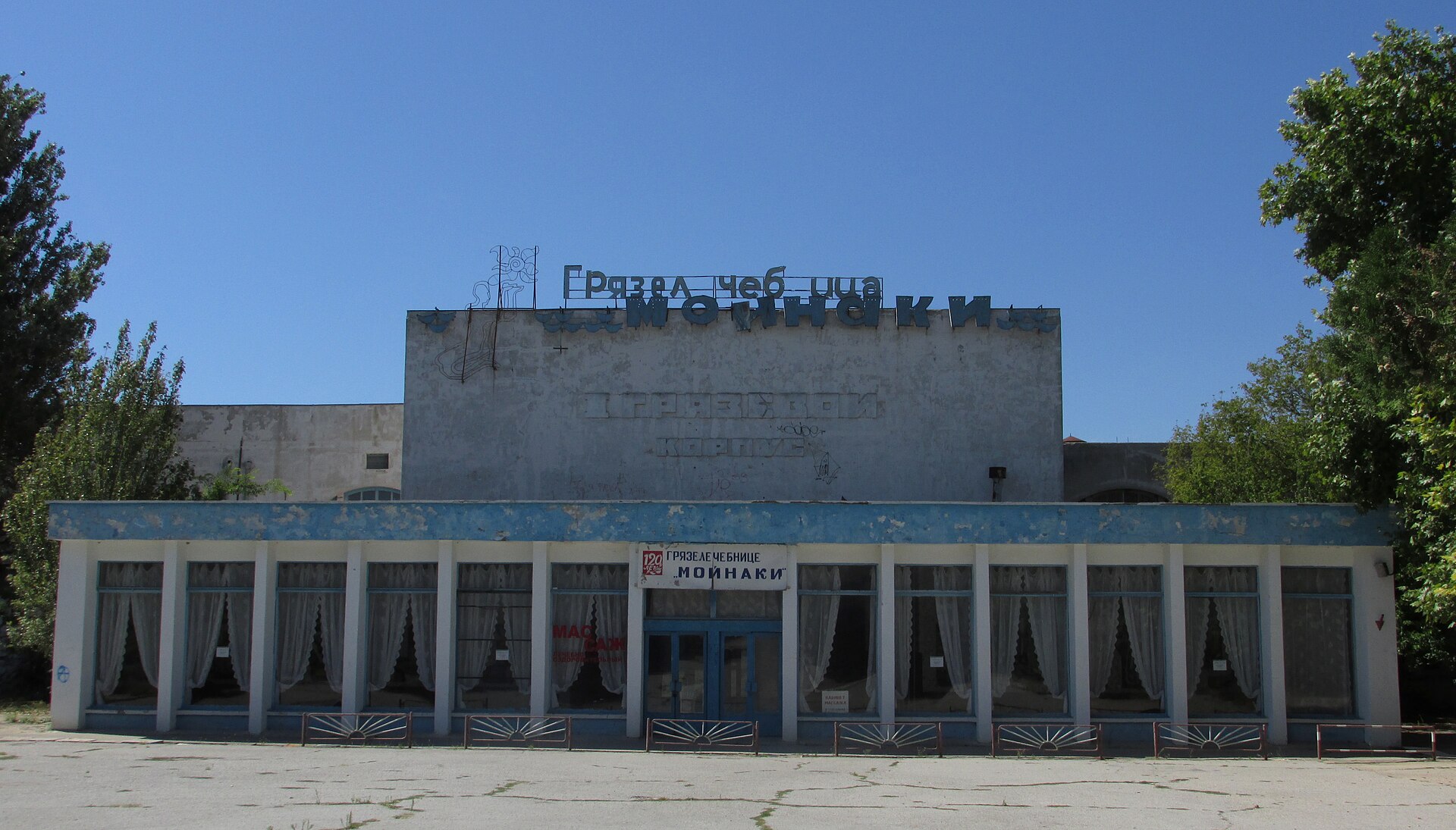
Moynaki is one of those rare places that feels suspended in time, as if the last century never quite ended. Tucked away on the outskirts of Yevpatoria, this mud therapy lake has drawn visitors for over a hundred years—not just for healing, but for the quiet, the stillness, the chance to step away from the noise of modern life. There are no crowded promenades here, no neon signs or tourist traps. Instead, the landscape opens up into wide, sunlit steppes, the air thick with salt, the water’s surface so smooth it mirrors the sky. In summer, the lake warms to a gentle temperature; in winter, a thin crust of ice forms over its shallow depths.
The story of Moynaki begins in the late 1800s, when local doctors first recognized the therapeutic properties of its mud. Crimea had long been a destination for those seeking rest and recovery, but Moynaki stood apart. Unlike the grand palaces and manicured gardens of Yalta or Livadia, this place offered something simpler: raw, natural wealth. The lake’s silt mud, rich in minerals, and its brine—a concentrated salt solution similar to the Dead Sea—became the foundation of its reputation. By the early 20th century, the first mud therapy clinics had taken root, and Moynaki became an essential part of Yevpatoria’s spa culture.
The lake itself is shallow, covering about forty hectares, which allows the water to heat up quickly under the Crimean sun. The bottom is lined with a thick layer of dark, almost black mud, formed from decaying algae, microorganisms, and mineral deposits. The scent of hydrogen sulfide is unmistakable—sharp and unfamiliar to many—but it’s precisely this characteristic that signals the mud’s healing potential. Doctors here recommend treatments for joint and muscle ailments, skin conditions, nervous system disorders, and general wellness. The process is straightforward: patients are coated in warm mud, left to relax as the minerals absorb into the skin, then rinsed off in the lake’s mineral-rich waters.
The architecture of Moynaki’s clinics is modest but carries a quiet charm. Most of the buildings date back to the Soviet era, when the resort was at its peak. Constructed from white stone, they feature large windows and spacious verandas where patients could unwind after treatments. Inside, some of the original details remain—mosaic panels depicting sea scenes and mythological figures, wooden benches worn smooth by decades of use, staircases darkened by time. The atmosphere is one of understated comfort, a far cry from the sleek, impersonal design of modern wellness centers.
A stay at Moynaki isn’t just about the treatments; it’s about settling into a slower rhythm. Mornings begin with a doctor’s visit, followed by a simple but hearty breakfast in the dining hall—fresh vegetables, local fish, yogurt. Then comes the day’s therapies: mud applications, brine baths, massages, or physiotherapy. Between sessions, there’s time to wander along the lake’s edge, sit under the shade of an old tree, or lie in the sun, listening to the cries of gulls and the rustle of reeds. The pace is unhurried, almost meditative, as if the place itself encourages you to slow down.
Beyond its therapeutic reputation, Moynaki is a striking natural site. The lake is surrounded by steppe, which bursts into color in spring with wild tulips and poppies, then fades to golden hues under the summer sun. The area is a haven for birds—herons, cormorants, and occasionally flamingos, which migrate here in winter. The water is so saline that swimming feels more like floating; the high salt content makes it impossible to sink, much like the Dead Sea. This phenomenon draws not only patients but curious visitors, eager to experience the strange, buoyant sensation for themselves.
Though Moynaki is primarily a medical facility, it also attracts those simply looking to escape the chaos of city life. There are no nightclubs, no fancy restaurants, no amusement parks—just silence, clean air, and the chance to be alone with your thoughts. Many people return year after year, as if to a place that has become personally meaningful. For some, it’s a childhood memory, a trip their parents took them on decades ago. For others, it’s where they regained their health, or where they first discovered the quiet joy of doing nothing at all.
In recent years, Moynaki has seen gradual renovations. Older buildings are being restored, and new wings equipped with modern facilities have been added. Yet the essence of the place remains unchanged. The focus is still on healing—not just the body, but the mind. Perhaps that’s why, despite the rise of newer resorts, Moynaki hasn’t lost its appeal. It’s a place where time moves differently, where each day unfolds with the same gentle predictability. And in that unhurried rhythm, there’s a kind of magic.