- Home
- South Africa
- St George
- St. Mark's Church, George
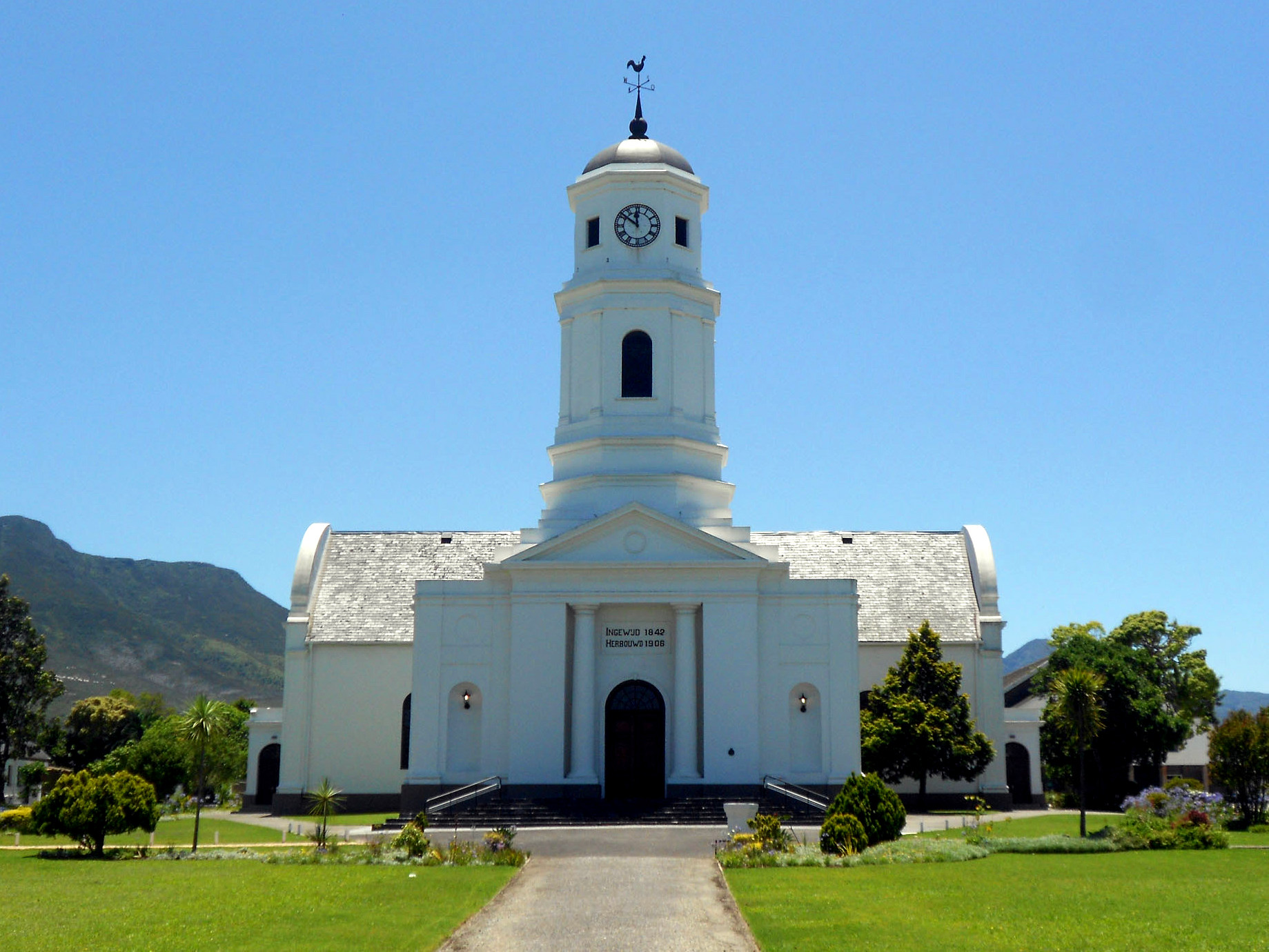
Photo: Lugerda, CC BY-SA 3.0
St. Mark's Church, George
out of 5 0 ratingsMoederkerk in George is one of those rare places that feels suspended in time, a quiet witness to the early colonial history of South Africa. Built in the 19th century, the church stands at the heart of the town, its sturdy stone walls and simple lines reflecting the Dutch Reformed traditions that shaped much of the Cape Colony. George itself was founded in 1811 as an administrative outpost, a necessary stop between Cape Town and the eastern frontier, and the church quickly became its spiritual and social anchor. Today, it remains a place where the past lingers—not as a relic, but as something still very much alive.
The story of Moederkerk begins long before its current structure took shape. The first church in George was built in 1813, a modest building that soon proved too small for the growing community. Construction on the present church started in 1832 and took nearly a decade to complete. The design is unassuming yet deliberate: thick walls of local stone, a symmetrical facade, and a steep gabled roof—all hallmarks of Cape Dutch architecture, adapted to the needs of a frontier settlement. There’s no grandeur for grandeur’s sake here; every element serves a purpose, whether practical or spiritual.
Inside, the church feels both intimate and expansive. High wooden ceilings, supported by dark beams, draw the eye upward, while large windows allow sunlight to filter in, softening the stone and wood. The interior is free of ornate decoration, save for the occasional carved detail on the pulpit or the old pews. The focus is on the space itself—the way it carries sound, the way it invites quiet reflection. The organ, installed in the 19th century, still fills the church with music during services, its tones resonating against the bare walls in a way that feels both timeless and deeply human.
For much of its history, Moederkerk was more than just a place of worship. In a town where life revolved around the church, it served as a gathering point for the community. Here, people marked births, marriages, and deaths; here, they debated local matters, settled disputes, and shared news from distant parts of the colony. Even now, the church remains a thread connecting the present to the past. Many of its congregants are descendants of the original Dutch settlers, and the Sunday services continue much as they have for generations. The rituals may be familiar, but the sense of continuity is what makes them feel extraordinary.
Outside, a small garden surrounds the church, offering a place to sit beneath the shade of old trees. A few weathered gravestones stand among the greenery, their inscriptions worn but still legible. These are the resting places of early pastors and townspeople who helped shape George in its earliest days. The garden is simple, almost unassuming, yet it adds another layer to the church’s story—a reminder that history isn’t just about buildings, but about the people who lived and died within their shadow.
George is a town that moves at its own pace, and Moederkerk fits perfectly into that rhythm. Unlike the crowded tourist spots of Cape Town or the bustling streets of Johannesburg, this is a place where time seems to slow down. Even on weekends, the church retains a sense of calm, its doors open to anyone who wishes to step inside. There are no guided tours, no crowds jostling for the best view—just the quiet hum of a place that has seen centuries pass by.
What makes Moederkerk special is that it’s still very much in use. It isn’t a museum, though it could easily be one. Services are held every Sunday, and the church remains a venue for weddings, baptisms, and funerals. Visitors are welcome during the week, and while there’s no formal introduction to its history, the space speaks for itself. The wooden pews, the worn stone floors, the way the light falls through the windows—all of it tells a story without words. If you’re lucky, you might even meet a local who’s happy to share a few anecdotes about the church’s past.
In a country as diverse and fast-changing as South Africa, places like Moederkerk offer a rare sense of rootedness. They remind us of the layers of history that have shaped the nation—of the Dutch settlers who arrived in the 17th and 18th centuries, of the communities they built, and of the ways those communities evolved over time. The church isn’t just a relic of colonialism; it’s a testament to the resilience of tradition, to the way people adapt and endure. For travelers interested in history, it’s a chance to step back in time, to see how the past isn’t just something we read about, but something we can still touch.
Day around this place
Where else to go on the same day
Building the day…
Where it is
-33.95620, 22.46313