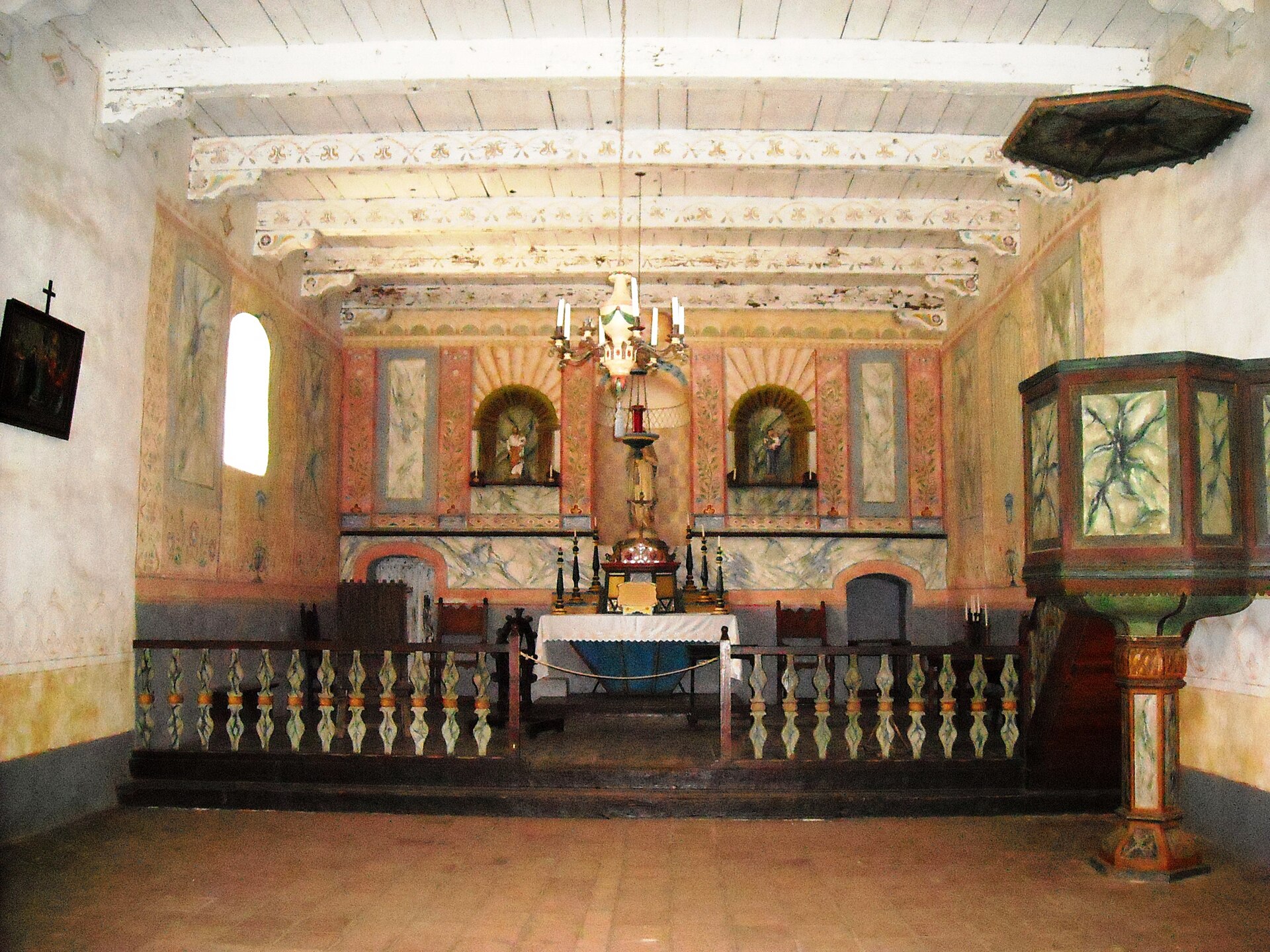
The missionary church of Concepción stands as a quiet witness to a moment in history when two worlds collided and, for a time, found a way to coexist. Tucked away in a small Bolivian town, it rises above the low-slung adobe houses and tiled roofs that still bear the marks of colonial life. This isn’t just a building—it’s a living record of the 18th century, when Jesuit missionaries sought to bridge European traditions with the cultures of Indigenous peoples. The result is something rare: a place where the austerity of Baroque architecture meets the vibrant patterns of local artistry, where Christian iconography intertwines with depictions of tropical birds and mythical creatures from the forests of South America.
The church itself is unassuming from the outside, built from wood and clay, materials that were readily available to the craftsmen of the time. Its facade gives little hint of the richness within. Step inside, though, and the space opens up in a way that feels almost theatrical. High ceilings, supported by thick wooden columns, are carved with intricate designs that seem to tell stories of their own. The walls are covered in frescoes where biblical scenes unfold alongside images of exotic flora and fauna, as if the artists couldn’t resist blending the sacred with the world they knew. The altar, gilded and glowing in the dim light, dominates the space, its presence both commanding and serene.
Concepción was one of several missions established by the Jesuits in the Chiquitos region, a vast territory that once stretched across parts of modern-day Bolivia, Brazil, and Paraguay. These missions were more than just religious outposts—they were experiments in cultural exchange. The missionaries brought with them European knowledge of agriculture, music, and craftsmanship, but they also absorbed local traditions, adapting their teachings to fit the realities of life in the tropics. The church was the heart of this community, a place where people gathered not only for worship but for festivals, theater performances, and education. It was here that a new culture began to take shape, one that borrowed from both sides of the Atlantic.
Today, the church remains an active place of worship, its doors still open for services. Yet it has also become a destination for those drawn to its history and artistry. Visitors come to see how the Jesuits and Indigenous artisans collaborated, creating something that feels both familiar and entirely unique. One of the most striking remnants of that time is the church’s organ, its music once a central part of mission life. The Jesuits brought European compositions with them, but local musicians reimagined these melodies, blending them with Indigenous instruments and rhythms. The result was a sound that was neither entirely European nor entirely Indigenous, but something entirely new.
The town of Concepción has changed little over the centuries. Its streets are narrow and dusty, lined with simple houses that seem to hold the past in their walls. The people here take pride in their history, and many are eager to share it—whether through stories, old manuscripts, or the artifacts displayed in the small museum attached to the church. There’s a sense that the mission’s legacy is still alive, woven into the fabric of daily life. It’s not uncommon to hear music from the colonial era drifting through the streets during festivals, a reminder of how deeply these traditions are still felt.
In 1990, the Jesuit Missions of the Chiquitos were designated a UNESCO World Heritage site, a recognition not just of their architectural significance but of the unique culture that flourished here. Unlike many colonial-era structures, these missions were never destroyed by war or neglect. They stand today much as they did centuries ago, offering a rare glimpse into a moment when two civilizations found common ground. The church in Concepción is one of the best-preserved examples of this, its walls and artwork telling a story that is both local and universal.
Visiting the church is less about ticking off a tourist attraction and more about stepping into a different time. You could spend hours studying the frescoes, deciphering the symbols hidden in the carvings, or simply sitting in the quiet, listening to the creak of the wooden beams. There’s a sense of stillness here, a feeling that the past isn’t as distant as it seems. Occasionally, the town comes alive with festivals that recreate the music and celebrations of the 18th century, drawing both visitors and locals. For many in Concepción, the church isn’t just a historical site—it’s a part of who they are.
Concepción isn’t a place that announces itself with grand monuments or bustling crowds. It’s quiet, unassuming, the kind of town that reveals its charm slowly. There’s no rush here, no pressure to move on to the next attraction. Instead, there’s time to wander, to sit, to absorb the atmosphere. The church is the heart of it all, a place where the layers of history feel tangible. It’s a reminder that some stories endure, not because they’re loud or flashy, but because they’re deeply human. And in a world that often feels divided, that’s something worth holding onto.