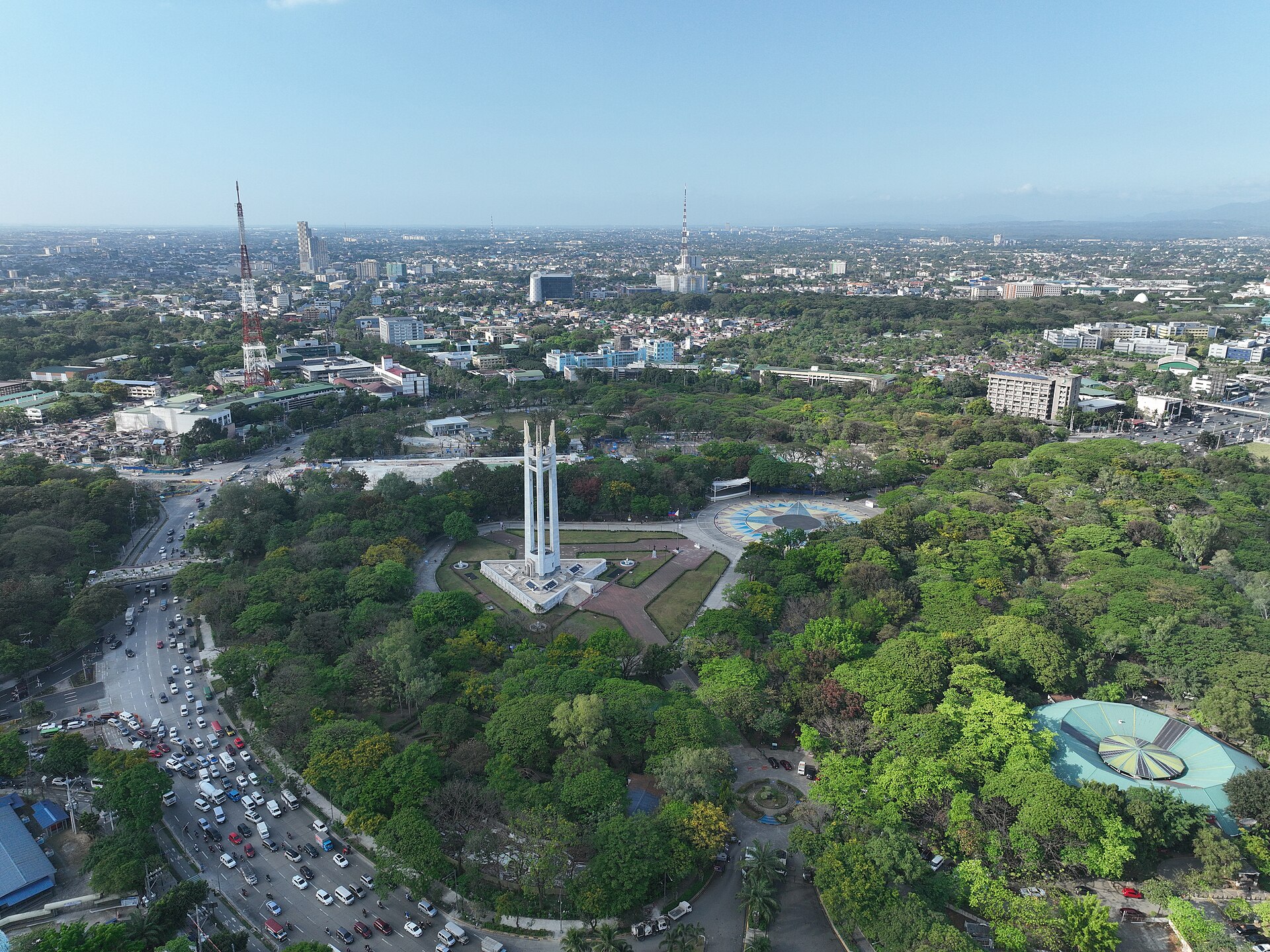
Quezon Memorial Circle isn’t just another park in Metro Manila—it’s where the city’s relentless energy softens into something quieter, something that feels almost like a pause. Tucked in the heart of Quezon City, the circle honors Manuel Quezon, the country’s second president and the man the city was named after. Despite being just a short drive from Manila’s business districts, the place has a different rhythm. Wide pathways wind beneath old trees, and the air carries the kind of stillness that’s rare in a metropolis of this size. It’s the kind of space where people come to breathe, whether they’re locals escaping the heat or visitors trying to make sense of the city’s layers.
The centerpiece of the circle is the Quezon Memorial Shrine, a structure that’s both understated and commanding. Built in the mid-20th century, the mausoleum is a low, circular building of white marble, its columns framing the entrance in a way that feels both solemn and welcoming. Inside, Quezon’s remains rest beneath a simple but dignified tomb. The design borrows from classical memorials, yet there’s nothing overly grand about it—just a sense of respect, the kind that lingers without demanding attention. Around the shrine, the park unfolds in careful symmetry: manicured lawns, benches shaded by acacia trees, and fountains that add a soft murmur to the quiet.
Quezon himself was a complicated figure, and the circle doesn’t shy away from that. He was a leader who helped shape the Philippines’ path to independence, yet his presidency coincided with the turmoil of World War II and Japanese occupation. The park doesn’t try to smooth over these contradictions; instead, it lets them exist side by side. For many Filipinos, this is a place of reflection, where history feels tangible without being overwhelming. It’s also very much a part of everyday life. On weekends, families spread out picnics on the grass, teenagers pose for photos by the fountains, and elderly men play chess under the trees. The circle isn’t just a monument—it’s a living space where the past and present overlap.
The architecture here blends neoclassical elements with a distinctly local sensibility. The shrine’s columns and the park’s orderly layout give it a sense of structure, but the space never feels stiff or formal. Instead, it has an easy, almost casual feel, as if it’s always been part of the city’s fabric. During holidays, the circle comes alive in a different way. Strings of lights drape over the trees, open-air concerts draw crowds, and the fountains glow with colored lights after dark. Even the way the park is lit at night—soft, warm, almost intimate—makes it feel like a place where people belong.
One of the most striking features is the statue of Quezon that stands near the mausoleum. He’s depicted in mid-stride, a book in his hand, a nod to his belief in education as a path forward. The statue isn’t imposing, but it’s impossible to ignore. School groups often gather around it, listening to teachers explain the significance of the man and his era. For foreigners, it’s often their first real introduction to Philippine history beyond the usual tourist spots. There’s no pressure here, no guided tours pushing you along—just the quiet invitation to look, to wonder, to piece together the story for yourself.
The circle is encircled by a road that carries the hum of the city, but inside, the noise fades. It’s one of those rare places in Quezon City where you can forget, even for a moment, that you’re in the middle of a sprawling urban area. There are no hawkers selling trinkets, no crowds jostling for space—just open lawns, the occasional jogger, and the sense that time moves a little slower here. That might be why locals keep coming back. It’s not just a park or a memorial; it’s a small escape, a place to step away from the rush without actually leaving the city.
Beyond the shrine and the statue, there’s a small museum dedicated to Quezon’s life. The exhibits are modest—a few personal items, photographs, documents—but they offer a glimpse into the man behind the name. You won’t find flashy displays or interactive screens, just straightforward storytelling. For history buffs, it’s a must-visit, but even those who stumble in by accident often leave with a better understanding of why this place matters. The museum doesn’t try to be anything more than it is: a quiet space to connect with the past.
As evening falls, the circle transforms. The white marble of the shrine takes on a soft glow under the lights, and the pathways are illuminated from below, casting long shadows. The fountains become pools of light, and the air cools just enough to make sitting on a bench feel like a small luxury. It’s a time when the place feels most like itself—not just a tourist spot, but a part of the city’s daily life. Couples walk hand in hand, students chat on the grass, and the occasional street musician plays a slow melody. There’s no grand spectacle, just the quiet sense that this is where the city comes to unwind.
Quezon Memorial Circle isn’t just a monument to one man or one era. It’s a place where different generations intersect, where history isn’t something distant but something you can touch. You’ll see young people taking selfies in front of the shrine, families having lunch on the grass, and old men reminiscing about the days when this was all just a dream. The circle doesn’t feel like a museum; it feels like a living room for the city, a space where the past isn’t preserved in glass cases but woven into the fabric of everyday life. That’s why it endures—not as a relic, but as a place that still has something to say.