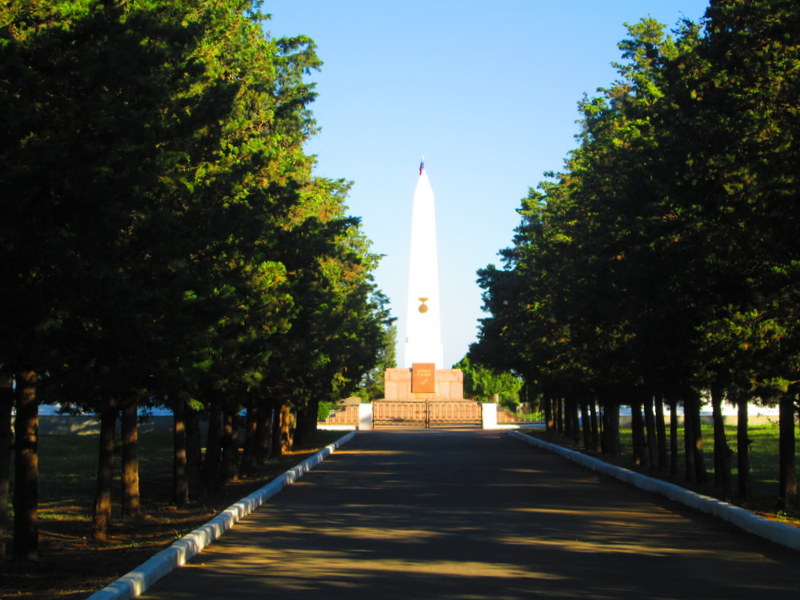
The Soviet War Memorial Cemetery in Sevastopol is one of those rare places where history isn’t just remembered—it’s felt. Perched on a hillside in the city’s northern district, it overlooks the bay, its quiet slopes holding the stories of thousands who died defending the city during the Second World War. The cemetery was established in 1944, immediately after Sevastopol’s liberation, when the grim task of burying the dead began. What started as mass graves scattered across battlefields later became a unified memorial in the 1970s, a place where the past is preserved not in grand monuments, but in the weight of silence.
The design of the memorial is unadorned, almost austere, as if any excess would distract from its purpose. A central avenue leads to a towering obelisk crowned with a star, flanked by rows of granite slabs bearing the names of the fallen. Many of those names were never recovered—only the words *Eternal glory to the heroes* remain, etched into stone. Cypress and pine trees line the paths, their needles softening the sounds of the city below. There are no elaborate sculptures or dramatic inscriptions here, just the quiet dignity of simple graves and the stillness that lingers between them.
This cemetery is inseparable from the story of Sevastopol’s defense, one of the war’s most brutal and resilient chapters. The city endured two sieges: the first lasting nearly a year, from October 1941 to July 1942, and the second stretching over nine months in 1944, as Soviet forces fought to reclaim it. Tens of thousands perished—soldiers and civilians alike—many buried where they fell, in bomb craters or shallow trenches. After the war, their remains were gathered here, creating a collective resting place for those who had held the city to the last.
Today, the memorial is more than a historical site; it’s a living part of Sevastopol. Veterans visit, as do relatives of the fallen, school groups on field trips, and locals who come simply to walk the paths. Every year on May 9th, crowds gather for ceremonies and wreath-layings, but on other days, the cemetery feels almost ordinary—people standing in quiet reflection or strolling between the graves. There are no guided tours or detailed plaques; the names on the stones speak for themselves, and the land itself carries the rest of the story.
One of the most striking features is the memorial wall, its bas-reliefs depicting scenes from the siege: soldiers in trenches, medics carrying the wounded, sailors charging into battle. These images don’t glorify war; they show it as it was—harsh, unrelenting, yet profoundly human. Nearby, excerpts from letters and diaries of the city’s defenders are inscribed on plaques, adding a personal dimension to the collective memory. The words are raw, unfiltered, a reminder that behind every name on the stones was a life, a family, a story cut short.
The cemetery isn’t set apart from the city; it sits in a residential neighborhood, and locals pass by it daily on their way to work or the market. For many, it’s just another part of the landscape, but those who pause here, even briefly, sense that this place is about more than the past. It’s about how memory is passed down, how war didn’t end in 1945 but lives on in family histories, in the names on the stones, in the silence of those who come to pay their respects.
In winter, the cemetery feels stark—bare trees, gray skies, the wind off the sea. Yet even then, people come. In summer, when the flowers bloom and the air is warm, the mood shifts, though the weight of history remains. Bouquets left on graves, some by relatives, others by strangers, are a quiet testament to the fact that memory endures. There are no tourists here in the usual sense, but visitors to Sevastopol often make their way to this hillside, seeking to understand the cost of the city’s survival.
This isn’t just a burial ground; it’s a symbol of endurance and sacrifice. It serves as a reminder that the war touched every family, every home in Sevastopol. The city has been a battleground more than once, and its history is one of people who refused to surrender, even when hope seemed lost. Here, among the graves, that history becomes tangible. Those who walk these paths can’t help but reflect on what it means to defend one’s land—and what it costs.