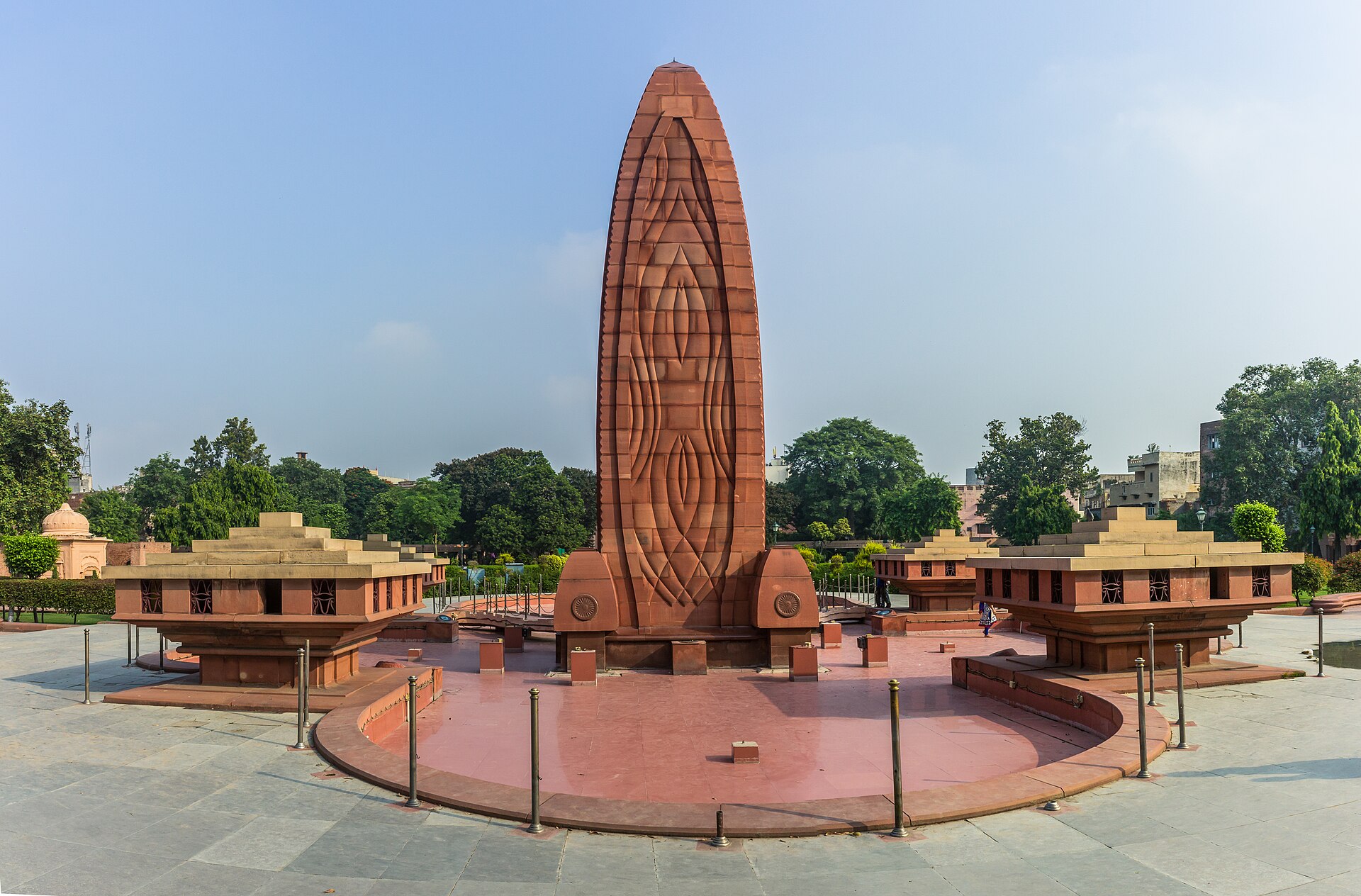
A place where history’s weight lingers. Away from the city’s noise, it doesn’t shout for attention like larger monuments. Instead, it stands quietly, its stone etched with names of those who never came home.
The design is simple. A tall pillar of pale stone rises from a paved plaza, its surface covered with names of soldiers lost in India’s wars. Pathways lead past plaques detailing battles fought. But the real presence here isn’t in the structure—it’s in the silence, the rustle of leaves, the distant footsteps. The absence of the fallen feels heavier because of it.
Built in the early 2000s, the memorial reflects a shift in how India viewed its military past—not just through victory, but through loss. Amritsar, near the Pakistan border, was chosen deliberately. Conflict here left deep marks, and the memorial acknowledges that without glorifying war.
There are no guides, no stalls, no crowds. Visitors move at their own pace. Some read the names. Others sit on benches, lost in thought. Veterans sometimes visit, their uniforms worn but their presence full of memory. School groups arrive, their voices hushed as teachers explain why this place exists. It feels less like a monument, more like a shared space for remembrance.
Dawn and dusk are when the memorial feels most powerful. The light softens the stone, casting shadows over the names. Some names repeat—families who lost more than one. You wonder about the lives left behind, the empty chairs, the unanswered letters.
For locals, the memorial isn’t just for Remembrance Day. They leave flowers, light small lamps. The park around it offers space to sit, though most days it’s quiet. That’s its strength—it doesn’t need noise to matter.
This place carries loss without fanfare. No speeches, no slogans. The tribute is in the silence, the wind through the trees, the way voices drop when people speak. It reminds you that peace is fragile, that the past is never far away.
The memorial is part of Amritsar’s story, a city shaped by conflict and resilience. For those who visit, it offers a moment to step away from daily noise and think about what it means to remember—not just the battles, but the people.