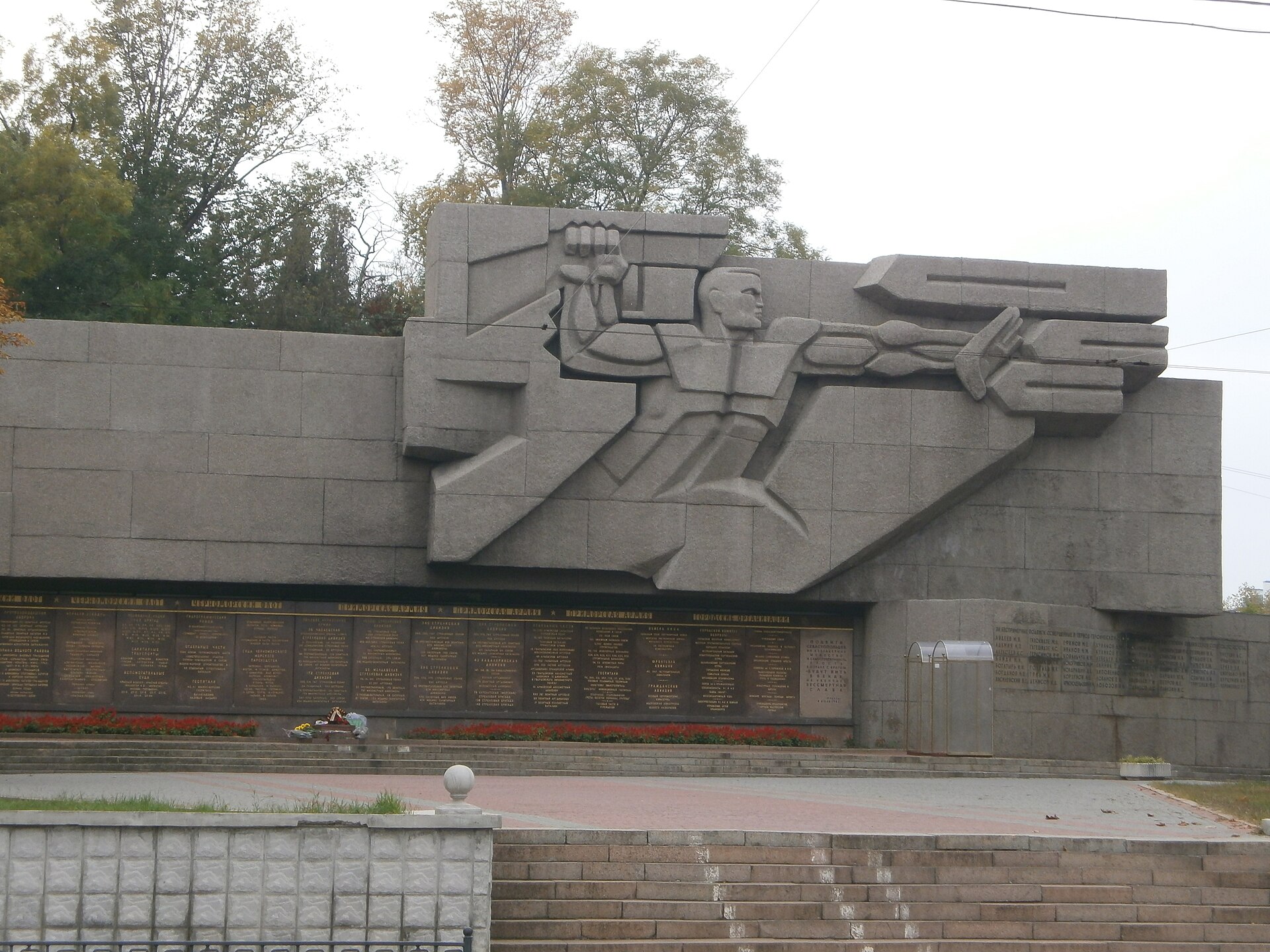
Perched on Sapun Ridge, where some of the fiercest battles for Sevastopol unfolded during World War II, this memorial stands as a quiet testament to the city’s defenders. The ridge itself became a symbol of resilience, the place where Soviet forces broke through German defenses in May 1944, marking the beginning of Crimea’s liberation. The land here still carries the weight of that struggle—shrapnel and shell casings occasionally surface from the earth, and remnants of trenches and fortifications remain, half-buried in the grass.
The memorial was unveiled in 1974, and since then, it has become one of Sevastopol’s most significant sites. Its design is understated yet powerful, blending into the landscape rather than dominating it. At its heart stands a towering obelisk, reaching toward the sky as if echoing the scale of the sacrifice made here. Nearby, the Eternal Flame flickers on days of remembrance, its light a constant reminder of those who never returned. The flame is tended with care, a small but meaningful ritual that connects the present to the past.
From the ridge, the view stretches across the surrounding hills, and on clear days, the outline of Sevastopol Bay comes into focus. The landscape itself feels like an open-air museum, where every slope and gully tells a story. Around the memorial, a park has been carefully planted, its trees and shrubs arranged to preserve the natural contours of the land. Even when groups of visitors arrive, the atmosphere remains subdued, the silence broken only by the wind or the occasional murmur of voices. It’s a place that invites reflection, where the cost of victory feels tangible.
A stone stele near the obelisk bears the names of Heroes of the Soviet Union who fought in these battles. Some of these names are familiar from history books, while others are known only to their families or comrades. Each one represents a life, a story cut short or forever altered by war. Nearby, memorial plaques outline the key moments of the defense, offering visitors a glimpse into the strategies, the losses, and the sheer determination that defined those days. The plaques are straightforward, their language free of embellishment, as if the facts alone are enough to convey the weight of what happened here.
The museum at the site expands on these stories, its exhibits going beyond military artifacts to paint a broader picture of life during the war. Photographs, documents, and personal belongings of soldiers and officers fill the space, but so do the everyday items that reveal how civilians endured the siege. Letters from the front, diaries kept under fire, even children’s drawings from those years—each piece adds a layer to the narrative. The museum doesn’t shy away from the harsh realities: the hunger, the bombings, the makeshift hospitals where medics worked around the clock. Yet there’s also a sense of resilience, of a city that refused to break.
Sapun Ridge isn’t just a historical site; it’s a living part of Sevastopol. Schoolchildren visit for lessons on courage, veterans come to honor their fallen friends, and tourists walk the paths to understand what freedom cost. On Victory Day and the anniversary of Sevastopol’s liberation, the ridge becomes a gathering place, with ceremonies, wreath-laying, and, in the evening, fireworks lighting up the sky. The events are solemn but not somber, a mix of grief and gratitude that feels deeply personal to those who attend.
Walking through the memorial leaves a lingering impression. There’s pride in the bravery of those who held the line, but also a quiet sadness at the scale of loss. The war doesn’t feel like distant history here—it’s present in the land, in the names on the stele, in the stories passed down through generations. That’s why the memorial doesn’t feel like a relic. It’s a place where the past isn’t just remembered; it’s still felt.
For many in Sevastopol, Sapun Ridge is more than a monument. It’s tied to family histories—stories of grandfathers who fought here or grandmothers who worked in the factories during the siege. Even newcomers to the city often find themselves drawn to the ridge, as if the land itself pulls them in. There’s no grandiosity here, no exaggerated patriotism. The memorial is simple, much like the people it honors. It doesn’t demand speeches or fanfare. All it asks is that you stand for a moment, look at the names, and listen to the silence. The history isn’t gone; it’s right here, in the earth beneath your feet.