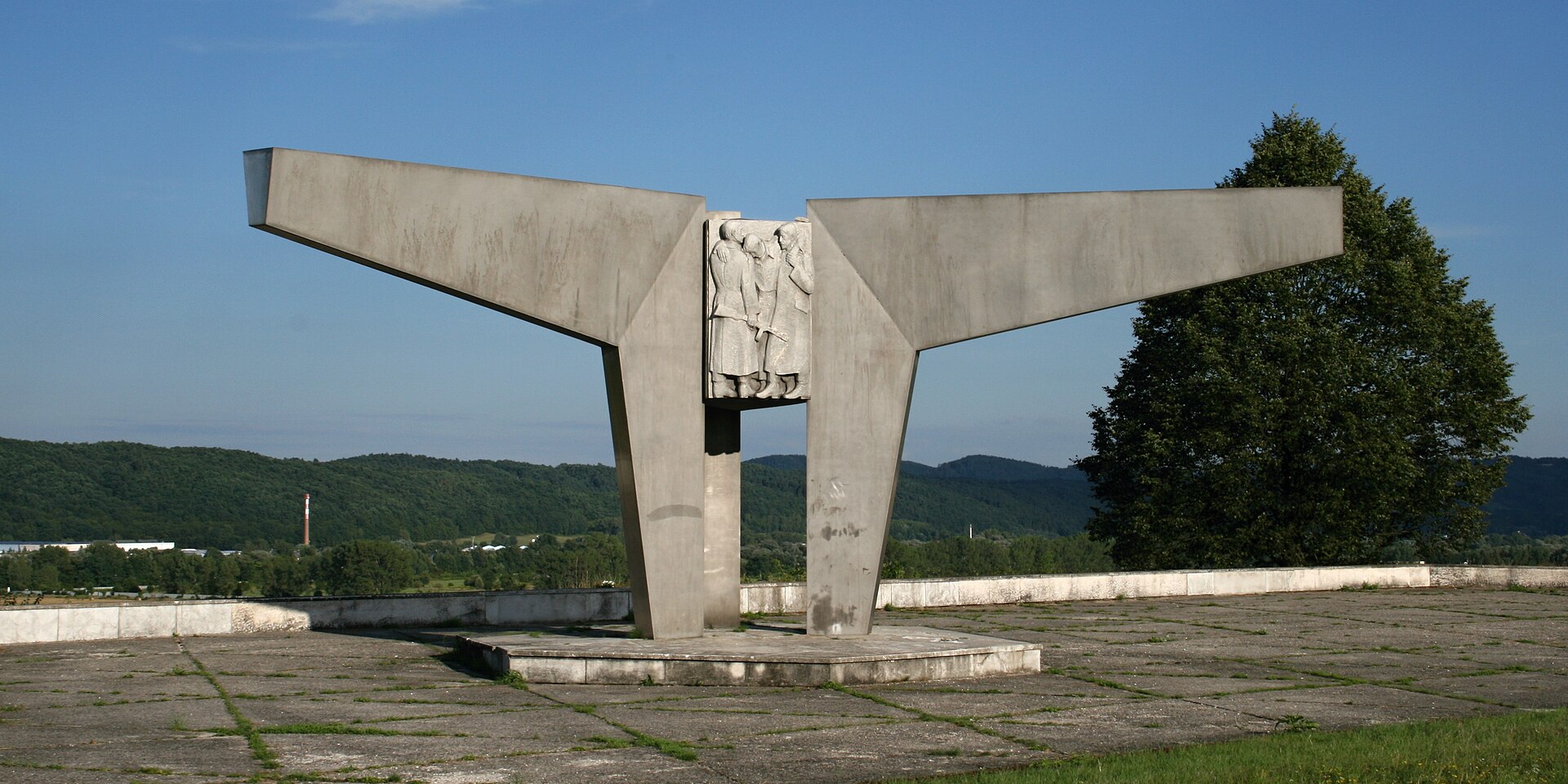
Nová Dubnica’s Memorial to the Slovak National Uprising stands on a quiet hill above the town, a place where history feels close enough to touch. It was here, in August 1944, that a rebellion against Nazi occupation and the collaborationist government of Jozef Tiso began to take shape. Though the uprising ultimately failed, it remains one of the largest acts of resistance in wartime Europe, a moment when ordinary people chose to fight despite overwhelming odds. The memorial doesn’t glorify victory—it honors the struggle itself, the defiance of those who refused to accept oppression even when the outcome was uncertain.
The design of the memorial is stark and deliberate. At its center, a towering stone stele rises from the ground, crowned by a bronze figure of a soldier holding a flag that seems to ripple in an unseen wind. There’s no excess here, no grandiosity—just the raw symbolism of resilience. The surrounding park is simple, with winding paths that invite quiet reflection. The absence of elaborate decoration makes the space feel more intimate, as if the weight of memory is enough on its own.
Nová Dubnica wasn’t chosen for this memorial by chance. During the uprising, the area became a stronghold for partisan fighters, a place where fierce battles were fought and local communities risked everything to support the resistance. After the war, the town came to embody the spirit of that defiance, and the memorial became its most enduring landmark. Every August, on the anniversary of the uprising’s beginning, ceremonies are held here, drawing veterans, families, and those who still feel the pull of that shared history.
For many Slovaks, this isn’t just a monument—it’s a place where the past lingers in the air. School groups often visit, listening to stories of the uprising while standing beneath the bronze soldier’s gaze. Older generations come to pay their respects, their steps slow and measured. The atmosphere is one of quiet reverence, not the kind that demands grand gestures, but the kind that settles into your bones. The surrounding hills and forests add to the sense of stillness, as if the land itself remembers what happened here.
Beyond the central monument, a small open-air exhibit offers a glimpse into the realities of the time. Replicas of trenches and military equipment are scattered across the site, arranged not for spectacle but to evoke the conditions of the uprising. There are no flashy displays or interactive screens—just the rough edges of history laid bare. It’s the kind of place where you can almost hear the distant echo of gunfire, where the past doesn’t feel like a distant lesson but something tangible, something that still matters.
From the memorial’s hilltop, the view stretches over Nová Dubnica and the countryside beyond. The town below looks peaceful now, its streets orderly, its buildings modern. But if you look closely, traces of the past remain: older structures that survived the war, narrow lanes that once carried partisans to safety. The contrast between then and now is striking, a reminder that history isn’t just something that happened—it’s something that shapes the present, even in ways we don’t always notice.
This isn’t a place for hurried visits or selfies. There’s no gift shop, no guided tour with a scripted narrative. Instead, it’s a space for contemplation, where the silence allows room for questions. Why did they fight? What would you have done? The memorial doesn’t provide easy answers, nor does it try to. It simply stands as a testament to the choices people make when faced with impossible circumstances.
The Slovak National Uprising remains a complicated chapter in the country’s history. Some see it as an act of heroism, others as a tragic miscalculation that led to greater suffering. The memorial in Nová Dubnica doesn’t take sides—it acknowledges the ambiguity, the courage, and the cost. It’s a place where history feels unresolved, where the weight of what was lost and what was gained lingers in the air.
More than anything, the memorial is a reminder of why memory matters. The details of the uprising may fade with time, but the essence of it—the willingness to stand up, even when the odds are against you—remains. That’s why people still come here, not just to learn about the past, but to feel its presence. In a world that often moves too fast, this quiet hill offers a chance to pause, to remember, and to carry something of that defiance forward.