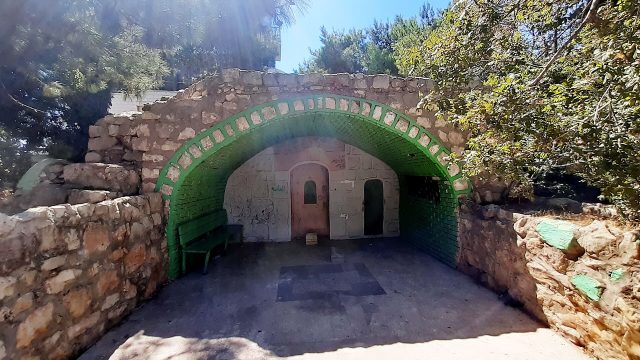
The memorial in the Megiddo Valley is one of those rare places where the past doesn’t just linger in stories or books—it becomes part of the land itself. Perched on a gentle rise, it overlooks the vast expanse of the Jezreel Valley, a landscape that has witnessed countless battles and turning points in history. The fields and rolling hills here have fed and divided civilizations for millennia, and now they cradle the names of soldiers who fell in Israel’s wars. Unlike the imposing monuments found in cities, this memorial feels more like a quiet refuge, a place to pause, reflect, and sense the connection between the earth and those who defended it.
The design is understated, almost austere, yet there’s a quiet power in its simplicity. The centerpiece is a long wall of pale stone, etched with the names of the fallen. The stones were chosen to blend seamlessly with the surroundings, as if the memorial had always been part of this landscape. Nearby, small platforms host ceremonies on Memorial Day, where families and visitors gather in remembrance. Olive trees, symbols of peace and continuity, line the paths leading to the wall, their branches swaying softly in the breeze. The walkways are laid out to encourage a slow, deliberate approach, allowing visitors to leave the noise of daily life behind as they draw closer.
The history of this place is inseparable from the history of Israel itself. The Megiddo Valley, known in ancient texts as Armageddon, has been a battleground for empires—Egyptian pharaohs, Crusaders, Napoleon’s armies, and British forces during World War I all marched through here. In the 20th century, the valley became a frontline during Israel’s War of Independence, when the fledgling state fought for its survival. The memorial wasn’t just built to honor the dead; it serves as a reminder that the peace we take for granted today was once bought at a terrible cost.
Visiting the memorial isn’t like touring a museum or ticking off a landmark. It’s more like a conversation with history, one that unfolds in silence. There are no grand speeches or slogans here, just the rustling of leaves and the distant call of birds. Many visitors bring flowers or notes, leaving them at the base of the wall. Some come to remember loved ones, others to understand the sacrifices that shaped the country. On Memorial Day, the site comes alive with solemn ceremonies—sirens wail, people stand in silence, and the air fills with the weight of collective grief. But even on ordinary days, you might find someone sitting alone, lost in thought, as if the place itself invites introspection.
What makes this memorial unusual is its lack of grandeur. There’s no attempt to overwhelm or impress. Instead, it’s humble, and that humility is what gives it its strength. The stones, the names, the earth beneath your feet—they speak for themselves, without embellishment. For many Israelis, this is a deeply personal place, somewhere they return to again and again. For travelers, it might come as a surprise: not a typical tourist attraction, but a space where history stops being abstract and becomes something tangible, something you can almost touch.
Reaching the memorial is straightforward, though it lies off the usual tourist trail. From Haifa or Nazareth, it’s about a half-hour drive, following signs toward Megiddo. The road winds through rural landscapes, past kibbutzim and fields where life moves at the same unhurried pace it has for centuries. The memorial is open at all hours, and there’s no admission fee. The best times to visit are early morning or late afternoon, when the sun is gentler, casting a soft light that brings out the texture of the stones.
For those who want to delve deeper into the area’s history, the nearby Megiddo National Park offers a fascinating complement to the memorial. The ruins there span millennia—Canaanite temples, Roman fortresses, and layers of civilizations that rose and fell on this same soil. Walking among the ancient stones, it’s easy to feel the weight of time, as if the past isn’t just preserved but still alive, flowing from one era into the next.
The Megiddo memorial is more than a tribute to the fallen. It’s a reminder of how fragile peace can be, a place where individual lives, wars, and hopes intertwine across generations. There are no easy answers here, just the chance to ask questions—of yourself, of history. And perhaps that’s the real value of such places: they don’t let us forget that behind every name on the wall is a life, and behind every war is a longing for peace that transcends time.