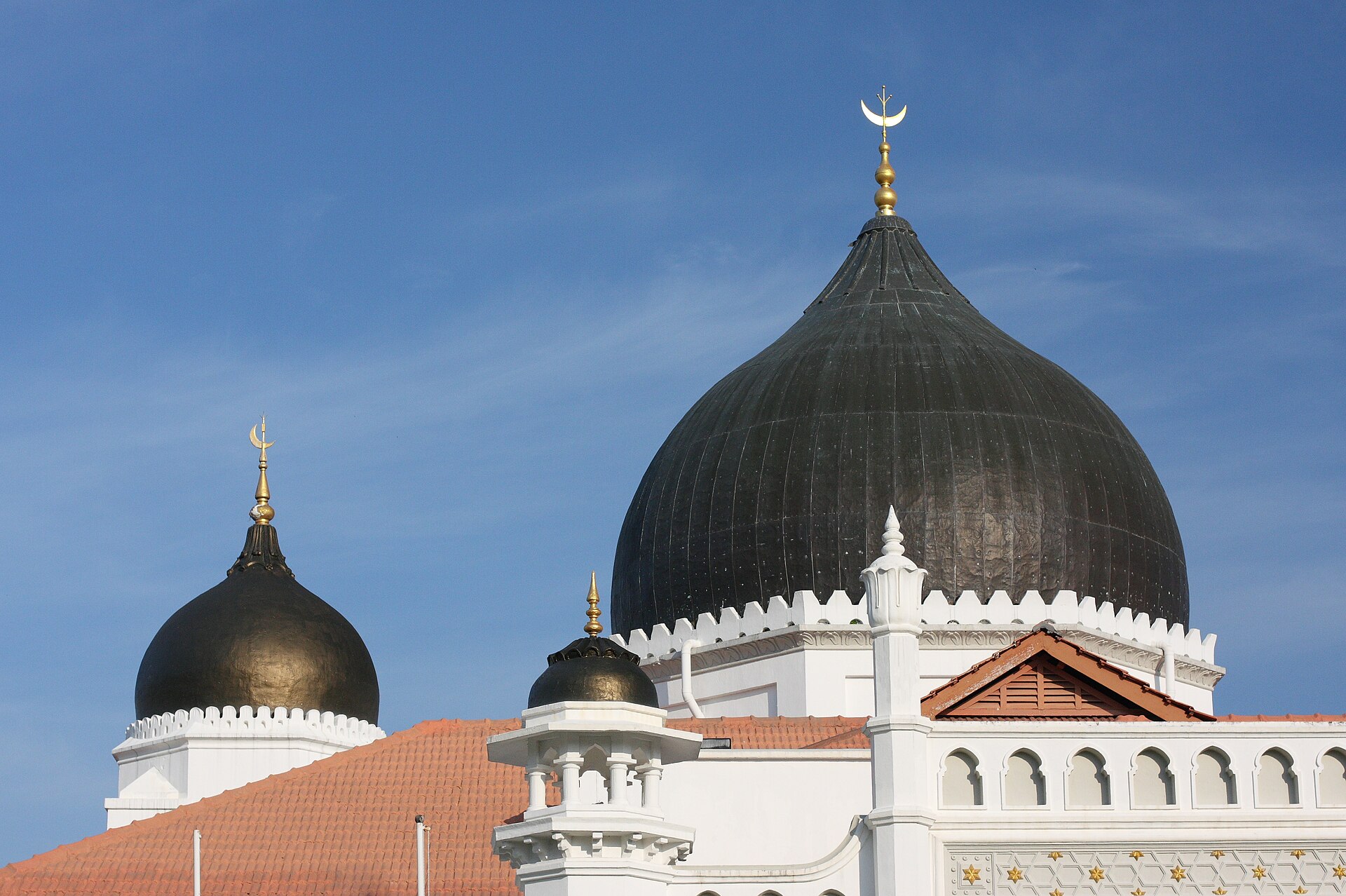
Georgetown’s Captain Keling Mosque is one of those rare places where time seems to pause, allowing the weight of history to settle around you. Tucked at the intersection of Pitt and Buckingham Streets, in the heart of the old city, it has stood for over two centuries as both a spiritual sanctuary and a quiet witness to Penang’s layered past. The mosque’s name pays homage to Caudeer Mohudeen, an Indian Muslim merchant who arrived in the early 1800s and became a unifying figure among the island’s diverse communities. Known to the British as Captain Keling, he was more than a trader—he was a bridge between cultures, a man who helped shape the social fabric of a place where people from across the Indian Ocean came seeking opportunity.
The mosque’s architecture tells a story of adaptation and resilience. The original structure, built in 1801, was a modest wooden building, humble yet significant as the first permanent home for Penang’s Indian Muslim community. By the mid-19th century, it had been rebuilt in brick and stone, its design reflecting the Mughal influences of northern India while responding to the tropical climate. The result is a building that feels both grand and airy—its whitewashed walls rising above arched doorways, domes, and minarets that seem to float against the sky. The play of light and shadow across its surfaces gives it a sense of movement, as if the structure itself is breathing.
Inside, the mosque is a space of quiet dignity. The prayer hall stretches beneath high ceilings, its large windows filtering sunlight through stained glass, casting soft patterns on the carpeted floors. The walls are adorned with Arabic calligraphy, verses from the Quran rendered in elegant script, their meaning more felt than read. There is no ostentation here, no gilded excess—just a careful balance of form and function, designed to focus the mind rather than distract it. The mosque remains an active place of worship, and during prayer times, its courtyard fills with the murmur of devotion, a reminder that this is not just a relic of the past but a living part of the city.
The streets around the mosque carry the same sense of continuity. This was once the commercial heart of Georgetown, where merchants traded spices, textiles, and ideas, and traces of that era linger in the narrow lanes and low-slung shophouses. A short walk from the mosque, you’ll find stalls selling fragrant cardamom and cloves, bolts of brightly dyed fabric, and sweets sticky with jaggery and ghee. The architecture here is a patchwork of influences—Chinese clan houses with their ornate facades, British colonial buildings with their wide verandas, and Hindu temples with their vividly painted gods. It’s a neighborhood where history isn’t preserved behind glass but woven into the daily rhythm of life.
For Georgetown, the Captain Keling Mosque is more than a religious site; it’s a symbol of the city’s pluralism. Malaysia is a country where mosques, temples, and churches stand side by side, and this mosque embodies that coexistence. In a city shaped by Malay, Chinese, Indian, and European traditions, such places serve as a reminder of the delicate balance that holds communities together. The mosque has hosted interfaith dialogues, cultural festivals, and exhibitions, its doors open to those who wish to learn—not as a curiosity, but as a testament to shared history.
Visiting the mosque offers more than just a glimpse of beautiful architecture; it’s a chance to step into the currents of Penang’s past. Two hundred years have brought change—new buildings, new faces, new ways of life—but the mosque remains a constant, a place where the act of prayer connects the present to the generations that came before. Tourists are welcome during designated hours, though it’s worth remembering that this is not a museum but a place of worship. Modest dress and respectful behavior are expected, not as rules imposed for visitors, but as a reflection of the space’s purpose.
In recent years, the mosque has found its way onto Georgetown’s tourist trails, though it has resisted becoming a mere attraction. Its value lies not in spectacle but in authenticity. There are no pushy guides or souvenir stands here, just the quiet hum of daily life—the call to prayer, the rustle of leaves in the courtyard, the occasional laughter of children playing nearby. It’s a place where you can sit on a bench, watch the light shift across the minarets, and think about the countless lives that have passed through these gates.
In a world that often feels rushed, the Captain Keling Mosque offers a moment of stillness. It’s not just a landmark but a living part of Georgetown’s identity, a place where the past is not just remembered but actively lived. Whether you come for the architecture, the history, or simply the chance to pause, the mosque leaves an impression that lingers long after you’ve walked back into the bustle of the city.