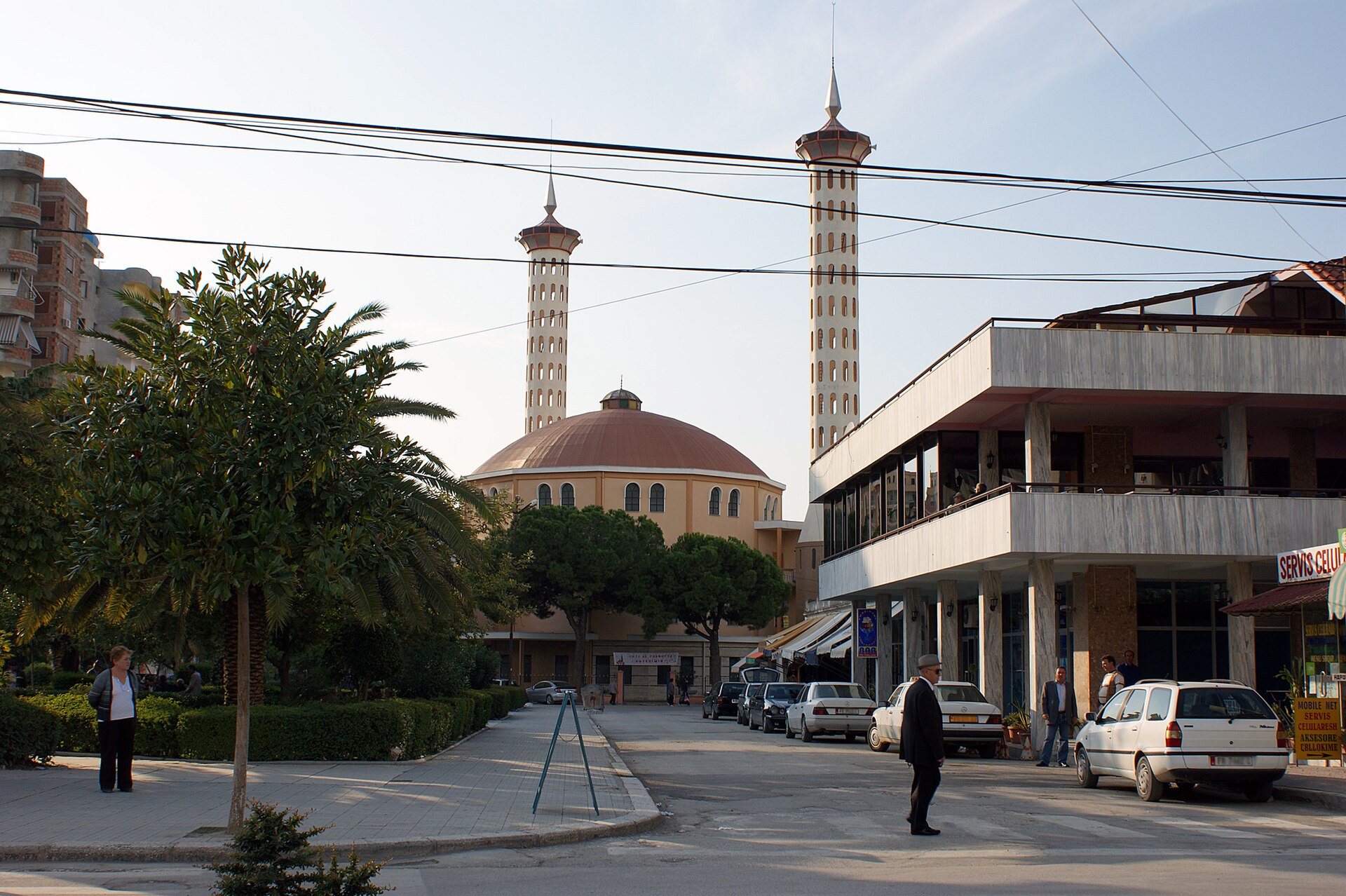
Fier’s mosque is one of those quiet places that doesn’t demand attention but lingers in memory long after you’ve left. Tucked among low-rise houses and narrow streets in the heart of the city, it blends into the everyday rhythm of life here, where time seems to move just a little slower. Unlike the grand mosques of Istanbul or Cairo, this one is unassuming, free of ornate flourishes or towering minarets. It wasn’t built to impress visitors but to serve the people who call Fier home—a silent witness to their daily routines, small joys, and passing seasons.
The mosque’s history is woven into the story of Fier itself, a city that spent much of its existence in the shadow of Albania’s more famous centers. Fier began as a modest settlement, only gaining significance in the 20th century when oil was discovered in the region. The mosque emerged during this period of transformation, as the city was still shaping its identity. In a country where religion was banned for decades under communist rule and only gradually reclaimed its place in public life, such buildings became symbols not just of faith but of resilience. They stand as reminders of what was lost and what endured.
Architecturally, the mosque is simple and practical. There are no intricate carvings or symbolic details meant to awe; no soaring minaret piercing the skyline. Instead, it’s a low, unadorned structure with a flat roof, a modest entrance, and a small dome that barely rises above the surrounding buildings. Inside, the space is equally understated: a spacious prayer hall with carpets, a mihrab pointing toward Mecca, and a minbar for sermons. Everything is designed to serve its purpose without distraction, a place for reflection rather than spectacle.
This isn’t the kind of mosque that draws tour groups or crowds of photographers. It’s not a landmark in the traditional sense, and that’s precisely what makes it worth visiting for those who want to see Albania beyond its beaches and ancient ruins. Here, religion isn’t something set apart from daily life but woven into it. Around the mosque, the city carries on as usual: children play in nearby squares, elderly men gather on benches to chat, and vendors sell fresh produce at the market. The scene feels authentic, far removed from the polished veneer of places designed for tourists.
At times, the mosque becomes the heart of the community. During Ramadan or Eid al-Adha, locals gather here to celebrate, filling the air with conversation, laughter, and the scent of traditional dishes prepared for the occasion. For many in Fier, the mosque is more than a place of worship—it’s a gathering spot, a place to catch up with neighbors, discuss business, or simply pass the time. In this way, it serves the same role as churches or synagogues elsewhere: a space that brings people together, offering a sense of belonging to something larger than themselves.
Albania is a country where religious tolerance isn’t just talked about but lived. Muslims, Christians, and people of other faiths have coexisted here for centuries, often side by side without conflict. The mosque in Fier is one of many examples of how different traditions share the same space. Nearby, you’ll find Orthodox churches and Catholic cathedrals, none of them seen as rivals but as part of the same cultural landscape. This ease of coexistence might explain why the atmosphere around the mosque feels so natural, free of the weighty solemnity that can sometimes accompany places of worship.
For travelers who find themselves in Fier, the mosque offers a glimpse into how life unfolds in this corner of the Balkans. The city makes no claims to being a tourist hotspot, and that’s part of its charm. There are no crowds, no souvenir stalls, no guides hustling for business. Instead, there are quiet streets, friendly faces, and the sense that you’ve stepped into a place where time moves at its own unhurried pace. The mosque, in this context, isn’t just a building—it’s a thread in the larger fabric of the city’s history and the lives of its people.
If you decide to visit, it’s worth keeping a few things in mind. As with any place of worship, modest dress is appreciated—shoulders and knees should be covered, and women may want to bring a scarf to cover their heads. Inside, it’s best to keep noise to a minimum and avoid disturbing those who are praying. That said, locals are generally understanding of visitors who may not know all the customs. The key is to approach the space with respect, both for the place itself and for those who use it.
The mosque in Fier isn’t the kind of place you visit to check off a list or snap a dramatic photo. It won’t dazzle you with architectural grandeur or lavish interiors. But if you’re looking to experience Albania beyond the usual tourist trail—to see how people live when no one’s watching—this unassuming corner of the city might reveal something more meaningful than a postcard-perfect view. Here, you’ll find that the simplest things—a quiet conversation, a shared prayer, or a cup of coffee after a long day—can matter far more than the most impressive landmarks.