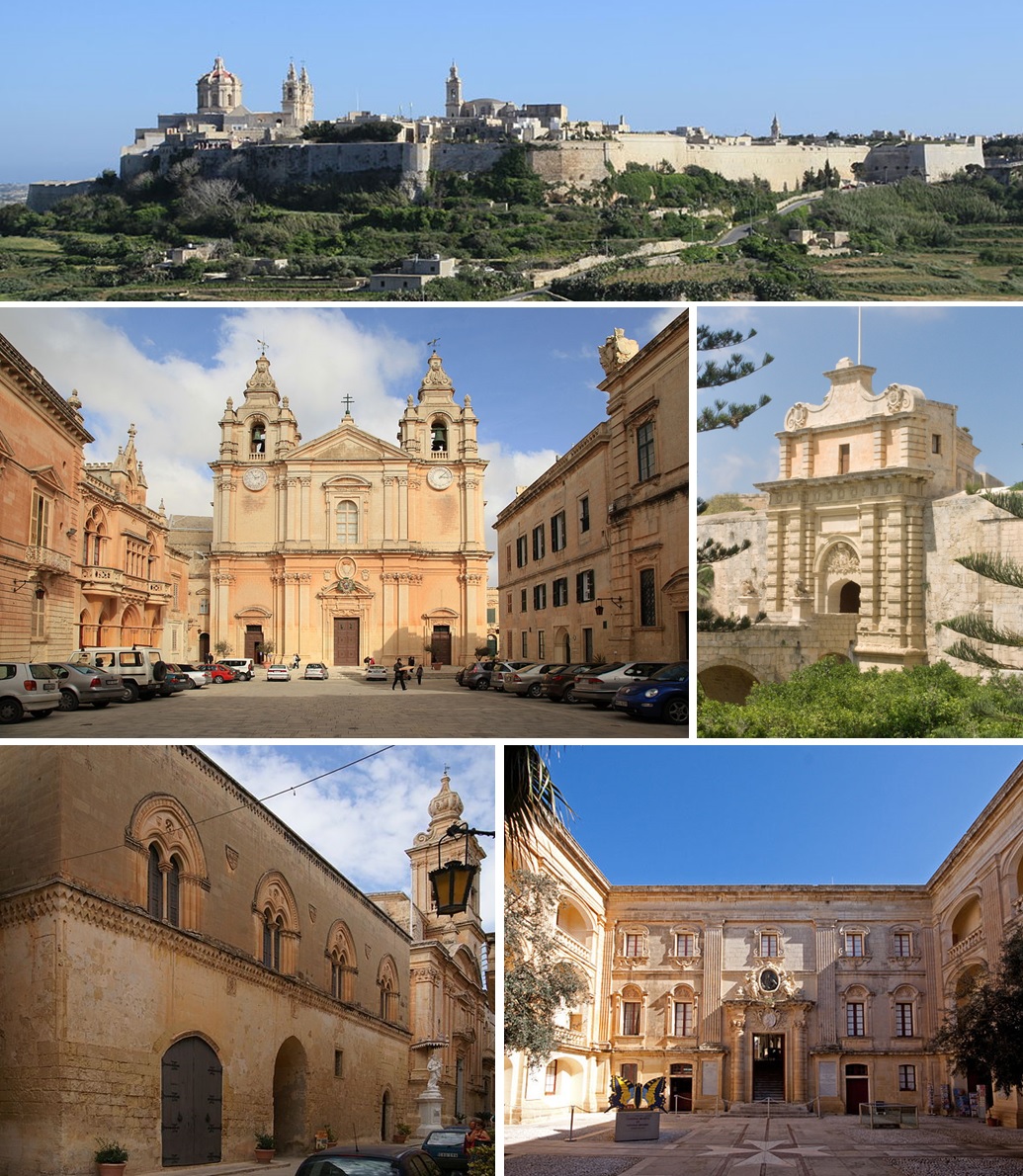
Mdina sits quietly at the heart of Malta, a place where time seems to have paused. Unlike the bustling coastal towns or the grand capital of Valletta, this ancient city feels suspended in another era. Its narrow, winding streets are paved with stone, worn smooth by centuries of footsteps, and lined with palaces and townhouses that have stood for hundreds of years. The heavy wooden doors, the intricate balconies, the high walls—everything here speaks of a past that refuses to fade. There are no crowds rushing past, no tour groups following flags. Instead, there’s a stillness, broken only by the occasional echo of footsteps on cobblestones or the distant chime of a church bell.
Long before Valletta became the island’s capital, Mdina held that title. Its history stretches back over two and a half thousand years, beginning with the Phoenicians who settled here around the 8th century BC. Romans, Arabs, Normans, and Spaniards followed, each leaving their mark on the city’s architecture and culture. But it was the Arabs, who ruled Malta between the 9th and 11th centuries, who shaped Mdina into the place it is today. They built its labyrinthine streets, designed to confuse invaders, and fortified its walls, which still encircle the old city. The name Mdina itself comes from the Arabic word for "city," a quiet acknowledgment of its origins.
The entrance to Mdina is through its main gate, which opens onto St. Paul’s Square. Dominating the square is the Cathedral of St. Paul, built in the late 17th century after an earthquake destroyed its predecessor. The cathedral is more than just a place of worship—it’s a symbol of the city’s resilience. Its Baroque facade, with its columns and ornate decorations, stands out against the low, honey-colored buildings around it. Inside, the walls are adorned with paintings and sculptures by Maltese artists, while the ceiling is covered in frescoes depicting scenes from the life of St. Paul. According to tradition, the apostle took refuge in Malta after a shipwreck, and the cathedral was built on the site where he is said to have lived.
Beyond the cathedral, the streets twist and turn, revealing something new at every corner. One of Mdina’s most distinctive features is its wooden balconies, known locally as *galleriji*. These elaborately carved structures jut out from the upper floors of houses, their intricate designs a hallmark of Maltese architecture. Originally, they served a practical purpose—allowing women to observe the street below without being seen. Today, they add to the city’s charm, their dark wood contrasting with the pale stone of the buildings. Walking beneath them, it’s easy to imagine the lives that unfolded behind those closed shutters, the quiet conversations, the secrets kept within.
Among Mdina’s most notable buildings is Palazzo Falson, also known as the Norman House. Built in the 13th century, it has belonged to noble families for generations and now functions as a museum. The palace is filled with the collections of its last private owner, a man who spent decades gathering antiques, paintings, rare books, and even weapons. Each room tells a story—the grand salon with its carved ceilings, the library lined with leather-bound volumes, the kitchen where feasts were once prepared. But more than the objects themselves, it’s the sense of history that lingers here, the feeling of stepping into a home that has witnessed centuries of life.
Mdina is also a city of legends, and one of the most enduring is that of the so-called "Dungeons of the Slaves." Carved into the rock beneath the city, these underground chambers were used in medieval times to hold prisoners. Today, visitors can walk through the narrow passageways, where rusted chains still hang from the walls and small cells offer a glimpse into the harsh conditions endured by those who were held here. Some say the dungeons are haunted, that the echoes of suffering can still be heard at night. Whether or not the stories are true, the place carries a weight, a reminder of the cruelty that once existed within these walls.
As evening falls, Mdina transforms. The streets, bathed in the soft glow of lamplight, take on a different character. Shadows stretch long across the stone, and the air grows cooler. The city feels even more secluded, as if the modern world has been left behind at the gates. A few cafes and restaurants remain open, serving traditional Maltese dishes—slow-cooked rabbit, fresh seafood, local cheeses—and glasses of wine from the island’s vineyards. There are no nightclubs here, no loud music. Just the quiet hum of conversation, the clink of glasses, and the occasional laughter drifting through the night.
Despite its museum-like appearance, Mdina is still a living city. A small community remains, and while most visitors come for the day, some choose to stay longer, renting rooms in converted palaces or townhouses. In the early morning, before the tourists arrive, the streets are empty. The only sounds are the chirping of birds and the rustle of leaves in the breeze. It’s in these moments that Mdina feels most like itself—a place where the past is not just remembered but still alive.
For many, Mdina becomes the highlight of a trip to Malta. It’s not as grand as Valletta, nor as lively as the coastal resorts. There are no beaches, no amusement parks, no modern attractions. Instead, there’s something intangible—a sense of peace, a connection to history, the feeling of having stepped into a story. Some come for a few hours, wandering the streets, browsing the small shops that sell handmade lace and local crafts. Others return again and again, each visit revealing something new. Whether it’s the way the light falls on the cathedral at dusk or the quiet corner of a hidden garden, Mdina has a way of staying with you long after you’ve left.