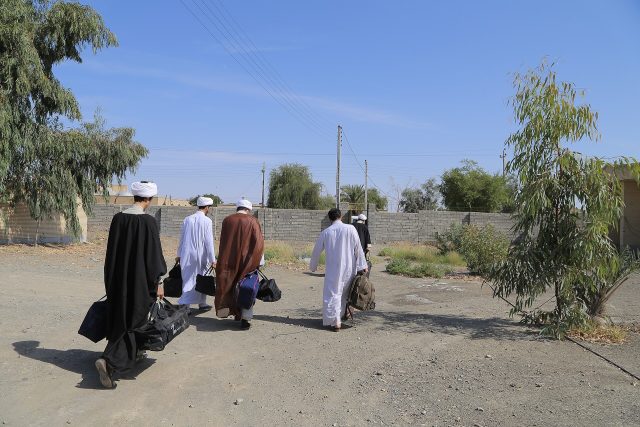
The mausoleum of Seyyed Mohammad in Kahnuj is one of those quiet places that doesn’t announce itself to travelers but lingers in the mind long after you’ve left. Tucked away on the edge of town, where the mountains soften into desert and life moves at the unhurried pace of tradition, it feels far removed from the well-trodden paths of Iran’s more famous sites. There are no crowds here, no bustling bazaars or neon signs—just a handful of modest buildings, a dusty road, a few scattered palm trees, and the occasional local visitor stopping to pray or rest in the shade.
The history of the mausoleum is woven into the fabric of Iran’s Sufi traditions. Seyyed Mohammad, the figure honored here, was one of the wandering preachers who carried Islam across Persia during the Middle Ages. His tomb became a place of pilgrimage not because of grand architecture, but because of the spiritual presence that many believe still lingers. Over time, stories have grown around him—some say he had the gift of healing, others claim he played a role in local uprisings against foreign rulers. But like many tales passed down through generations, the details have blurred, leaving only fragments of memory in the words of elderly residents.
The architecture of the mausoleum is simple and unadorned, built for devotion rather than display. The main structure is a low, square building topped with a dome, its light stone walls glowing golden in the sunlight. The entrance is marked by delicate plaster carvings, and inside, beneath the dome, lies the tomb of Seyyed Mohammad, draped in a green cloth embroidered with prayers. Nearby stands a small mosque where locals gather for prayer, along with a few old trees that offer respite from the midday heat.
Kahnuj is a town rarely mentioned in guidebooks, and the mausoleum is less a tourist attraction than a living part of daily life. For the people here, it’s a place of remembrance, visited during religious holidays to honor ancestors and seek blessings. Occasionally, Sufi gatherings take place within its walls, where the verses of Rumi or Hafez are recited to the accompaniment of traditional instruments. On such evenings, the air fills with the scent of incense and the murmur of prayers, creating an atmosphere that feels both timeless and deeply personal.
The land around the mausoleum is stark and arid, where rain is a rare visitor and the earth comes briefly to life only after a downpour. Summers here are relentless, with temperatures that drive even locals indoors during the hottest hours. But in winter and early spring, the air cools, and the sky clears, revealing distant mountain ranges that stretch endlessly toward the horizon. On these days, the mausoleum feels especially serene, as if time itself has slowed to match the quiet rhythm of the place.
Visiting Seyyed Mohammad’s mausoleum isn’t so much about sightseeing as it is about glimpsing a side of Iran that exists beyond the well-known landmarks. There’s no grandeur here like in Isfahan, no ancient ruins like in Persepolis—just a sense of authenticity, where past and present intertwine so naturally that they become impossible to separate. Travelers who make their way to Kahnuj won’t find luxury hotels or polished tourist infrastructure, but they will find something rarer: Iran as Iranians experience it—unhurried, profound, and quietly enigmatic.
If you do decide to come, it’s best to visit with a local guide or someone familiar with the area. Few people in Kahnuj speak English, and customs are observed more strictly than in larger cities. Women should dress modestly, and visitors of all genders should be mindful of local norms. But for those willing to respect these traditions, the mausoleum reveals itself in an unexpected way—not as a relic of the past, but as a living place where faith and history continue to coexist, undisturbed by the passage of time.