Köneürgench is a place where time seems to slow down, where the winds carry whispers of empires long gone and the earth holds the weight of centuries. Among its quiet ruins, the Mausoleum of Seýit Ahmet stands as a testament to the city’s former glory, a silent witness to the rise and fall of the Khwarazmian dynasty. This structure, like many others in Köneürgench, is more than just stone and mortar—it is a fragment of history, preserved against the odds in a landscape that has seen conquest, abandonment, and slow revival.
The mausoleum is modest in size but rich in detail, a characteristic feature of the architectural style that flourished in this region during the 12th and 13th centuries. Its exterior is marked by a simple yet elegant portal, adorned with intricate geometric patterns and calligraphic inscriptions that hint at the craftsmanship of its builders. The brickwork, weathered by time, still retains a sense of precision, with each layer carefully laid to create a structure that has endured for nearly a thousand years. Inside, the space is intimate, almost austere, with a single chamber that once housed the tomb of Seýit Ahmet, a figure whose identity remains partly shrouded in mystery. Some accounts suggest he was a Sufi saint or a revered religious scholar, though the exact details of his life have faded with the passage of time.
What makes the mausoleum particularly striking is its place within the broader narrative of Köneürgench. Once the capital of the Khwarazmian Empire, the city was a thriving center of trade, scholarship, and culture along the Silk Road. Its streets buzzed with merchants, scholars, and artisans from across the known world, and its skyline was dotted with mosques, madrasas, and mausoleums that reflected the wealth and sophistication of its rulers. The Mausoleum of Seýit Ahmet is one of the few structures that survived the Mongol invasions of the 13th century, which left much of the city in ruins. It stands as a rare survivor, a link to a time when Köneürgench was a jewel of the Islamic world.
The architecture of the mausoleum is a blend of influences, reflecting the cultural exchanges that defined the Silk Road. The use of baked brick, the geometric patterns, and the calligraphic inscriptions are all hallmarks of the Khwarazmian style, which drew from Persian, Central Asian, and Islamic traditions. The portal, in particular, is a fine example of the region’s architectural innovation, with its recessed niche and decorative motifs that create a sense of depth and movement. Inside, the dome—though now partially collapsed—would have once been a marvel of engineering, designed to draw the eye upward and create a sense of awe in those who entered.
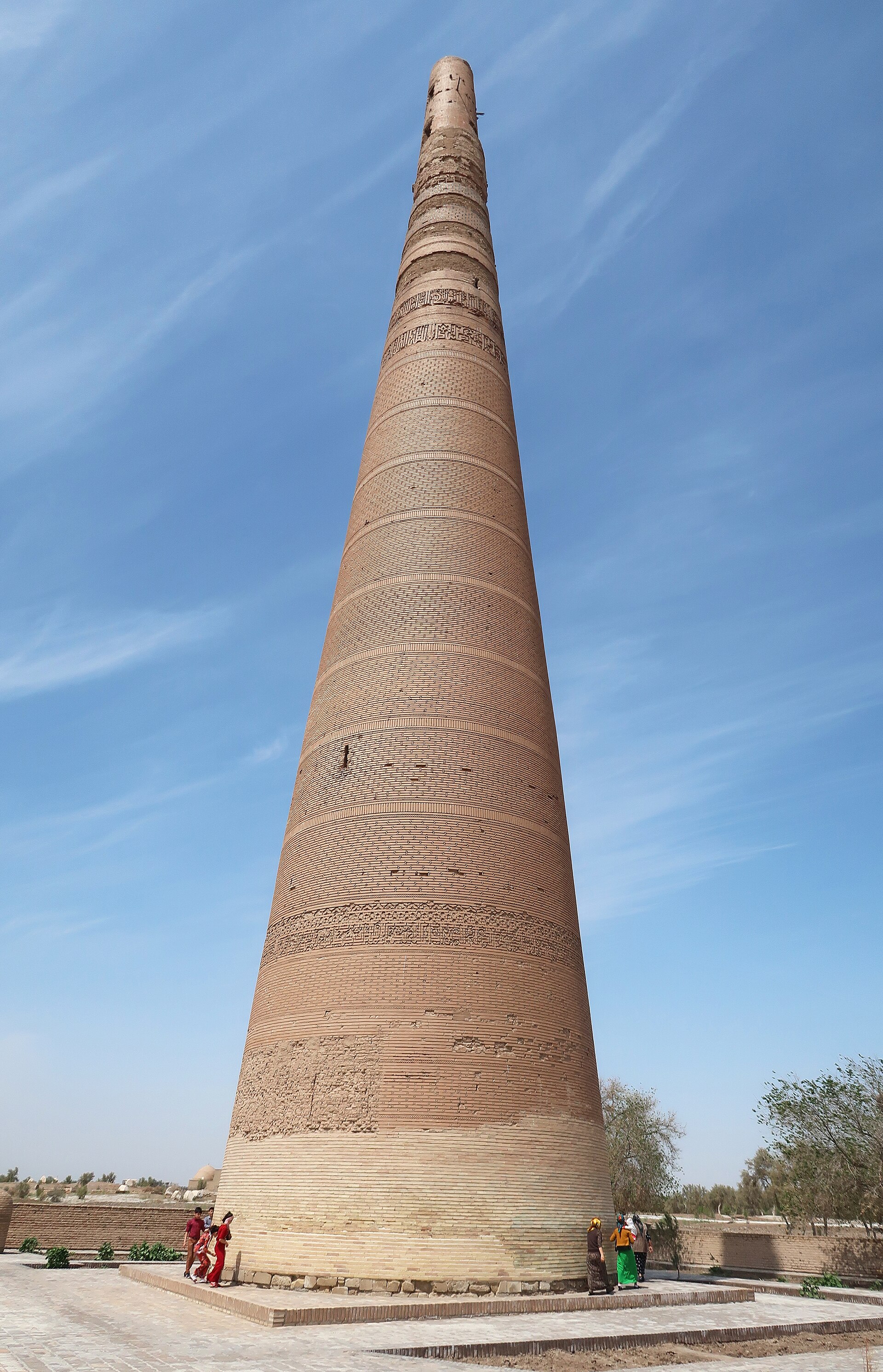
Today, the mausoleum is part of a larger archaeological site that tells the story of Köneürgench’s rise and fall. The city was gradually abandoned after the Mongol conquests, as trade routes shifted and new powers emerged in the region. For centuries, it lay forgotten, its ruins buried beneath the sands of the Karakum Desert. It wasn’t until the 20th century that efforts were made to uncover and preserve what remained, and the Mausoleum of Seýit Ahmet was one of the first structures to be restored. Now, it stands alongside other monuments, such as the Turabek Khanum Mausoleum and the Kutlug Timur Minaret, as a reminder of the city’s former grandeur.
Visiting the mausoleum is a quiet experience, one that invites reflection rather than spectacle. There are no crowds here, no vendors selling trinkets or guides rushing through their scripts. Instead, there is only the sound of the wind rustling through the dry grass and the occasional call of a bird echoing across the ruins. The light in Köneürgench is soft, especially in the early morning or late afternoon, casting long shadows that accentuate the textures of the brickwork. It’s easy to imagine what the city must have looked like in its prime, with its domes gleaming under the sun and its streets alive with activity.
The Mausoleum of Seýit Ahmet is not just a monument to the past; it is also a symbol of resilience. Despite the passage of time, the ravages of war, and the harsh desert climate, it has endured. Its survival is a testament to the skill of its builders and the reverence with which it was regarded by those who came after. For modern visitors, it offers a glimpse into a world that is both familiar and foreign—a world where faith, art, and architecture intersected to create something lasting.
Köneürgench itself is a place that rewards patience. It is not a destination for those seeking the hustle and bustle of modern tourism, but for those who are willing to slow down and listen, it offers a rare opportunity to connect with history in a way that feels personal and unfiltered. The Mausoleum of Seýit Ahmet is just one piece of that puzzle, but it is a piece that carries the weight of centuries. Standing before it, one can’t help but feel a sense of humility, a reminder of how fleeting even the greatest empires can be. Yet, in its quiet endurance, there is also a sense of hope—that some things, no matter how fragile, can withstand the test of time.