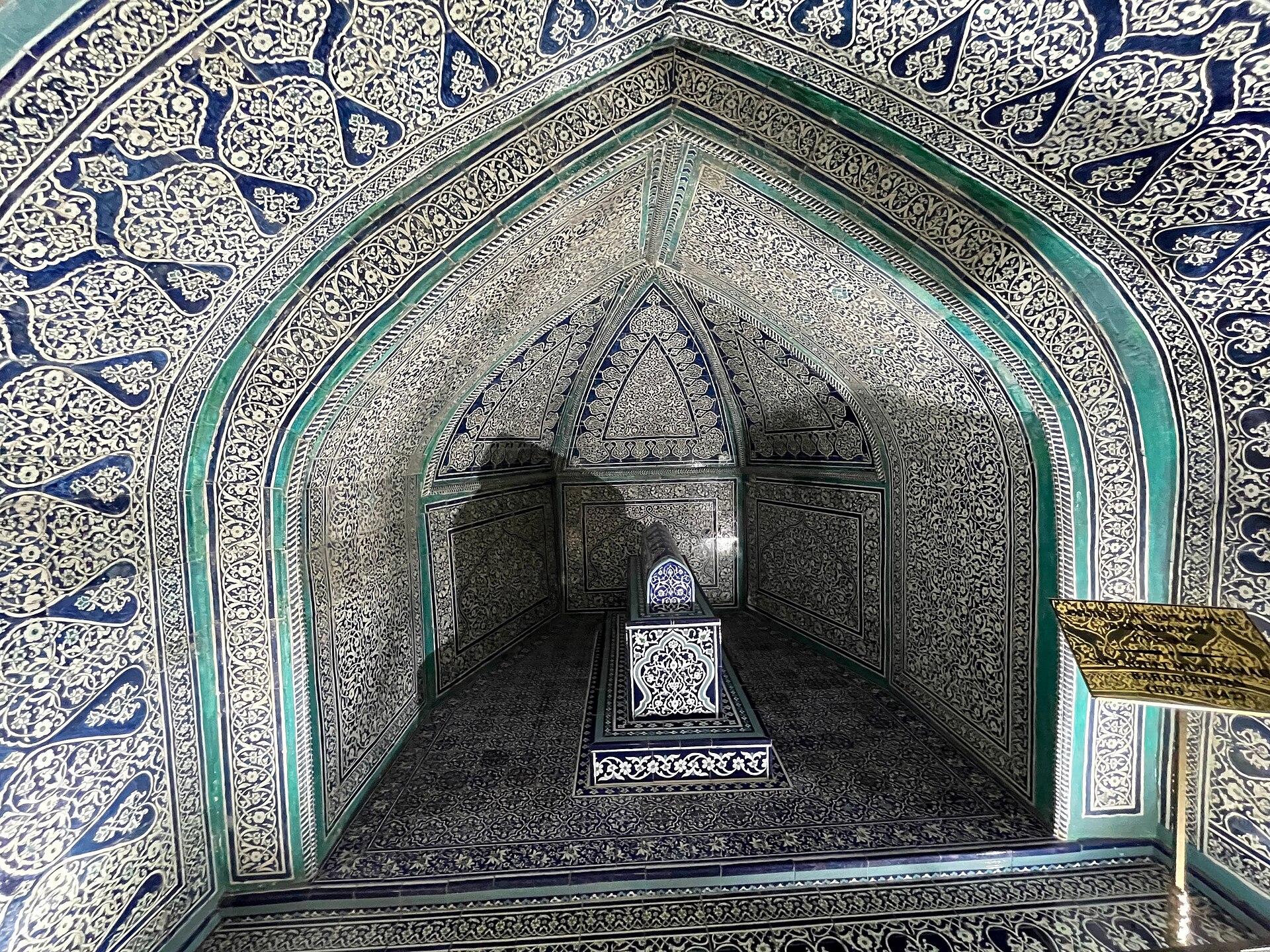
The Pahlawan Mahmud Mausoleum is one of those rare places in Khiva where time seems to soften, as if the weight of centuries dissolves into the quiet air. Tucked within the ancient walls of Itchan Kala, the old city’s historic heart, it stands as a silent witness to the stories that have shaped this land. Mahmud, the man honored here, was more than a figure of legend—he was a poet, a wrestler, a philosopher, and, to many, a saint. His name still carries reverence in the region, and the mausoleum built in his memory is far more than a tomb. It is a symbol of spiritual resilience and the enduring cultural legacy of Khorezm.
The architecture of the mausoleum is a study in balance, its simplicity belying the skill of the craftsmen who built it in the 14th century. Over the years, it has been restored and expanded, yet it retains the lightness and grace that define Central Asia’s medieval design. The main portal, adorned with intricate tilework, draws visitors in like a guardian of the past. Inside, the spacious hall rises to a high dome, where light filters through lattice windows, casting delicate patterns across the walls. The mihrab, the niche pointing toward Mecca, is crafted with particular care, its details a testament to the sacred nature of the space.
Mahmud was not just a wrestler of extraordinary strength but also a poet whose verses have lingered in the oral traditions of the region. Stories of his humility and wisdom are still told, and his tomb has become a place of pilgrimage for those seeking inspiration or protection. Locals believe that wishes made here with sincerity are granted, and the mausoleum is rarely empty. Some come to pay their respects, others to admire the craftsmanship, and a few simply to soak in the atmosphere—a quiet energy that seems to hum beneath the surface.
Over time, the mausoleum grew into part of a larger memorial complex. Nearby, a madrasa, a mosque, and a small cemetery where Khorezm’s noble families are buried have taken root, turning the area into an open-air museum of sorts. The stones here hold memories, and the space feels alive with history, especially during religious festivals when traditional rituals unfold and prayers fill the air. Even those who don’t share the local beliefs can’t help but be moved by the sense of reverence that permeates the place.
Khiva is a city steeped in history, but the Pahlawan Mahmud Mausoleum stands apart, not for its grandeur, but for its soul. It lacks the imposing scale of the Tash Hauli Palace or the towering presence of the Kalta Minor minaret, yet it feels more intimate, more human. Perhaps that’s because Mahmud himself embodied qualities that resonate across time—strength tempered by kindness, wisdom paired with humility. His mausoleum isn’t just a building; it’s a bridge between past and present, a place where the weight of history feels tangible.
If you find yourself in Khiva, take a moment to step inside. Sit on one of the benches in the courtyard, listen to the rustle of leaves in the old trees, and watch how the light plays across the walls. There’s something about this place that lingers long after you’ve left—a quiet reminder of why we travel. It’s not just about seeing beautiful things; it’s about feeling a connection to something deeper. The mausoleum is more than a monument; it’s a testament to the idea that true strength isn’t in the stones we build, but in the spirit that gives them meaning.