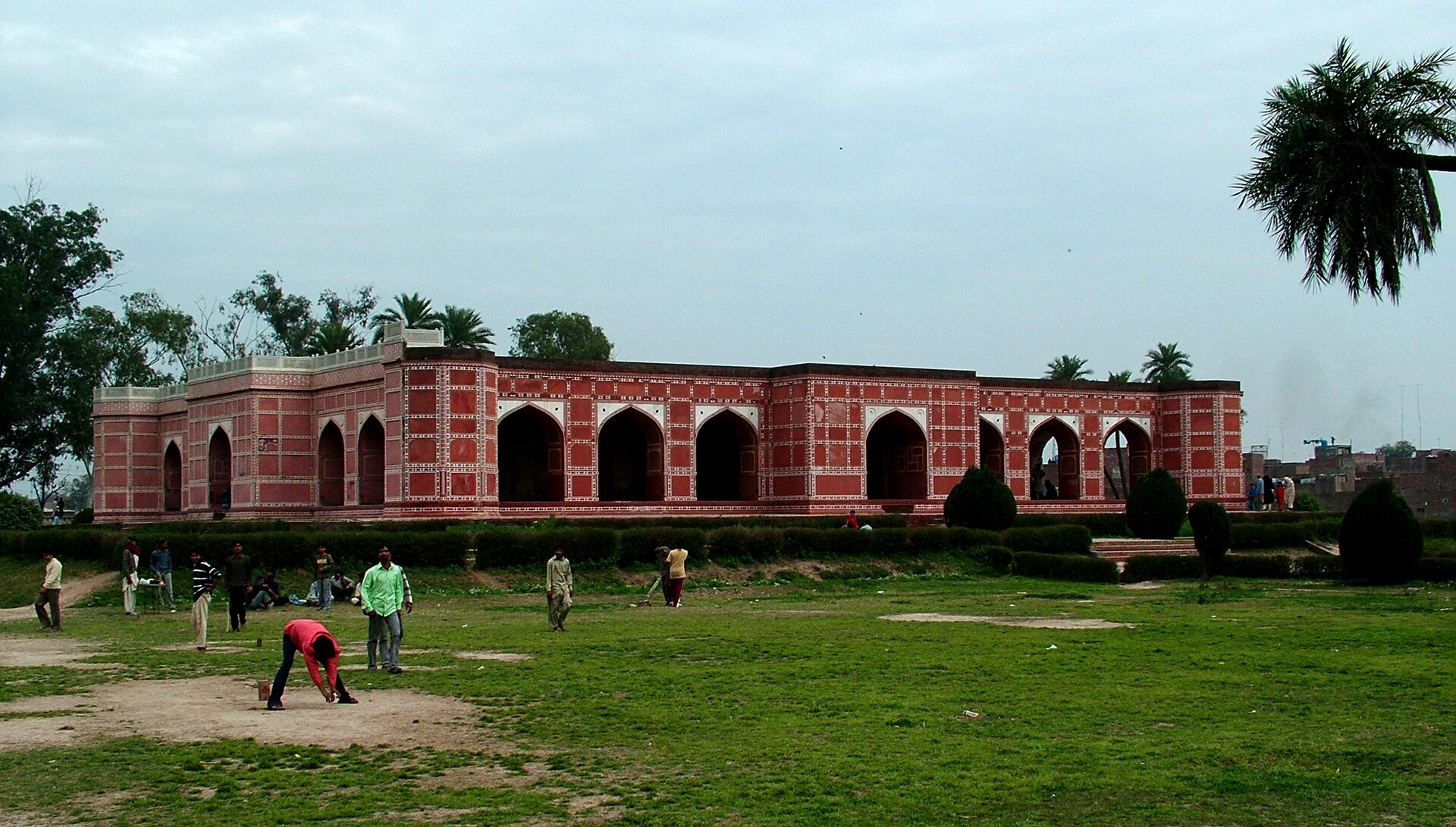
The tomb of Nur Jahan in Sheikhupura stands on the edge of the city, surrounded by low hills and scattered trees. Built in the early 17th century, this monument was created for the Mughal Empress Nur Jahan, one of the most influential women in the history of the Indian subcontinent. Her name, meaning Light of the World, suits the tomb’s graceful lines.
The structure uses red sandstone and white marble, a combination that gives it a sense of balance. Unlike later Mughal buildings with towering domes, this one is low and unassuming. The facades feature geometric and floral carvings, though time has worn away much of their detail. Inside, fragments of paintings and semi-precious stone inlays remain, hinting at its past grandeur.
Nur Jahan was Emperor Jahangir’s partner in governance. She shaped the empire’s politics and culture, introducing perfumes and cosmetics to the royal court. She is also credited with creating rosewater, a recipe still used in Pakistan today. The tomb is her final resting place, yet it reflects her legacy—a woman who defied the conventions of her time.
Sheikhupura was founded in the 16th century as a Mughal retreat. Beyond Nur Jahan’s tomb, the city holds other historical sites, like Jahangir’s fort. But it’s the tomb that draws visitors, preserving an era when art, power, and faith intertwined.
Visiting the tomb is about stepping into a quieter moment in history. The surroundings are peaceful, with only the occasional murmur of locals or the rustle of leaves. Inside, the air stays cool, as if the walls hold echoes of the past. Unlike crowded sites in Lahore or Agra, this place offers solitude.
While the Taj Mahal and Jahangir’s tomb in Lahore are more famous, Nur Jahan’s mausoleum has its own appeal. It doesn’t overwhelm with grandeur but invites quiet reflection. History here feels unpolished, alive in its own way.
If you visit Sheikhupura, wander the nearby streets. Small shops sell traditional sweets and spices. Locals may share stories of Mughal rulers who once walked these paths. The tomb isn’t just a monument—it’s a piece of history waiting to be heard.