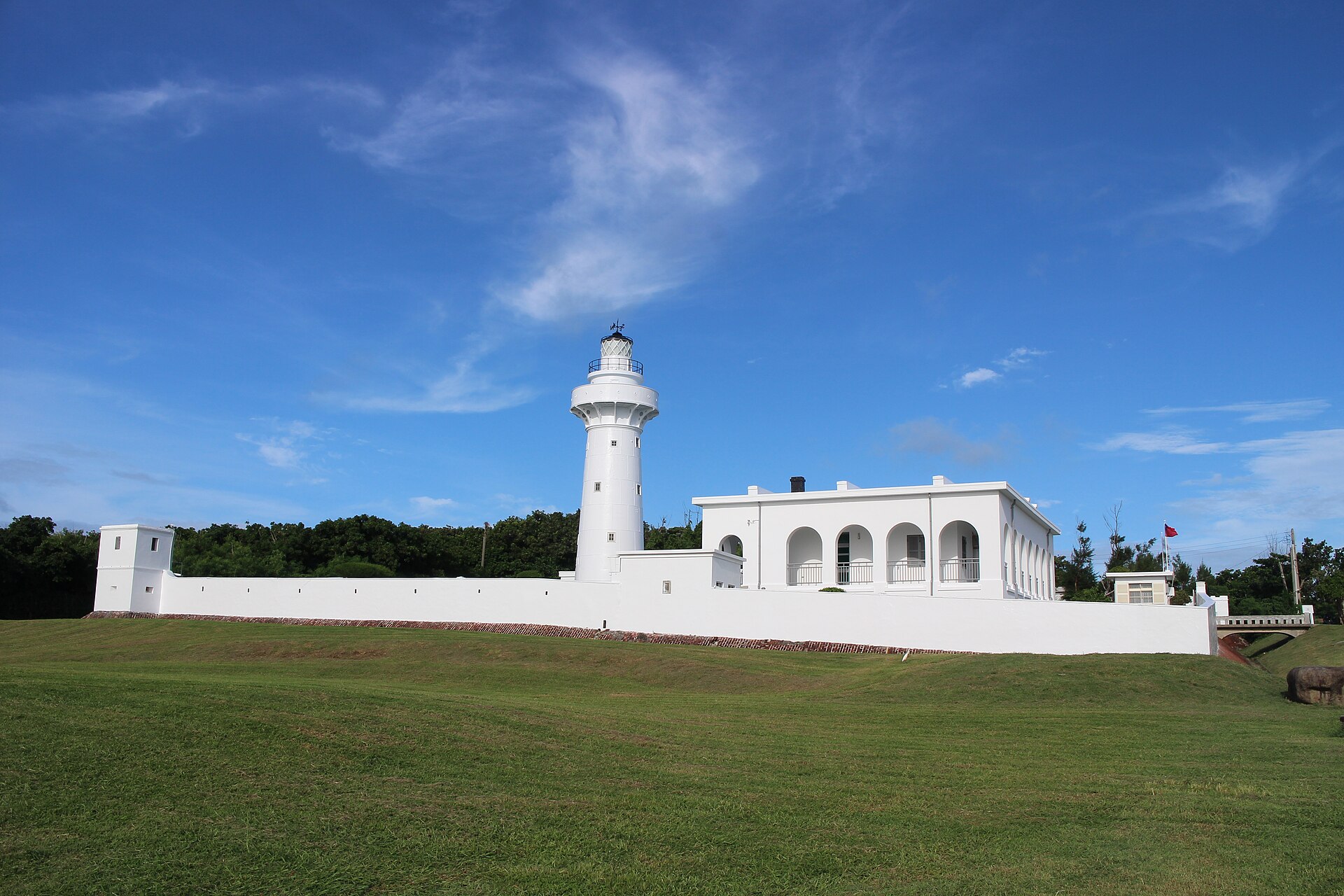
Eluanbi Lighthouse stands at the southernmost tip of Taiwan, where the Taiwan Strait meets the South China Sea. It’s not just a point on the map—it’s a place where the weight of history lingers in the salt air, where the wind and waves have shaped the coastline for centuries. The lighthouse rises above jagged cliffs, surrounded by wild, untamed landscapes where the land drops sharply into the water and the horizon stretches endlessly. For those who make the journey to Hengchun, this isn’t just another landmark; it’s a place that offers something quieter—a sense of stillness, of space, of connection to something beyond the rush of everyday life.
The story of Eluanbi begins in the late 19th century, when Taiwan was under Qing Dynasty rule. Back then, the island’s coastline was treacherous for ships, with hidden rocks, thick fog, and strong currents making navigation perilous. Shipwrecks were common, and European powers, eager to secure trade routes in Asia, pushed for lighthouses to be built. In 1883, British engineers designed Eluanbi, and within a few years, the first structure stood on the cape. But it didn’t last long—it was destroyed during the First Sino-Japanese War. The current lighthouse was built in 1898 under Japanese administration, and since then, it has remained largely unchanged, its stark, functional design a testament to its purpose.
The architecture of Eluanbi is simple but striking. The white tower, about twenty meters tall, rises above the rocks, its cylindrical shape reminiscent of classic European lighthouses, with a slight widening at the base. At the top, where the Fresnel lens once guided ships, a metal balcony wraps around the structure, offering sweeping views of the sea. Nearby, the old keeper’s quarters and storage buildings still stand, their stone and brick walls whitewashed, giving the complex a clean, almost austere appearance. Inside, some of the original mechanisms remain, though the lighthouse now operates automatically.
For much of its history, Eluanbi was off-limits to the public. Its strategic location made it a restricted site, especially during times of conflict. The Japanese fortified the area during World War II, and after the war, it came under the control of the Nationalist government. It wasn’t until the late 20th century, when tensions in the region eased, that the lighthouse was opened to visitors. Today, you can climb the tower to see its inner workings and take in the panoramic views from the top. On clear days, the vista includes not just the endless sea but also the green hills of Hengchun and, occasionally, the faint outlines of nearby islands.
The area around the lighthouse is as compelling as the structure itself. Eluanbi Cape is a protected zone, home to unique flora and rugged landscapes. The cliffs are covered in wild grasses and shrubs, with rare plants tucked into crevices. Along the shore, black sand beaches stretch out, nearly always deserted—most tourists prefer the more accessible resorts elsewhere. The water is clear, but swimming is dangerous due to strong currents. Instead, the cape is a great place for birdwatching, with gulls, cormorants, and other seabirds nesting in the area. In the evening, as the sun dips below the horizon, the sky turns shades of orange and violet, and the sea shimmers with reflected light.
For the people of Hengchun, Eluanbi Lighthouse is more than just a tourist attraction—it’s a piece of their history. Hengchun, one of Taiwan’s oldest towns, has always been tied to the sea. Fishermen, traders, and sailors once relied on the lighthouse as both a guide and a symbol of safety. Local folklore is filled with tales of ships lost to these shores and the spirits said to wander the cliffs. Some believe that on stormy nights, the voices of drowned sailors can still be heard calling out. Whether or not you believe the stories, they add a layer of mystery to the place, a quiet melancholy that lingers in the air.
Though modern navigation has lessened its importance, Eluanbi remains a working lighthouse, still guiding small fishing boats and yachts. For visitors, it’s a chance to step back in time, to feel the raw power of the sea and imagine the challenges faced by those who once depended on its light. There are no crowds here, no flashy attractions—just the quiet rhythm of the waves, the wind in the grass, and the sense that time moves a little slower.
A visit to Eluanbi is more than just a stop on a tour; it’s a quiet journey into the past. Standing at the top of the tower, looking out over the vast expanse of water, it’s easy to picture the ships that once sailed these waters, the keepers who lit the lamp to guide them through the fog, the waves that have crashed against the rocks for centuries without pause. The lighthouse reminds us that nature and history are far bigger than our daily concerns. And perhaps that’s why people keep coming back—to feel, even for a moment, like they’re part of something enduring.