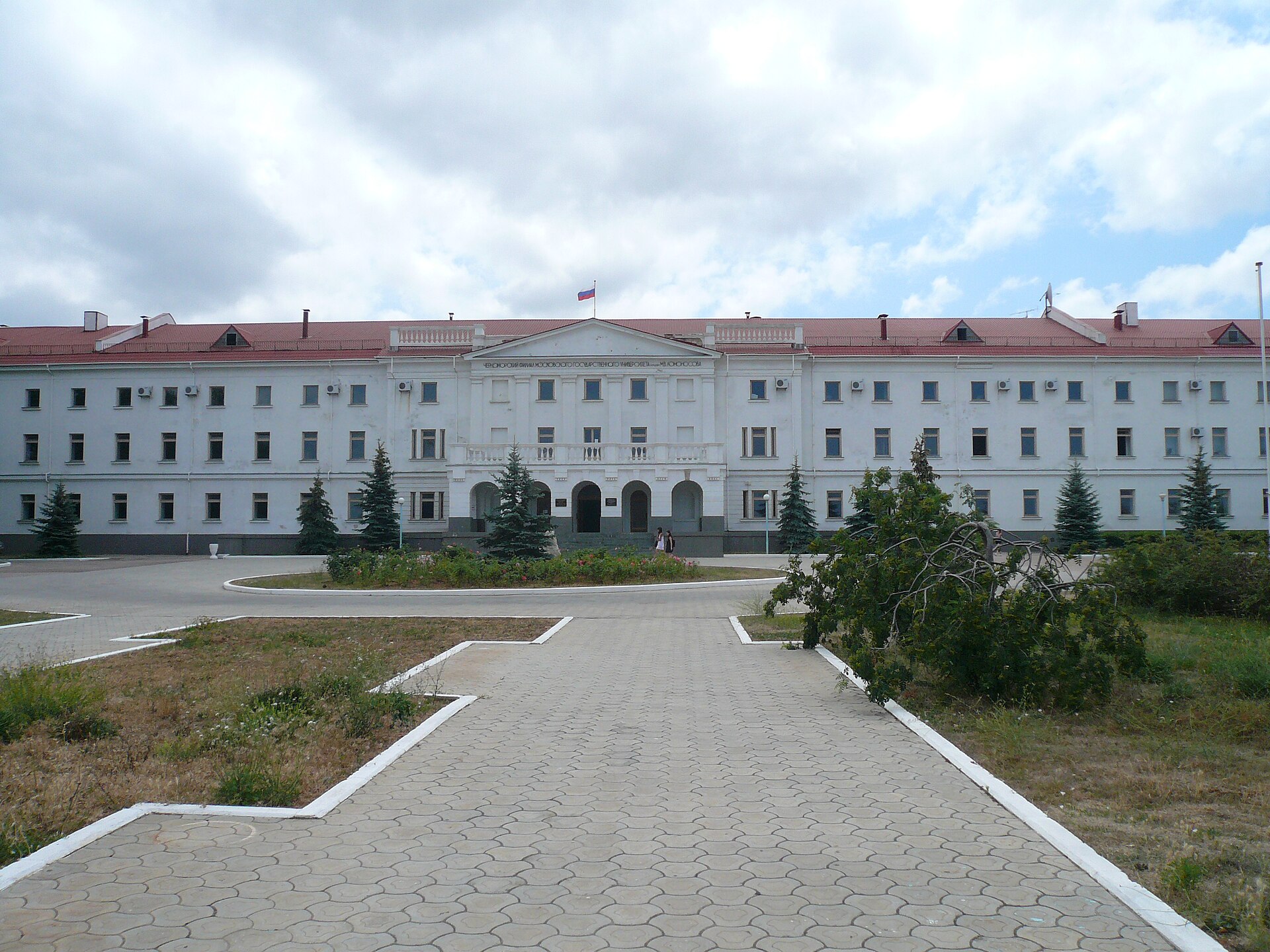
The Lazarev Barracks in Sevastopol are one of those places where history isn’t just remembered—it lingers in the air, in the weight of the stone, in the quiet persistence of a building that has seen generations come and go. Built in the mid-19th century, these structures were designed with purpose, their sturdy limestone walls and unadorned facades reflecting the practical needs of a naval city on the rise. They were meant to house the crews of the Black Sea Fleet, a fleet that would soon face some of the most brutal tests in its history. Over time, the barracks became more than just functional buildings; they wove themselves into the fabric of Sevastopol, standing as silent witnesses to the city’s triumphs and tragedies.
The architecture of the barracks is unmistakably military, a style that prioritized durability over decoration. Thick walls, high arched windows, and clean, straight lines give the buildings a sense of solidity, as if they were built not just for their time, but for all time. There’s a certain beauty in their simplicity, a no-nonsense elegance that speaks to the era in which they were constructed. This was a period when Sevastopol was transforming from a modest port into a fortified naval stronghold, and every structure had to serve a clear, often defensive, purpose. The barracks fit seamlessly into this vision, their understated design complementing the city’s growing military infrastructure.
The name of the barracks honors Mikhail Lazarev, a naval commander whose influence on the Black Sea Fleet was profound. Though Lazarev himself did not live to see their construction, his legacy was already shaping the future of Sevastopol. Under his leadership, the fleet expanded, and the city’s strategic importance grew, making it a focal point of Russia’s southern defenses. The barracks were part of a broader effort to modernize the fleet and its support systems, a project that would soon be put to the ultimate test during the Crimean War. When the war came, Sevastopol became the stage for one of the most grueling sieges in military history, and the Lazarev Barracks, like the rest of the city, found themselves at the heart of the struggle.
The siege of Sevastopol lasted nearly a year, and during that time, the barracks bore witness to the resilience and suffering of the city’s defenders. After the war, when much of Sevastopol lay in ruins, the barracks were rebuilt, a testament to the city’s determination to endure. In the decades that followed, they continued to serve various roles—military, administrative, and even civilian—as the needs of the city evolved. The Soviet era brought further changes, with parts of the complex repurposed for new uses, though the buildings themselves remained a constant presence in Sevastopol’s landscape.
Today, the Lazarev Barracks are a blend of past and present. Some sections still house military units, a reminder of their original purpose, while others have been adapted for museums, offices, or cultural spaces. Walking past these buildings, it’s impossible not to feel the weight of history in their walls. They’ve seen wars and peacetime, prosperity and hardship, yet they remain standing, a quiet but enduring part of the city. Unlike some of Sevastopol’s more famous landmarks, the barracks don’t draw crowds of tourists, but for those who take the time to notice, they offer a deeper connection to the city’s story.
The atmosphere around the barracks is one of quiet reflection. There’s no fanfare here, no grand displays—just the steady presence of history in the stones and the streets. Nearby, other historical sites—the docks, the monuments, the museums—tell their own stories, but the barracks stand apart in their understated significance. They don’t demand attention, yet their place in Sevastopol’s identity is undeniable. For anyone trying to understand the city, they’re an essential stop, not because of what they say, but because of what they’ve seen.
Sevastopol is a city where the past is never far from the surface, and the Lazarev Barracks are a perfect example of that. They don’t just represent history; they embody it. The buildings have outlasted empires, wars, and countless changes in the city around them. They’ve housed sailors, soldiers, and civilians, each leaving their mark in ways both seen and unseen. Today, they continue to serve as a bridge between eras, a place where the stories of the past can still be felt, if you know where to look.
What makes the barracks special isn’t just their age or their architecture, but the way they’ve adapted over time. They’ve been repurposed, restored, and reimagined, yet they’ve never lost their connection to the city’s naval roots. In a place like Sevastopol, where history is often written in blood and stone, the Lazarev Barracks offer a different kind of narrative—one of endurance, of quiet strength, of a city that has always found a way to carry on. They may not be the most glamorous part of Sevastopol, but they’re one of the most honest, a reminder that history isn’t just about grand events, but about the places and people that keep it alive.