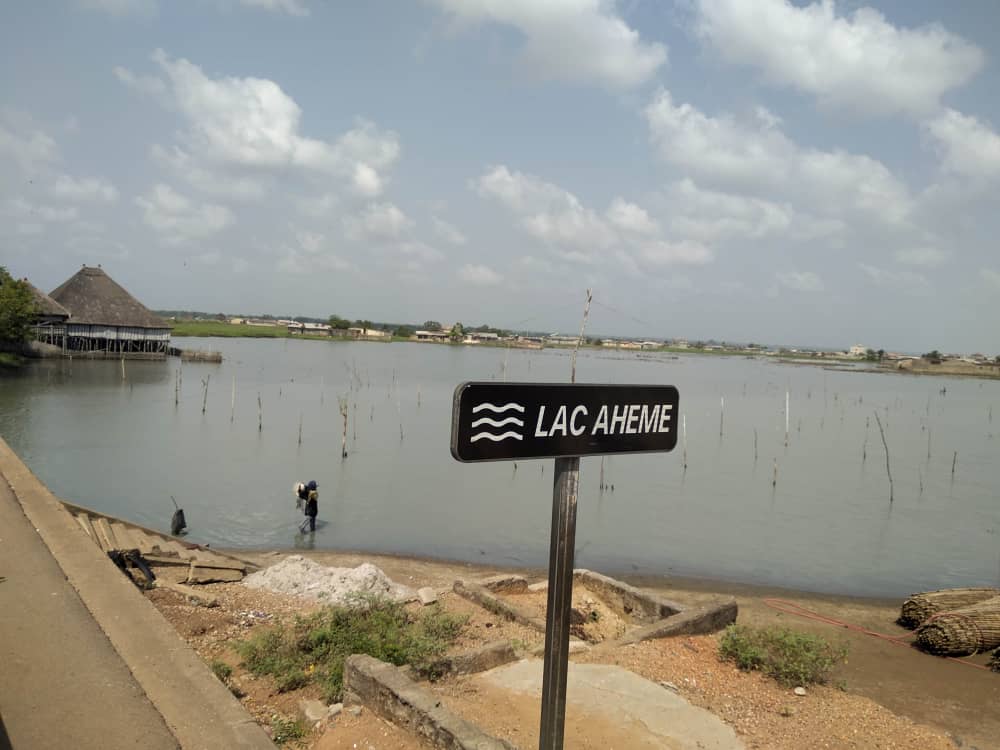
The river and the ocean meet here, not in a rush, but slowly, as if savoring the moment. The water hovers between fresh and salt, flowing through channels, small islands, and mangrove thickets that shift with the tides. Twice a day, the landscape changes—expanding with the incoming sea, then receding to reveal mudflats and narrow streams. In the rainy season, the lagoon swells until the line between land and water blurs. In the dry months, it shrinks into shallow pools connected by slender threads of current.
For centuries, this stretch of water was a crossroads, linking the Atlantic coast to West Africa’s interior. Colonial trade routes once passed through here, carrying palm oil, ivory, and enslaved people. Today, few visible traces of that past remain, but the lagoon’s quiet persistence tells another story—one of coexistence.
Fishermen set out at dawn. By midday, they return with their catch. On the shore, women clean and smoke the fish over open fires, the air thick with woodsmoke and spices.
The architecture in Grand-Popo follows this unhurried rhythm. Houses sit low to the ground, often on stilts to avoid flooding, their walls made of clay and wood. Flat roofs serve as drying racks for fish or places to sit in the evening, watching the sun dip below the horizon. Along the shore, palm-thatched huts stand beside weathered colonial buildings, remnants of French West Africa reclaimed by the landscape. There are no grand monuments here—just structures shaped by necessity and the elements.
The lagoon isn’t a place for a single activity. A boat ride or an afternoon by the water would be reason enough to come. But it’s also a place to sit and listen—to the water against mangrove roots, the rustle of leaves, the distant calls of birds.
Mornings bring a thin mist that softens the edges of everything. By noon, the haze burns off, and the water mirrors the sky. As evening falls, the light turns golden, and the lagoon seems to glow.
For those who live here, the lagoon is life. Children wade in the shallows. Women wash clothes on the banks. Elders share stories of how things used to be. On weekends, families from nearby towns arrive to grill fish over fires and linger in the quiet. There are no crowded beaches or resorts. The lagoon doesn’t try to impress—it simply exists.
If you come here, take your time. Rent a pirogue from a local fisherman and drift upstream, where the water darkens and the mangroves grow denser. Or walk along the shore, watching for herons, kingfishers, or an osprey diving for fish. In the rainy season, the lagoon floods lowlands until it feels like an endless lake surrounded by jungle. Even in the dry months, the water never truly disappears—it just retreats, waiting.
Grand-Popo doesn’t have the grand landmarks found elsewhere in Benin. No palaces, no ancient temples, no tourist attractions vying for attention. What it has is something rarer: a place that moves at its own pace. If you spend a few days here, you’ll realize that sometimes the most rewarding experiences unfold slowly, like a river easing into the sea.