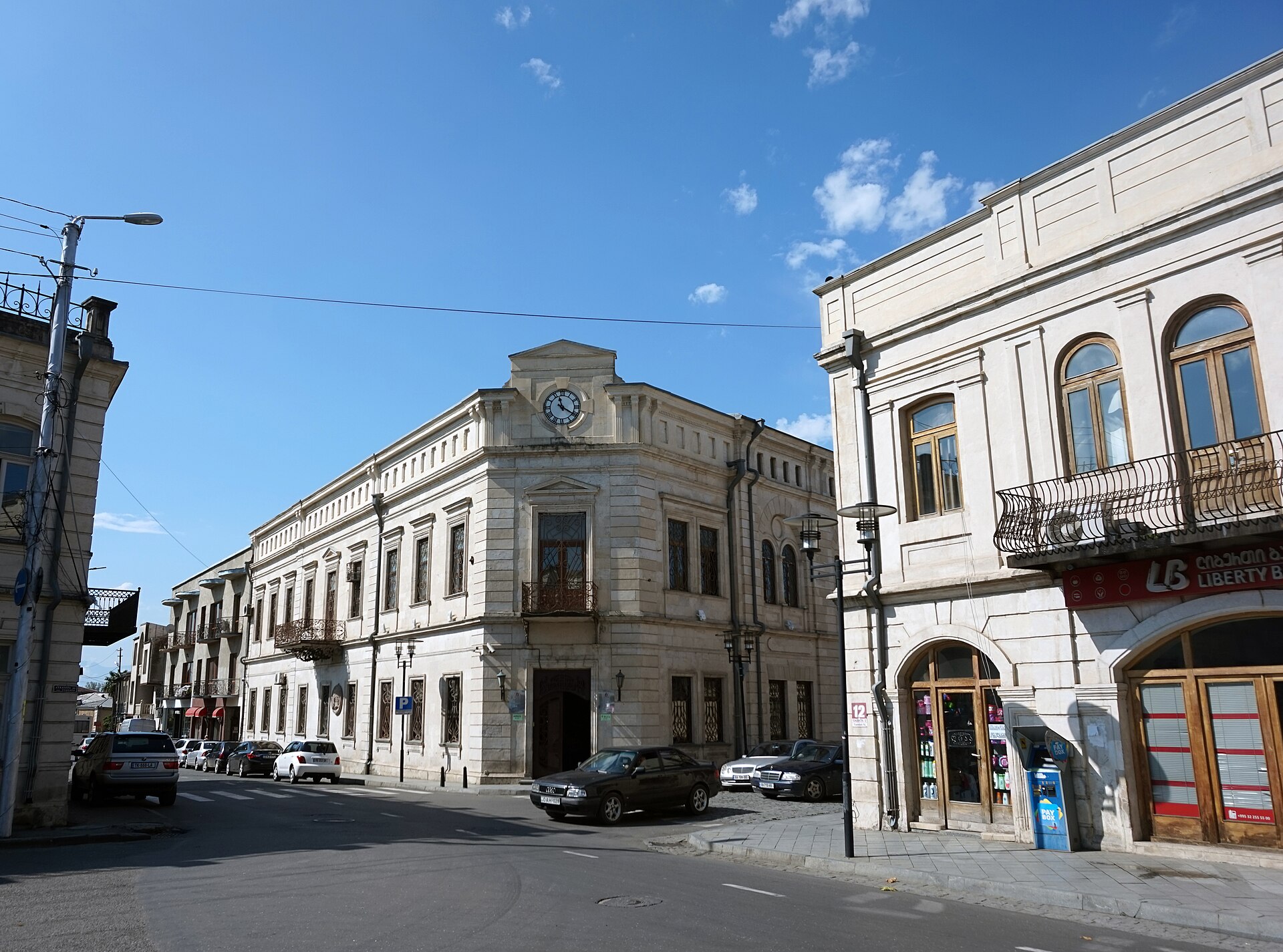
Kutaisi’s State Historical Museum feels like a place where time lingers, reluctant to move forward. Housed in a late 19th-century merchant’s mansion in the heart of the old city, the building itself is part of the story it preserves. The architecture carries the weight of its era—tall ceilings, heavy wooden doors, and ornate plasterwork that has softened with age, its cracks and faded details adding character rather than diminishing it. Inside, the atmosphere isn’t the sterile hush of a typical museum. Instead, it feels like stepping into a home where the past hasn’t been curated so much as allowed to remain, each object holding onto its own quiet narrative.
The museum’s origins trace back to 1921, though its collection began taking shape long before that. What started as a private passion project by local historians and collectors gradually expanded, incorporating archaeological finds unearthed in and around Kutaisi. Today, the exhibits span an astonishing breadth of time, from Paleolithic stone tools to 19th-century household items. The most compelling pieces, however, are those tied to Colchis—the mythical land of the Golden Fleece, which once thrived in what is now western Georgia. Here, you’ll find ancient coins, jewelry, pottery, and weapons that once belonged to the people of this legendary kingdom, their craftsmanship still striking after millennia.
One of the museum’s most remarkable sections is its numismatic collection. Coins from different epochs fill the display cases, from Greek drachmas to silver pieces minted during Georgia’s medieval kingdoms. Some are so well-preserved they look freshly struck, their surfaces gleaming under the light. Alongside them are seals, medals, and orders that trace the region’s political and economic evolution. The coins bearing the likenesses of Georgian kings are particularly fascinating—tiny, portable portraits of rulers whose names might otherwise be forgotten.
The archaeological wing transports visitors even further back in time. Stone and bronze tools, clay vessels, and bone ornaments reveal the daily lives of Georgia’s earliest inhabitants. Many of these artifacts were discovered in local excavations, including ancient settlements and burial sites. The gold jewelry from the Colchian period stands out—delicate pendants, bracelets, and earrings crafted with a precision that speaks to a culture deeply connected to the wider ancient world. These pieces aren’t just relics; they’re evidence of a society that thrived at the crossroads of trade and influence.
A separate hall is dedicated to medieval Georgia, where fragments of frescoes, icons, and religious artifacts offer a glimpse into the spiritual and artistic life of the era. Intricately carved wooden crosses and metal icon covers, adorned with enamel and gemstones, showcase the skill of Georgian craftsmen. Nearby, manuscripts in Georgian and Church Slavonic hint at the country’s rich literary tradition, their pages a testament to the enduring power of the written word. These objects don’t just reflect religious devotion—they’re a reminder of how faith shaped identity and culture.
The ethnographic section brings the past closer to the present. Traditional costumes from different regions of Georgia fill the space, their vibrant colors and distinct embroidery patterns telling stories of local identity. Alongside them are household items—wooden chests, handwoven rugs, and tools—that paint a picture of daily life a century or two ago. The clothing, in particular, is striking; each region’s style is unique, from the cut of the fabric to the motifs stitched into the seams. These aren’t just museum pieces—they’re echoes of living traditions, passed down through generations.
What makes this museum special isn’t its size or the sheer volume of its collection, but the way it invites you to slow down. There are no crowds rushing from one exhibit to the next, no pressure to see everything at once. You can wander the halls at your own pace, lingering over details, reading the descriptions, or simply standing by a window to watch the old city outside. Occasionally, temporary exhibitions add a fresh perspective, shedding new light on familiar objects or introducing lesser-known aspects of Georgian history.
More than just a repository of artifacts, the Kutaisi Historical Museum feels like a conversation with the past. It’s a place where you can trace the threads of Georgia’s identity—how it was shaped by trade, faith, conflict, and creativity. For those with a deep interest in history, it’s an essential stop. For the casual visitor, it offers something rarer: a chance to see Kutaisi not just as a destination, but as a city with a memory that stretches back thousands of years. The building itself, with its creaking floors and sunlit corridors, seems to whisper that history isn’t just something you observe—it’s something you can almost touch.