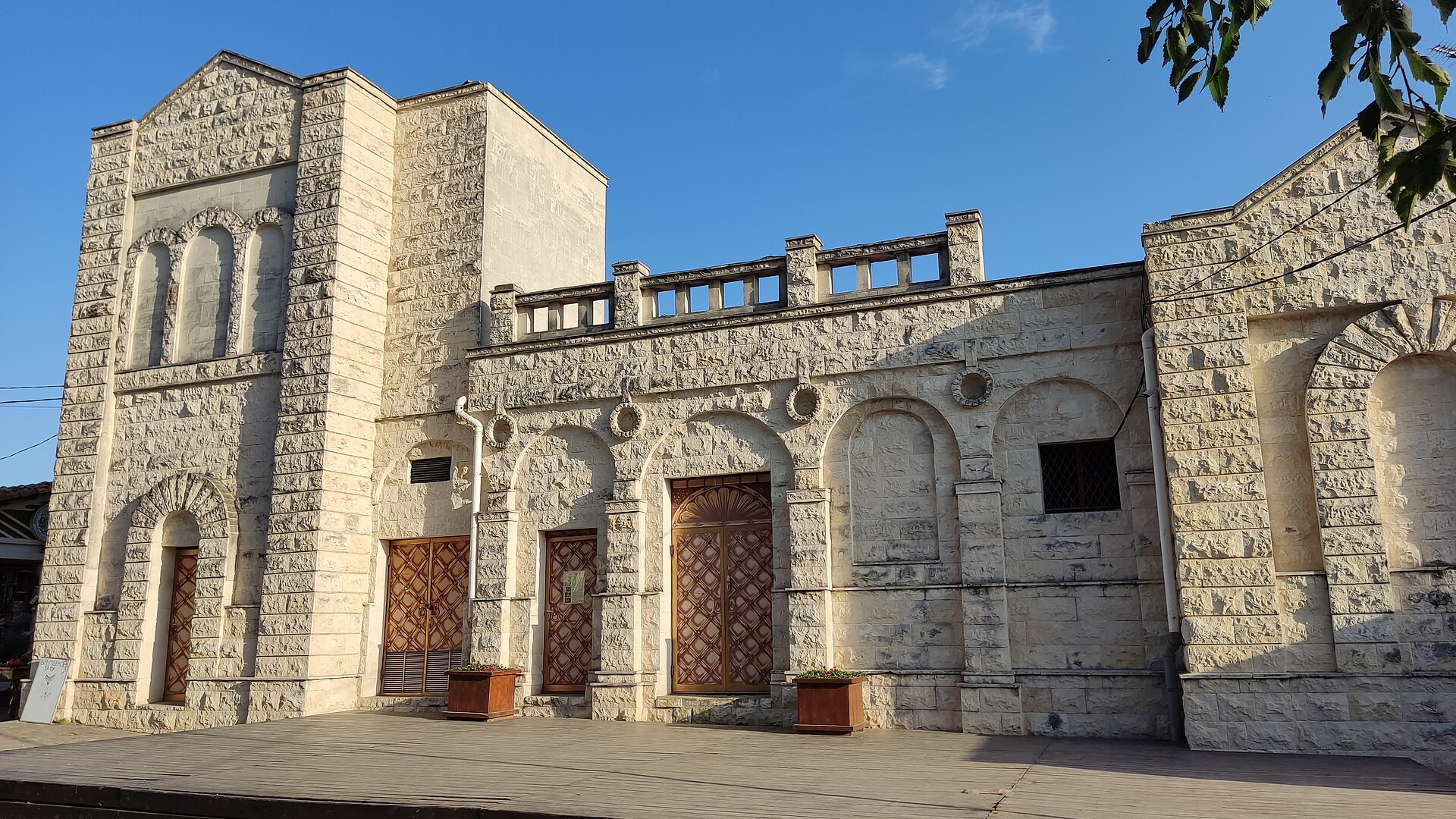
The Merchant Synagogue in Yevpatoria is one of those rare places that seem frozen in time, preserving the spirit of the old city. Built in the late 19th century, it was more than just a religious center—it was a vital gathering place for the Karaite community, an ethnic group of Turkic origin that practiced a distinct branch of Judaism. The Karaites had lived in Crimea for centuries, leaving a lasting mark on the peninsula’s architecture and history. Their presence in Yevpatoria was particularly strong, as the city flourished as a major Black Sea trading hub, where Karaite merchants played a key role in commerce and urban life.
The synagogue stands in the heart of Yevpatoria’s historic district, where the atmosphere of the old merchant city still lingers. In its heyday, Yevpatoria was one of the most important ports in the region, and the Karaites were among its most influential traders. The synagogue was funded by local businessmen, and its design reflects both Karaite architectural traditions and the European styles popular at the time. Though modest in size, the building is striking, with arched windows and intricate patterns typical of Karaite places of worship. Inside, the original decor was simple yet elegant, though much of it has been lost over the years.
Like many religious sites in the Soviet era, the synagogue was closed after the revolution and repurposed for various uses—from sports clubs to storage spaces. Decades of neglect took their toll, and the building fell into disrepair. It wasn’t until the early 2000s that restoration work began, bringing the synagogue back to life, though not as an active house of worship. Today, it functions as part of a museum complex dedicated to Karaite history and culture, offering exhibits on their traditions, contributions to Crimea, and the broader story of Yevpatoria.
Visiting the synagogue is as much about the journey through the city as it is about the building itself. Yevpatoria, founded in ancient times, has always been a crossroads of cultures. Greek colonies, Genoese trading posts, Tatar settlements, and Russian quarters once coexisted here, and the Karaites fit seamlessly into this diverse landscape. From the synagogue, a short walk leads to other Karaite landmarks—kenassas (prayer houses), merchant homes, and old trading rows—all contributing to the unique character of the city. The waterfront, with its mix of architectural styles, is a reminder of how these different communities shaped Yevpatoria over the centuries.
Inside the synagogue, some original details remain, though much of the interior was lost during its years of abandonment. The high windows, wooden ceiling beams, and carved elements offer a glimpse of what the space once looked like. In its prime, it was a place where people gathered not just for prayer, but for conversation and community. Today, the building hosts tours, lectures, and temporary exhibitions, covering not only Karaite culture but also the broader history of Yevpatoria. The exhibits are modest but thoughtful, providing context without overwhelming visitors with too much information.
The Merchant Synagogue is more than just an architectural monument—it’s a testament to how different peoples and faiths coexisted in one place. In Yevpatoria, where trade routes and cultures intersected for centuries, such diversity was the norm. Karaites, Greeks, Armenians, Tatars, and Russians all left their mark on the city, and their legacy is still visible in its streets. The synagogue serves as a quiet reminder that history is rarely simple, but it’s in places like this—where the stories of different people intertwine—that it feels most alive.
Yevpatoria today is known as a resort town, with sandy beaches and sunny weather drawing visitors from across the region. But beyond the tourist spots, the city is rich in history, and the synagogue is one of its lesser-known but most intriguing sites. It doesn’t attract crowds, and there’s no grand spectacle here—just an authentic sense of the past. For those who take the time to visit, it offers a chance to step away from the usual tourist trail and engage with a different side of Crimea.
If you find yourself in Yevpatoria, the synagogue is worth a short visit. Spend half an hour wandering its halls, examining the details, and then step outside to imagine what life here was like a century ago. In moments like these, history stops being just a collection of dates and facts and becomes something tangible. The Merchant Synagogue isn’t just about Yevpatoria’s past—it’s a living part of its present, a reminder that the city’s identity is shaped by more than just its beaches and resorts. It’s a place where the layers of time are still visible, waiting to be discovered.