- Home
- Austria
- Hofburg Imperial Palace
- Krimmler Waterfalls
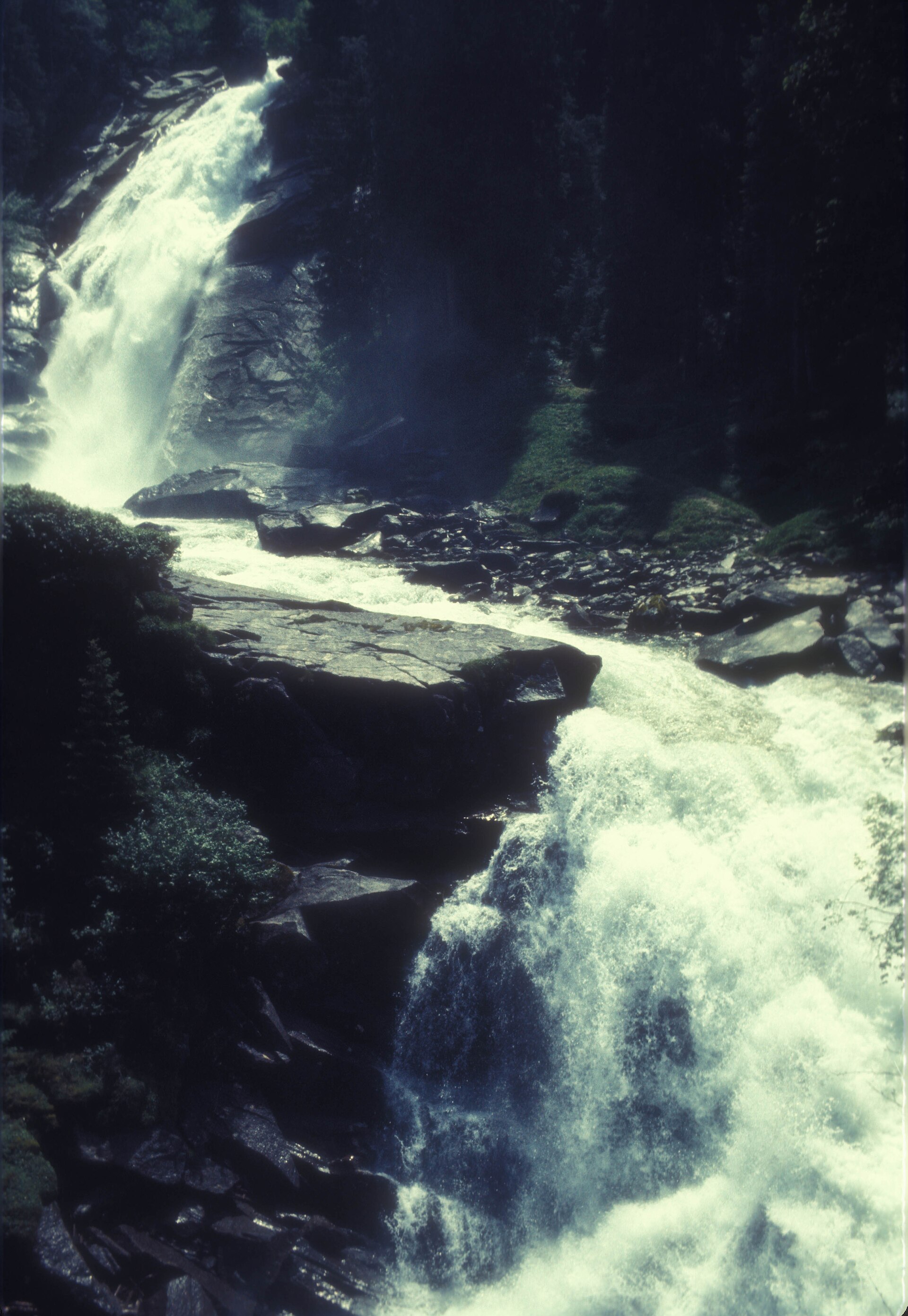
Photo: JERRYE & ROY KLOTZ MD, CC BY-SA 3.0
Krimmler Waterfalls
out of 5 0 ratingsThe Krimml Waterfalls are one of those rare places where nature doesn’t just display its power—it does so with a quiet, overwhelming majesty that leaves you standing still, watching. Tucked into the Krimml Ache Valley, these falls are Austria’s tallest and among the most striking in Europe. The water doesn’t drop in a single, dramatic plunge but cascades down a series of rocky ledges, spanning nearly four hundred meters in total. Even on a clear day, the force of the falling water sends up a fine mist, and rainbows shimmer in the spray as if the air itself is alive with color.
The story of the Krimml Waterfalls begins with the glaciers that once blanketed these mountains. The Krimml Ache River starts its journey high above, fed by the Krimml Kees glacier at around three thousand meters. As it rushes toward the valley, the water carves its way through the landscape, tumbling over natural steps formed over millennia. Geologists believe these cascades took shape during the Ice Age, when melting glaciers eroded softer rock, leaving behind the rugged cliffs we see today. Now, the falls are sustained not just by glacial melt but by rainfall and underground springs, keeping them full and powerful year-round.
For centuries, the Krimml Valley was remote and sparsely populated, and the waterfalls were seen more as a natural wonder than a tourist attraction. The first written records date back to the Middle Ages, when locals regarded the falls as a sacred place. It wasn’t until the 19th century, when Alpine tourism began to flourish, that travelers started to take notice. In 1879, the first path was carved into the hillside, allowing visitors to get closer to the water. By the early 20th century, viewing platforms were added, offering the best vantage points to take in the full spectacle of the cascades.
There’s no grand architecture here—nature alone has crafted the scene, and any man-made structure would only distract from it. Still, the trails and bridges that wind along the falls are thoughtfully designed to blend into the landscape. Wooden walkways and stone steps follow the natural contours of the terrain, letting visitors ascend safely without disrupting the surroundings. The most famous viewpoint sits about a hundred meters above the lowest cascade, where you can watch the water crash against the rocks, sending up clouds of spray. On sunny days, the light catches the mist, creating a shimmering effect that makes the falls seem almost ethereal.
Beyond their beauty, the Krimml Waterfalls play a vital role in the region’s ecosystem. The water is crystal clear and rich in oxygen, making it an ideal habitat for trout and other fish. The area around the falls is home to chamois, alpine marmots, and even rare birds like the griffon vulture. The vegetation is just as unique, with mosses and ferns thriving in the damp air, while alpine flowers add splashes of color to the rocky slopes in summer.
Visiting the falls isn’t just a walk—it’s a journey upward, following the river’s path. The trail starts at the base of the lowest cascade and climbs alongside the water, passing three main tiers. The first drop, around 140 meters, is the most dramatic in terms of sheer force, its roar audible long before you see it. The second cascade rises nearly a hundred meters, and by this point, the air is thick with mist. The third and tallest tier reaches 130 meters, offering a sweeping view of the valley below. The full ascent takes about an hour and a half, but every step is worth it, especially if you go early in the morning when the crowds are thin and the sunlight just begins to touch the cliffs.
In winter, the Krimml Waterfalls transform into a frozen wonderland. The water slows to a trickle, then stops altogether, leaving behind intricate ice formations that cling to the rocks like giant sculptures. The trails are often closed during these months due to snow and ice, but those who venture out in winter are rewarded with a completely different view. The ice doesn’t just coat the stones—it shapes them into fantastical forms, glinting in the sunlight like scattered jewels on clear, cold days.
What makes the Krimml Waterfalls special is their lack of pretense. There are no flashy attractions or crowded viewing decks, just the raw, unfiltered power of nature. The only sounds are the rush of water and the occasional call of a bird echoing through the valley. Even if you’re not up for a long hike, it’s worth climbing to the first viewpoint—the sight of the lowest cascade framed by the valley below is unforgettable. And if the weather cooperates, a rainbow arching over the mist will be the perfect finishing touch to the experience.
Day around this place
Where else to go on the same day
Building the day…
Where it is
47.20838, 12.17022